Guides

Cannabis, explained plainly

The questions people ask most, answered with sources and without the hype. Start anywhere.
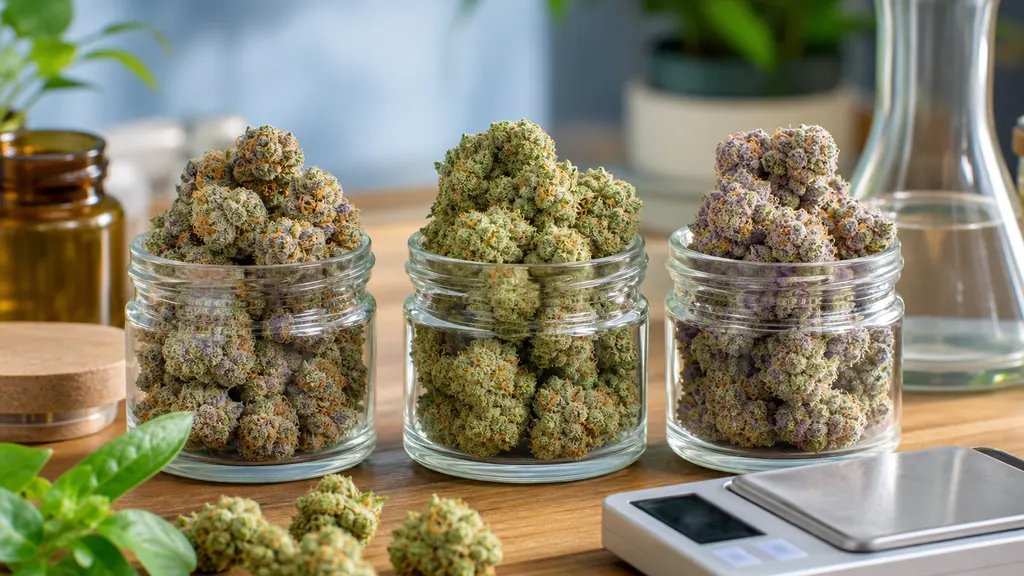
Three glass jars of frosty cannabis buds on a wooden counter beside a small digital scale and a glass beakerLatest7 min read · Updated Nov 20, 2026What does the THC percentage on weed actually mean?A THC percentage is a calculated share of a flower's weight, worked out from one lab sample of one lot. It is useful, but it is one value drawn from a plant that varies, and we could not find a source that shows what it predicts about how a product will feel.Read the guide

More guides

Showing 1–9 of 59 guides
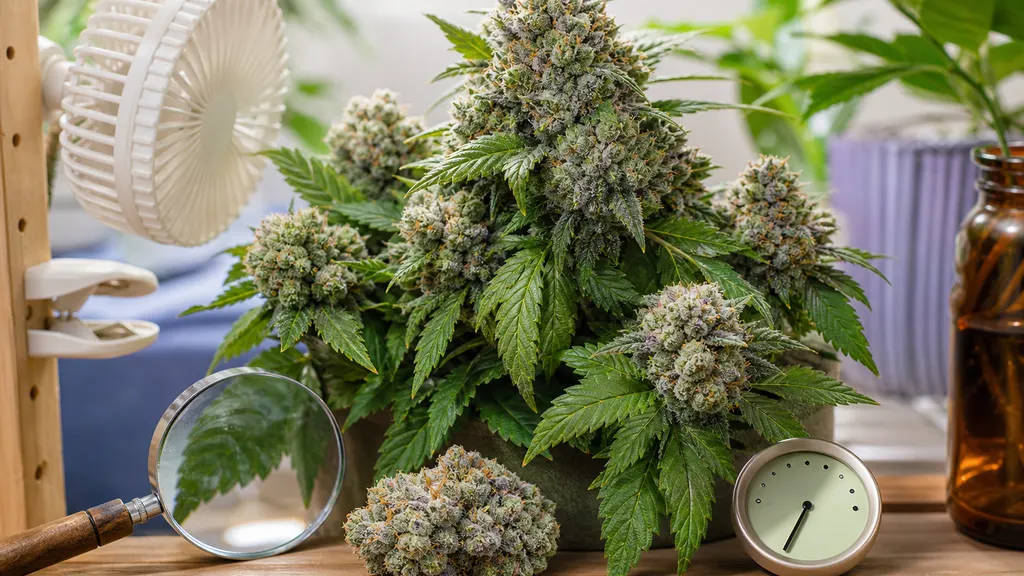
A healthy green cannabis plant in a pot beside a small clip-on fan, a handheld magnifier and a humidity gauge on a wooden shelf6 min read · Updated Nov 19, 2026Cannabis pests, mould and bud rot: why it starts insideA Canadian government guide says bud rot commonly starts in the interior of the bud, where humidity is highest and air movement is lowest. That makes it an environment problem first. Here is what the sources establish about pests and mould on a growing plant, and where they stay silent.Read it
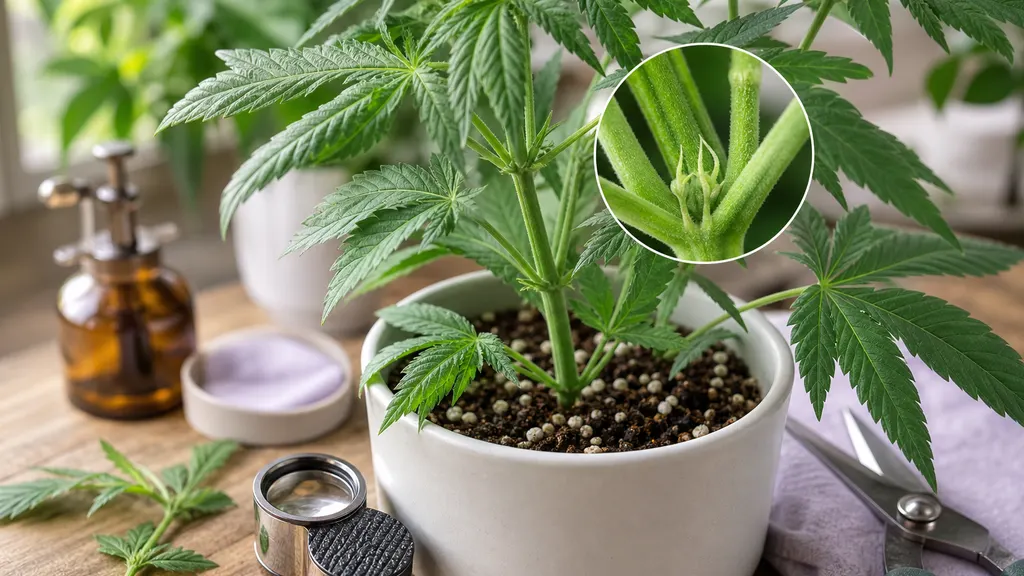
A small magnifying loupe resting beside a young cannabis plant, with a few fresh cuttings and a pair of fine scissors on a wooden bench6 min read · Updated Nov 19, 2026Sexing cannabis plants: pre-flowers and hermiesSexing is the step that decides whether a cannabis plant ever becomes the flower people buy: only unpollinated females do. Pre-flowers at the nodes show the sex, and a hermaphrodite shows both. What pollination costs in potency has not been measured in the sources we could verify.Read it
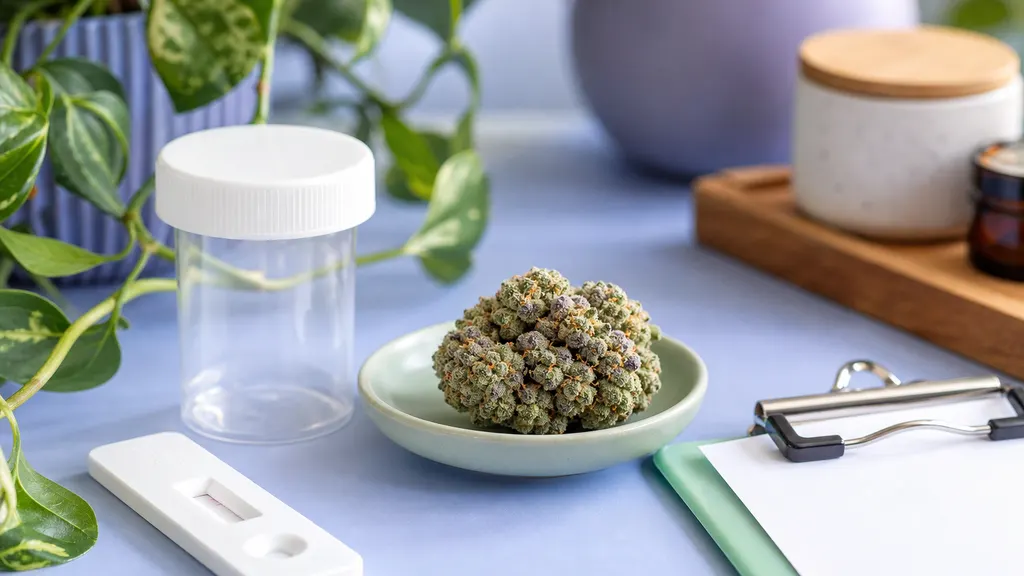
A sample cup and a test cassette beside a mint dish with a frosty cannabis bud, a clipboard and green trailing plants5 min read · Updated Nov 18, 2026Weed and drug tests in Canada: what a test can and can't tell youThere is no single number for how long THC stays detectable, and any page that gives one is oversimplifying. In Canada, workplace drug testing is shaped by case law rather than a statute, and it is narrow: individual testing is generally allowed only in specific situations and safety-sensitive roles.Read it
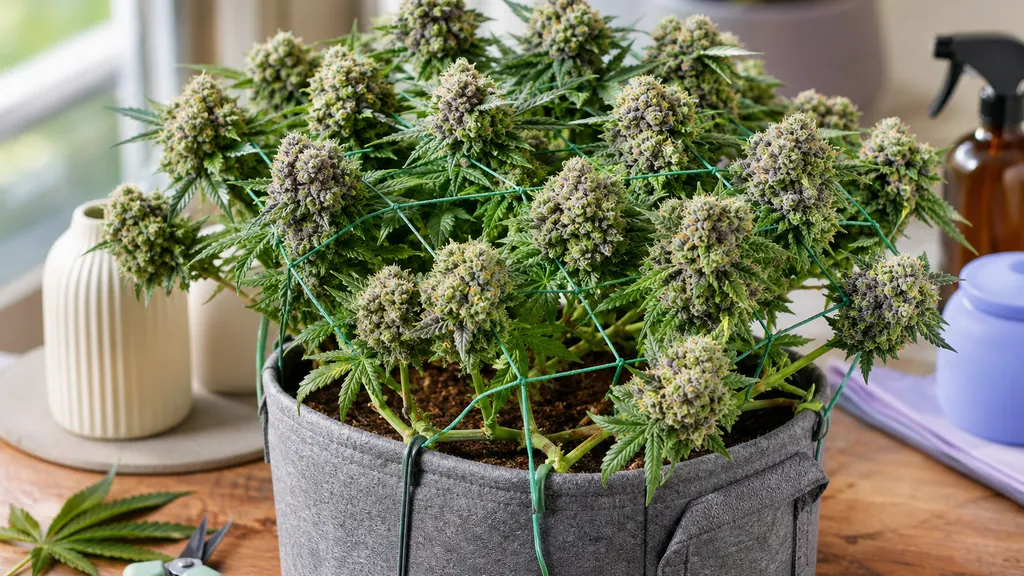
A bushy cannabis plant in a fabric pot with its branches gently tied down and spread through a flat net, beside soft cotton ties, small pruning snips and a few trimmed leaves on a wooden bench9 min read · Updated Nov 18, 2026Cannabis plant training: what topping, LST and SCROG are doingNo controlled cannabis study has compared one training technique against another. Three experiments did prune and shape plants and measure the result: topping gave more flower weight but no significant CBD-yield gain, and buds low on the plant were consistently weakest. Here is what was measured, and what was not.Read it
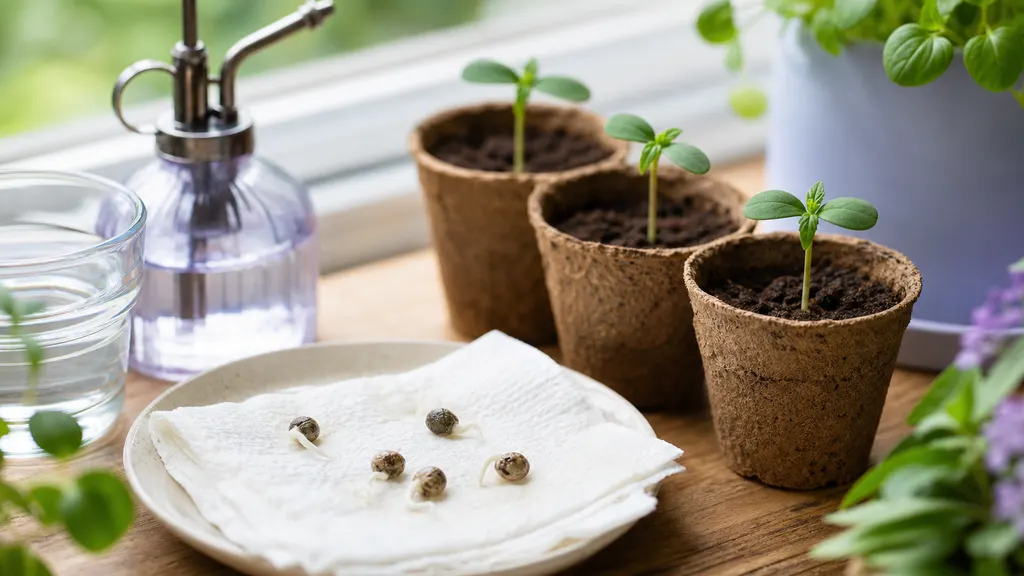
Cannabis seeds on a damp paper towel beside peat pots with young seedlings, a glass of water and a plant mister6 min read · Updated Nov 17, 2026Germinating cannabis seeds: what the research measuredCannabis seeds germinate across a wide temperature range, with the best results measured between 19 and 30 degrees Celsius. Seeds lose viability with age, feminized seeds have no published sex ratio, and Canadian law treats seed origin separately from the four-plant limit.Read it
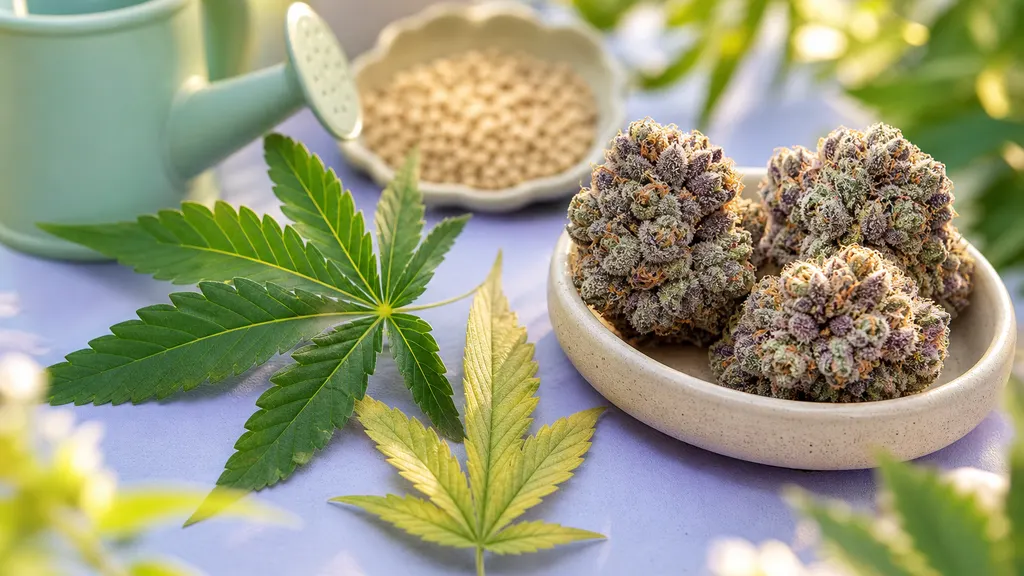
A deep-green healthy cannabis leaf beside a pale yellowing one, next to a dish of frosty cannabis buds and a mint watering can6 min read · Updated Nov 16, 2026Cannabis nutrients and deficiencies: what the studies measuredCannabis needs the same essential nutrients as other crops: nitrogen, phosphorus, potassium, calcium, magnesium and sulphur in larger amounts, plus trace elements. Peer-reviewed trials found lower optimum rates than many feeding charts suggest, and deficiencies took five to nine weeks to show when a nutrient was fully withheld.Read it
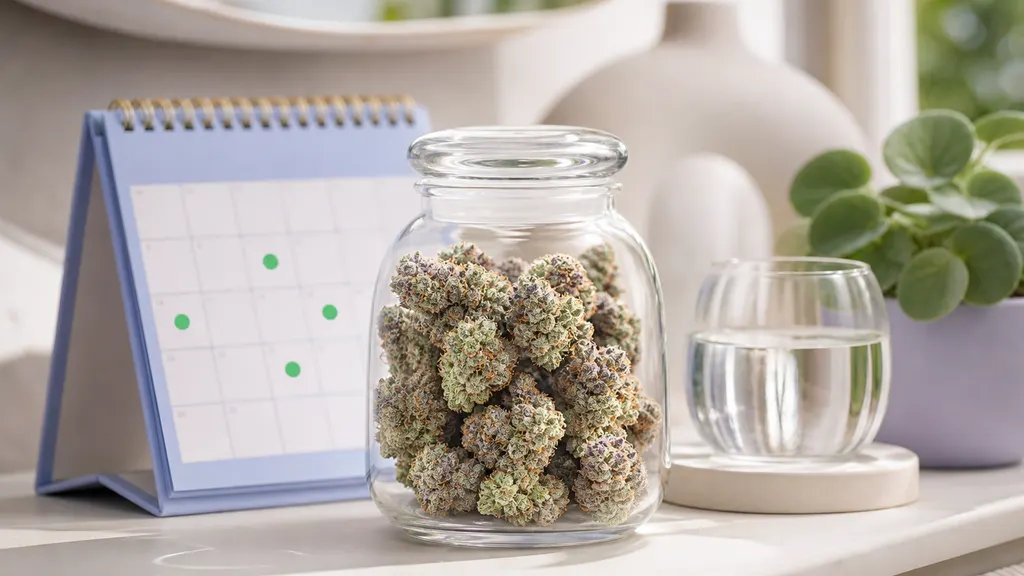
A closed glass jar of cannabis next to a desk calendar marked with mint-green dots, a glass of water and a houseplant4 min read · Updated Nov 15, 2026Weed tolerance and tolerance breaks: what the research does and doesn't showRegular cannabis use lowers the number of CB1 receptors in the brain, and that change reverses during abstinence. How long a break takes to matter is not settled: two imaging studies report two days and about four weeks, and neither measured whether the high came back.Read it
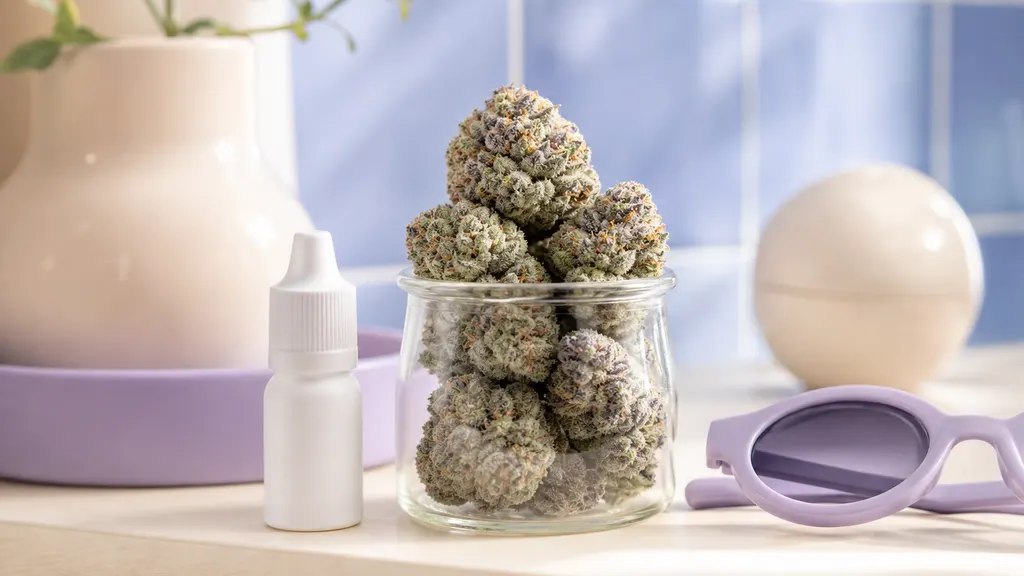
Eye drops and lavender sunglasses beside a glass jar of frosted cannabis buds on a pastel bathroom shelf5 min read · Updated Nov 14, 2026Why does weed make your eyes red? What the research saysTHC widens the small blood vessels on the white of the eye, so more blood flows through them and they show. A 2024 review calls the effect acute and transient. No study has timed how long it lasts, and the hour counts you see online have no source.Read it
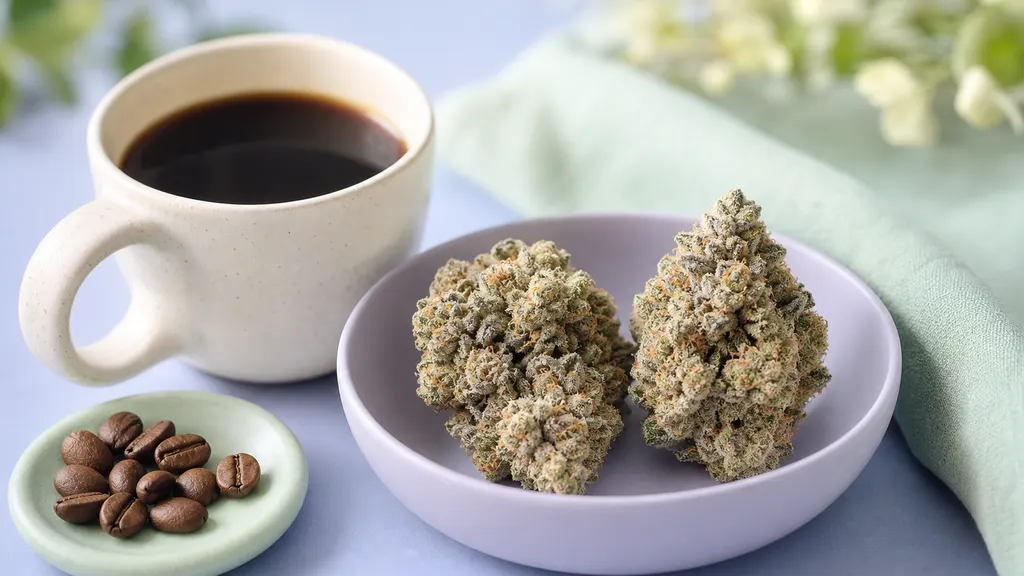
A cream mug of black coffee beside a lavender dish of frosted cannabis buds and a small plate of coffee beans5 min read · Updated Nov 13, 2026Weed and caffeine: what the evidence actually showsWeed and caffeine have been tested together in people only once. A small 2025 trial found minimal changes to THC's effects, task performance and metabolism. Most confident claims online rest on animal studies, some of which didn't use caffeine at all. In Canada, caffeine is not generally allowed in cannabis products.Read it
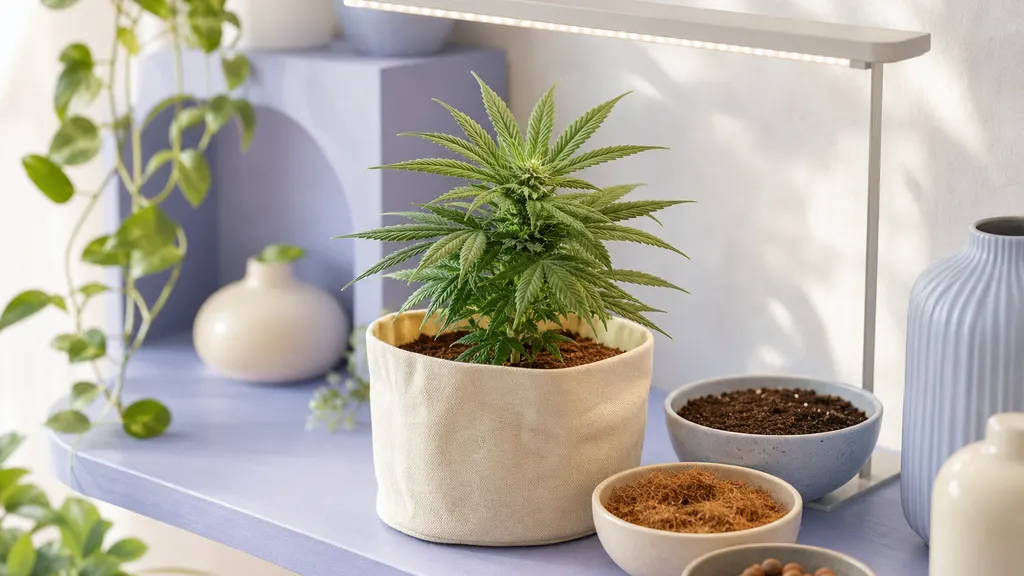
A young cannabis plant in a fabric pot under a slim LED grow light, with bowls of soil, coco coir and clay pebbles5 min read · Updated Nov 11, 2026Grow lights and growing medium: what the trials measuredControlled trials show that more light raises how much flower a plant makes, while light colour and growing medium have not been shown to change potency. Soil, coco and rockwool differ mainly in how they hold water. Here is what the research measured, and what it did not.Read it
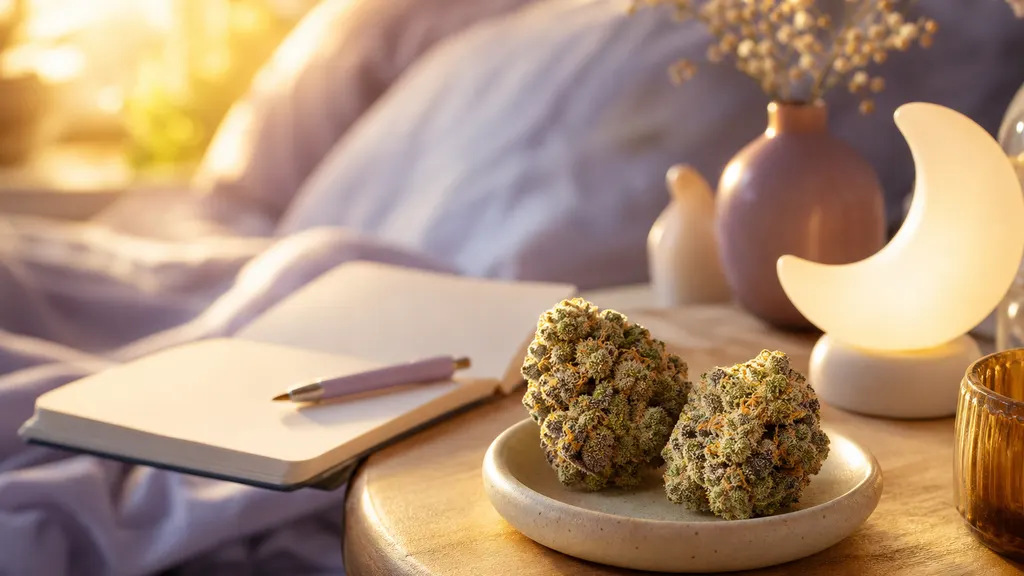
A sunlit bedside table with an open notebook, a glowing crescent-moon lamp, amber glass and a dish of frosty cannabis buds beside lavender bedding6 min read · Updated Nov 10, 2026Weed and dreams: what the research actually saysMany daily cannabis users report remembering fewer dreams, and strange, vivid dreams are one of the best-documented features of stopping. The popular claim that THC suppresses REM sleep is much shakier: of six studies with objective sleep measures, four found no REM effect. And no study measured a dream.Read it
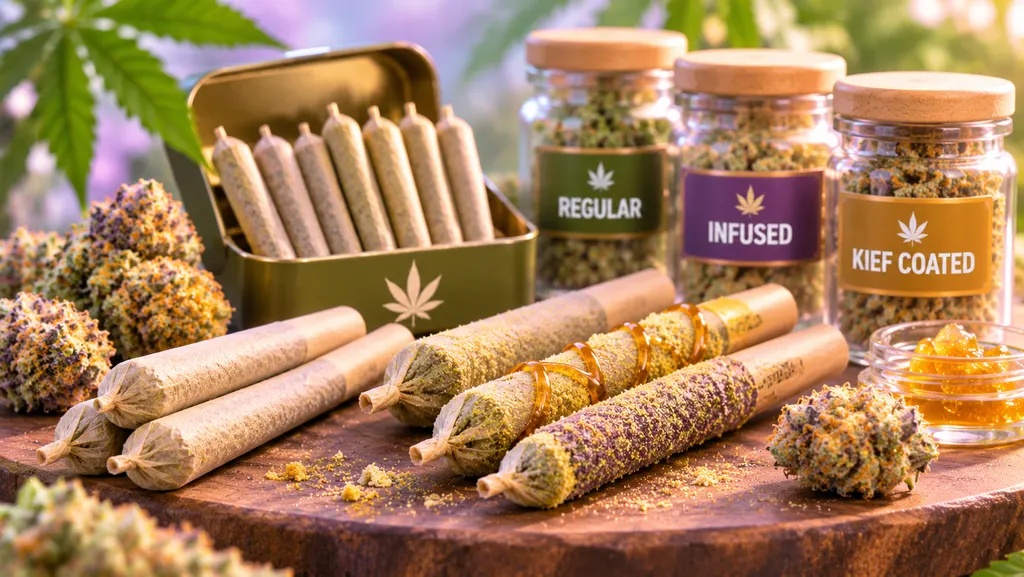
A tin of pre-rolls beside regular, infused and kief-coated pre-rolls and labelled jars6 min read · Updated Nov 9, 2026Pre-rolls explained: what's inside, sizes, and infused pre-rolls in CanadaA pre-roll is a joint rolled and sealed by the producer: ground cannabis in a paper cone, usually with a cardboard crutch, sold in a tube or multi-pack. Sizes commonly run from about 0.3 g to 1 g. In Canada, Health Canada treats an infused pre-roll as a cannabis extract product, not dried cannabis.Read it
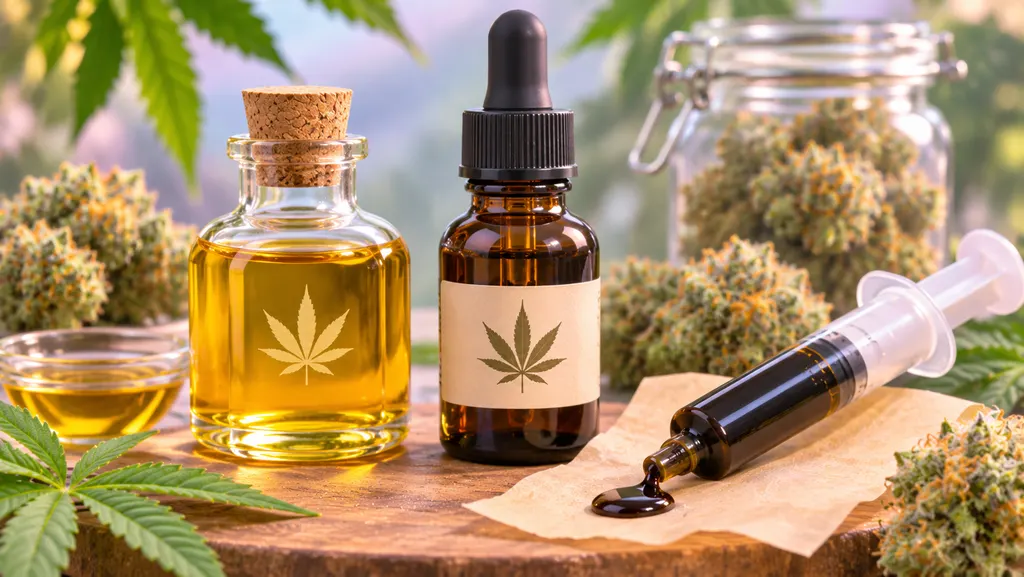
A bottle of cannabis oil, a dropper tincture and a syringe of dark RSO on a wooden table8 min read · Updated Nov 8, 2026Cannabis oil, tinctures and RSO: what's the difference?A tincture is a liquid cannabis extract dosed with a dropper, cannabis oil is a loose market term with no legal class in Canada, and RSO is a thick, dark whole-plant extract sold in a syringe. In Canadian law a tincture is an ingested extract, which changes the limits that apply to it.Read it
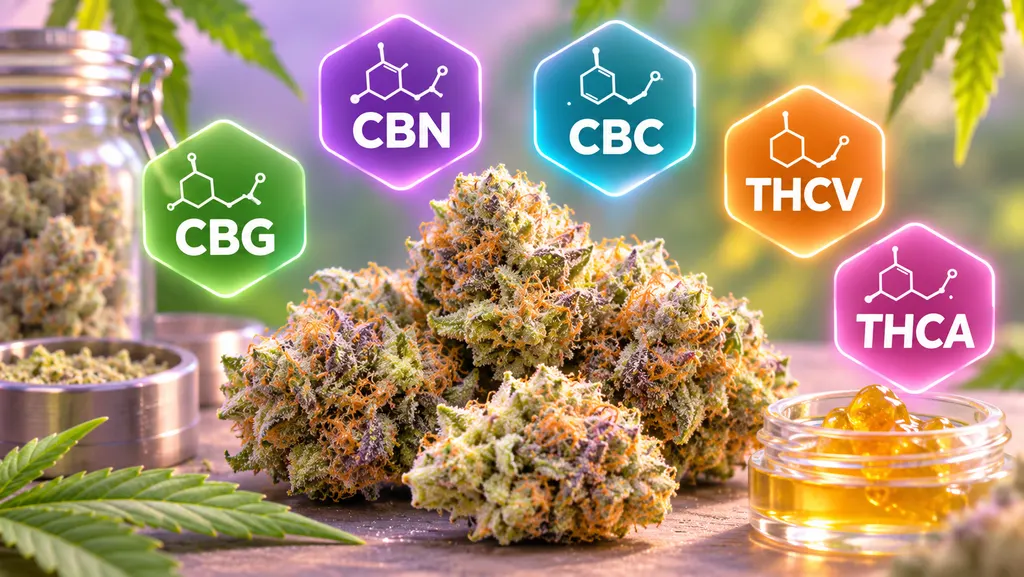
Cannabis buds under floating labels for CBG, CBN, CBC, THCV and THCA8 min read · Updated Nov 7, 2026Minor cannabinoids: CBG, CBN, CBC, THCV and THCA explainedMinor cannabinoids are the cannabinoids in cannabis other than THC and CBD, called minor because of how little a typical plant makes, not how strong they are. In Canada they all fall under the Cannabis Act, Health Canada names CBN and THCV as intoxicating, and labels only have to show THC and CBD.Read it
A pill organizer and an amber bottle beside a cream dish holding a frosted cannabis bud6 min read · Updated Nov 6, 2026Weed and medications: what is actually known about drug interactionsTHC and CBD are broken down by the same liver enzymes that process many prescription drugs. Documented interactions cluster in blood thinners, anti-seizure drugs and transplant drugs, mostly from case reports. For most other medications, including antibiotics, nobody has studied it. Ask your pharmacist or doctor, and never change a medication on your own.Read it
A glass of white wine beside a lavender dish of frosted cannabis buds on a periwinkle table5 min read · Updated Nov 5, 2026Weed vs alcohol: what the evidence actually comparesNo single study answers whether weed or alcohol is worse, because they've rarely been measured on the same scale. Four comparisons share a unit: crash risk, dependence, acute lethality and cost to Canada. Each points a different way. Canada also publishes a weekly numeric guide for alcohol and none for cannabis.Read it
Car keys on a lavender key ring beside a dish with a cannabis bud and a mint-green cup of water6 min read · Updated Nov 4, 2026Driving high in Canada: the THC limits and what they meanCanadian law sets three blood-THC concentrations for drug-impaired driving, and separately makes impairment itself an offence. Justice Canada calls the lowest limit precautionary, and no government publishes a waiting time that makes a driver legal.Read it
Dense, resin-coated cannabis buds glistening with sticky trichomes5 min read · Updated Nov 3, 2026Highest THC strains: what the numbers really meanThe highest THC strains are the ones with the biggest Total THC number on a lab report, but that number is a ceiling that varies by batch, lab and method. This guide explains how THC is measured and labelled in Canada, why very high figures are often inflated, and why a higher number isn't automatically a better choice.Read it
Cannabis buds beside a jar and chocolate chip cookies5 min read · Updated Nov 3, 2026Cookies strains: Girl Scout Cookies and its familyCookies strains are the cannabis family built around Girl Scout Cookies, widely reported as a cross of OG Kush and Durban Poison from the San Francisco Bay Area. Cuts like Thin Mints and Forum Cut, and descendants like Gelato, Sunset Sherbet and Wedding Cake, make up the family.Read it
A small grow tent with a few cannabis plants in the corner of a cozy bedroom6 min read · Updated Nov 2, 2026Growing weed in Canada: the 4-plant rule by provinceThe federal Cannabis Act lets adults grow up to four cannabis plants per residence for personal use, but each province sets its own extra rules. Quebec bans home growing outright, and Manitoba only allowed it, indoors, from May 1, 2025. Seeds and plants must come from a legal source.Read it
A gas pump nozzle pouring cannabis buds instead of fuel5 min read · Updated Nov 2, 2026Diesel strains: Sour Diesel, NYC Diesel and the gas familyDiesel strains are the cannabis family known for a sharp fuel smell, built around Sour Diesel and NYC Diesel. Their roots are reported to lead back to Chemdawg, though the origin of Sour Diesel itself is disputed.Read it
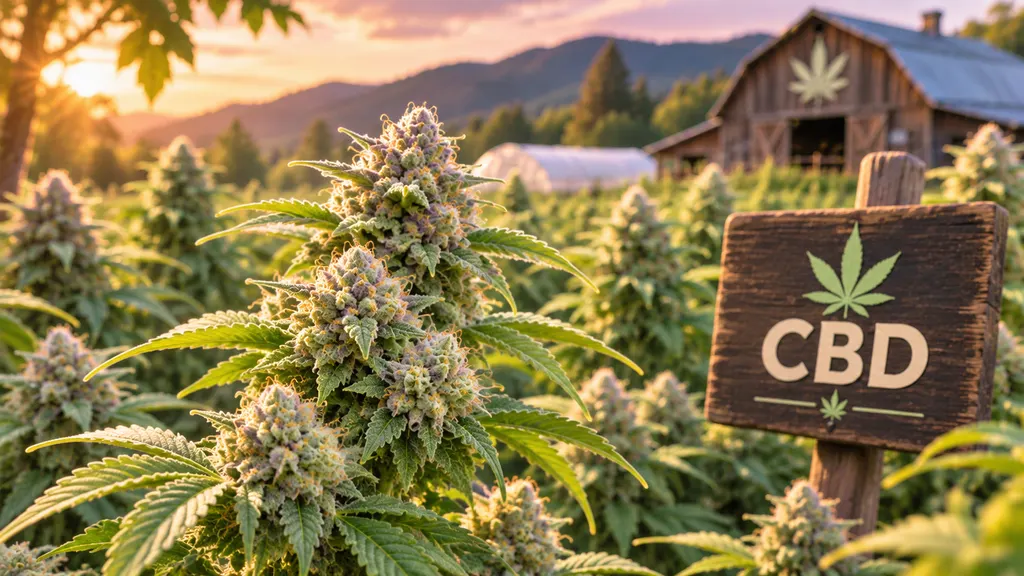
A sunny cannabis farm with a wooden CBD sign and a barn behind the plants4 min read · Updated Nov 1, 2026High-CBD strains: CBD-rich cannabis explainedHigh-CBD strains are cannabis varieties that test high in CBD (cannabidiol) and often low in THC. In Canada, CBD products are regulated as cannabis under the Cannabis Act, and labels show Total CBD and Total THC so you can read the ratio.Read it
A young woman relaxing on a cozy couch with a dab rig in her lap5 min read · Updated Nov 1, 2026What is a dab? Dabbing, rigs and concentrates explainedA dab is a small amount of cannabis concentrate that is heated on a hot surface and inhaled as vapour. Concentrates are far more potent than flower, so the main safety points are burns, heat, and starting with a very small amount.Read it
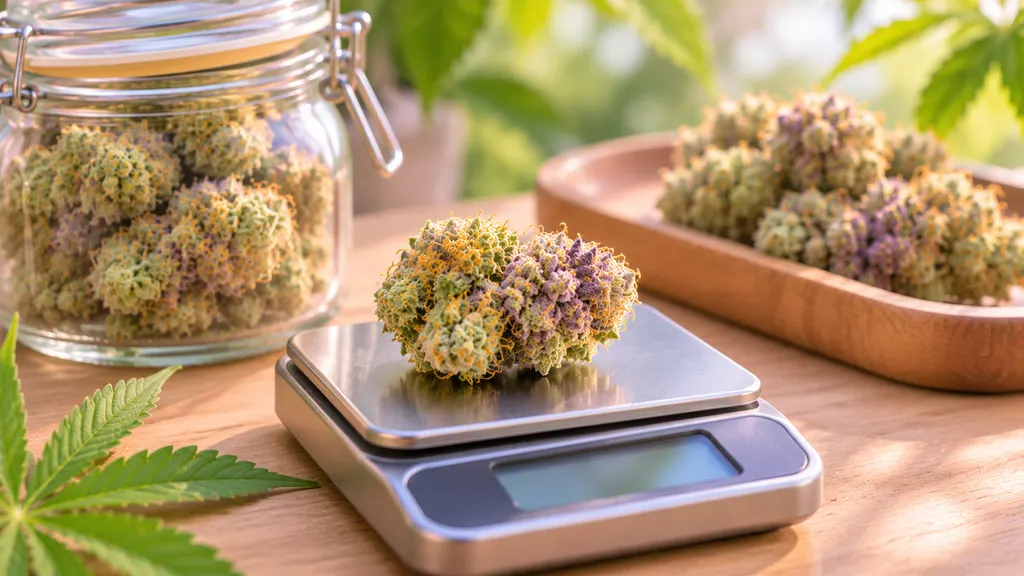
A cannabis bud on a small digital scale beside a jar of flower4 min read · Updated Oct 31, 2026How much is a gram of weed in Canada?There is no single price. Statistics Canada's last published quarterly figures, from 2019, put legal dried cannabis at about $10.65 a gram and illegal at about $5.93. More recent data shows recreational cannabis prices fell 1.1% between March 2024 and March 2025, but no current per-gram average is published.Read it
Light green cannabis buds piled on a wooden board beside a glass jar5 min read · Updated Oct 31, 2026Haze strains: the classic sativa familyHaze strains are a family of cannabis varieties descended from the original Haze, a long-flowering sativa blend reported to come from California in the 1960s and 70s. Super Silver Haze, Amnesia, Lemon Haze and Purple Haze are among the best-known descendants.Read it
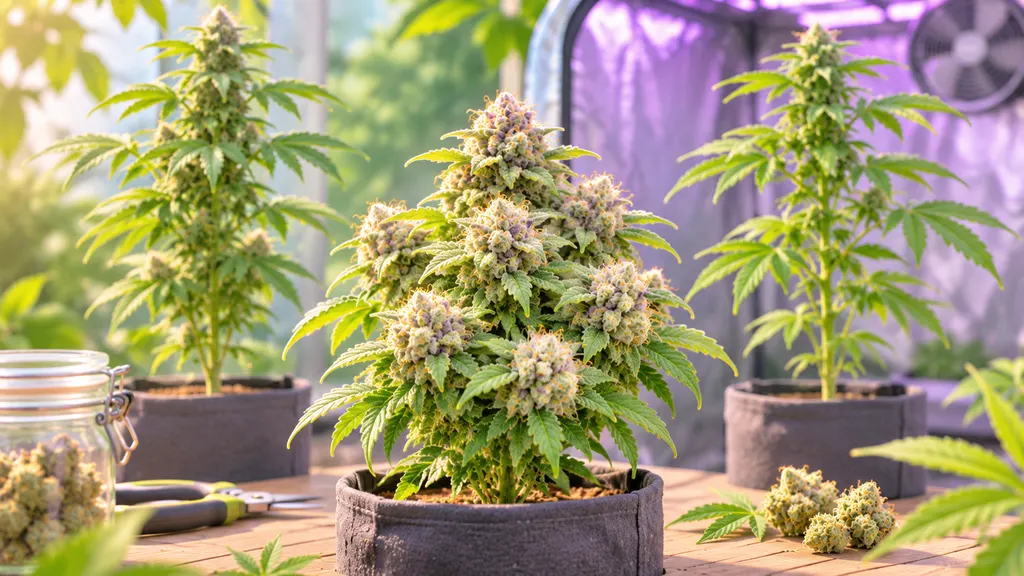
Small autoflowering cannabis plants in fabric pots6 min read · Updated Oct 30, 2026Autoflower strains: what they are and how they differAutoflowering cannabis switches from growing to flowering based on the plant's age, not on a change in daylight, because it carries genetics from Cannabis ruderalis. It stays smaller and finishes faster than a photoperiod plant, which usually means a smaller harvest.Read it
A traveller wheeling a suitcase overflowing with cannabis through a bright airport terminal5 min read · Updated Oct 30, 2026Can you fly with weed in Canada? Domestic flights and the borderYes on domestic flights, no across any border. CATSA allows cannabis in carry-on and checked bags on flights within Canada, and the 30 g public possession limit still applies. Taking cannabis out of Canada, even to a U.S. state where it is legal, is illegal.Read it
A male cannabis plant with pollen sacs beside a flowering female plant5 min read · Updated Oct 29, 2026Male vs female weed plants: how to tell them apartFemale cannabis plants grow pistils and form the resinous buds people smoke, while males grow small pollen sacs and produce no usable flower. You can tell them apart when the plant shows its pre-flowers, usually a few weeks into growth, and growers remove males to get seedless buds.Read it
Cannabis seeds falling from plants into a wooden bowl4 min read · Updated Oct 29, 2026Weed seeds in Canada: is it legal to buy them?Yes. Adults can legally buy cannabis seeds in Canada from federally licensed sellers and provincially authorized retailers. Seeds count toward your possession limit: one seed equals 1 g of dried cannabis under Schedule 3 of the Cannabis Act, so 30 seeds is the public maximum.Read it
Plump, frosty purple-tinged cannabis buds on a white plate beside a jar5 min read · Updated Oct 28, 2026What is exotic weed? What the word means (and doesn't)"Exotic" is slang and marketing, not a legal or lab category. It usually points to rare, new or very good-looking flower, but in Canada the word has no official definition, so the label, the packaged date and your own eyes and nose tell you more than the word does.Read it
A hand with painted nails putting a cannabis bud into an open metal grinder5 min read · Updated Oct 28, 2026How to use a weed grinder (and clean it)A grinder breaks dried flower into small, even pieces by twisting two toothed halves against each other. Load the buds, close the lid, twist back and forth, then open it to collect the ground flower, and wipe or soak it clean every so often so resin doesn't gum up the teeth.Read it
Kush cannabis buds outdoors with mountains behind, under the title What is Kush?5 min read · Updated Oct 27, 2026What is kush? Why it's called kush, and the Kush strainsKush is named after the Hindu Kush, the mountain range along the Afghanistan and Pakistan border where the landrace indica plants behind the name come from. Today the word is also casual slang for good weed in general, and the Kush family covers every strain on WeedDB that carries the name.Read it
Homemade cannabutter blocks on a cutting board beside a pot, a jar of infused butter and a bowl of cannabis6 min read · Updated Oct 26, 2026How to make cannabutter at homeCannabutter is butter gently simmered with decarbed cannabis, then strained and chilled. The steps are simple, but the strength of a homemade batch is uneven and can't be known without lab testing, so any dose is a guess and the advice is to start very low.Read it
Frosty cannabis buds surrounded by colourful candies and gummies4 min read · Updated Oct 25, 2026Runtz strains: origin, lineage, and every Runtz variantRuntz is a candy-sweet hybrid reported to be a cross of Zkittlez and Gelato. It became one of the most copied strain names of the late 2010s, so the Runtz family now includes dozens of crosses and flavour-named variants.Read it
A young woman eating a gummy beside a bowl of colourful gummies and baked treats6 min read · Updated Oct 23, 2026How long do edibles take to kick in?Health Canada says edibles can take 30 minutes to 2 hours to start working, with the strongest effects 2 to 4 hours in and effects lasting 4 to 8 hours. The wait is why the standard advice is to start low, go slow and not take more too early.Read it
A hand placing cannabis buds into a waffle ice cream cone4 min read · Updated Oct 22, 2026Gelato strains: Gelato 33, 41, 45 and the whole familyGelato is a hybrid reported to be a cross of Sunset Sherbet and Thin Mint Girl Scout Cookies, bred in the San Francisco Bay Area. The numbers in names like Gelato 33, 41 and 45 refer to different phenotypes, or selections, from the same cross.Read it
Amber slabs of cannabis shatter on parchment beside jars of other concentrates5 min read · Updated Oct 20, 2026What is shatter? How it's made and how it differs from wax and live resinShatter is a glassy, translucent cannabis concentrate made by dissolving resin out of the plant with butane and then removing the solvent. It is sold in Canada as a cannabis extract, with a cap of 1,000 mg of THC per container.Read it
Purple cannabis buds on a wooden board with mountains in the background6 min read · Updated Oct 18, 2026Purple weed: why some cannabis turns purplePurple cannabis gets its colour from anthocyanins, the same family of pigments that colour blueberries and red cabbage. Genetics decide whether a plant can make them, cool nights and late flowering let them show, and the colour says nothing reliable about strength.Read it
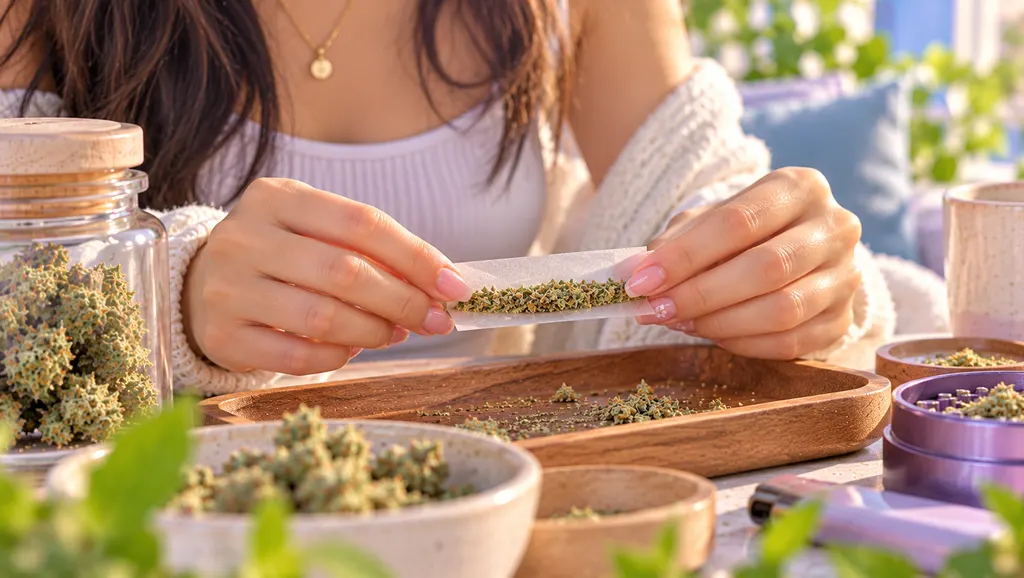
Hands with painted nails rolling a joint on a wooden tray6 min read · Updated Oct 16, 2026How to roll a joint: a step-by-step guideTo roll a joint, grind the flower, make a small filter, lay the filter and the ground cannabis in a rolling paper, shape it into a tube, tuck the paper, lick the gummed edge and seal it. Once you have the motion, it takes under a minute.Read it
Cans of cannabis drinks and a glass of sparkling drink with fruit and ice5 min read · Updated Oct 14, 2026THC drinks in Canada: how cannabis beverages workCannabis beverages have been legal in Canada since October 2019, and each container can hold no more than 10 mg of THC. They are classed as edibles, so they act slowly: Health Canada says effects can start 30 minutes to 2 hours after drinking.Read it
Blocks of pressed hash half buried in sand dunes at sunset5 min read · Updated Oct 12, 2026What is hash? How it's made and how it differs from kief and rosinHash, short for hashish, is a cannabis concentrate made by collecting the resin glands (trichomes) from the plant and pressing or gathering them into a solid. It is made without chemical solvents, and in Canada it is sold as a cannabis extract under the Cannabis Regulations.Read it
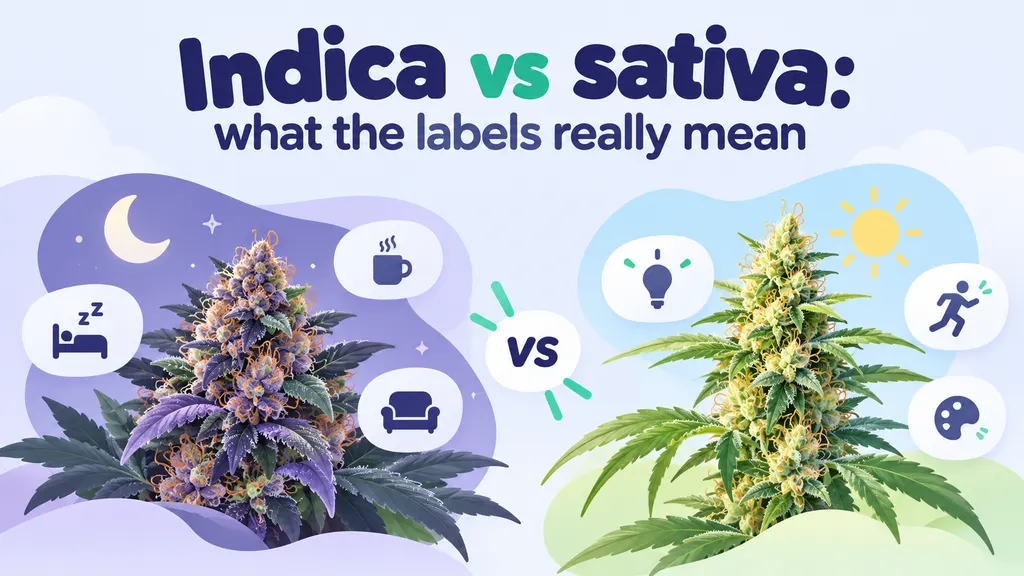
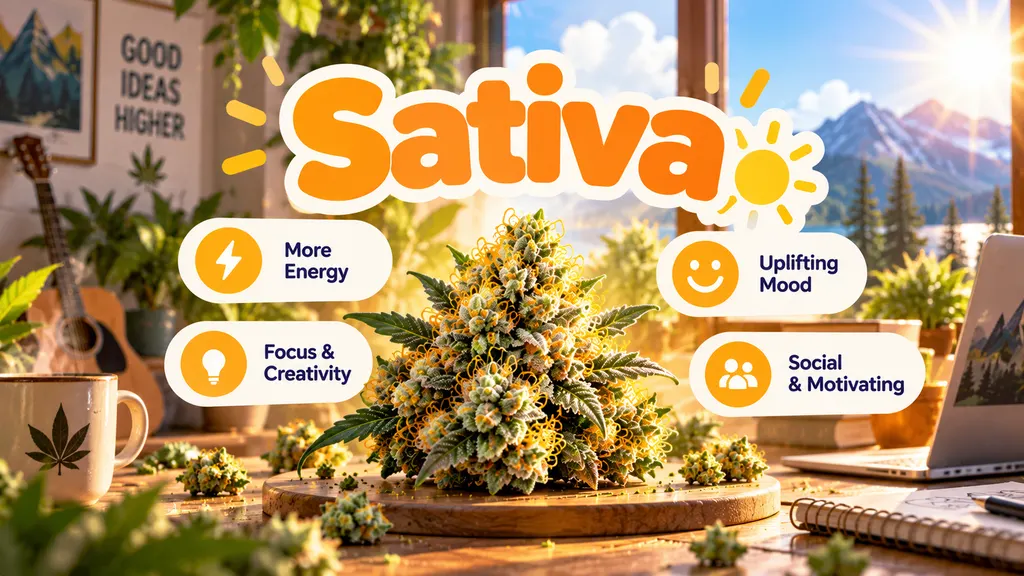
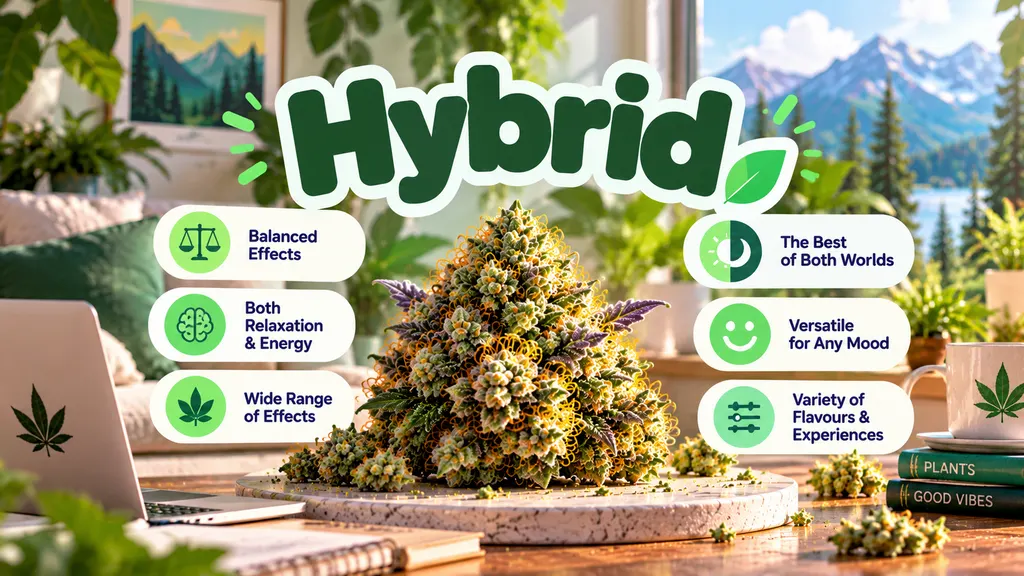
Illustration of an indica plant at night beside a sativa plant in daylight, titled Indica vs sativa: what the labels really mean6 min read · Updated Oct 9, 2026Indica vs sativa: what the labels really meanIndica, sativa and hybrid are old plant names that shops now use as shorthand for how a strain might feel: indica for calm and heavy, sativa for bright and lively, hybrid for somewhere between. Genetic and chemical studies show the labels only loosely match what's actually in the jar, so the THC and CBD numbers, the terpenes and your own dose tell you much more.Read it
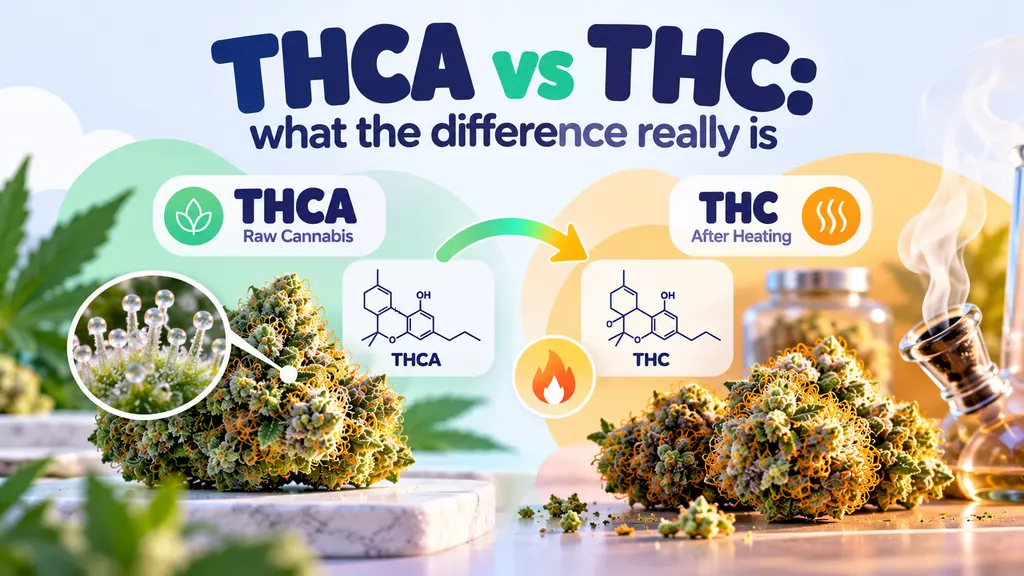
Illustration of raw cannabis (THCA) turning into THC after heating, with both molecules shown5 min read · Updated Oct 9, 2026THCA vs THC: what the difference really isTHCA is the raw, acidic form of THC that cannabis plants actually make, and on its own it isn't considered intoxicating. Heat strips off part of the molecule and turns THCA into THC, which is why Canadian labels show "Total THC": the THC you'd have if all the THCA converted.Read it
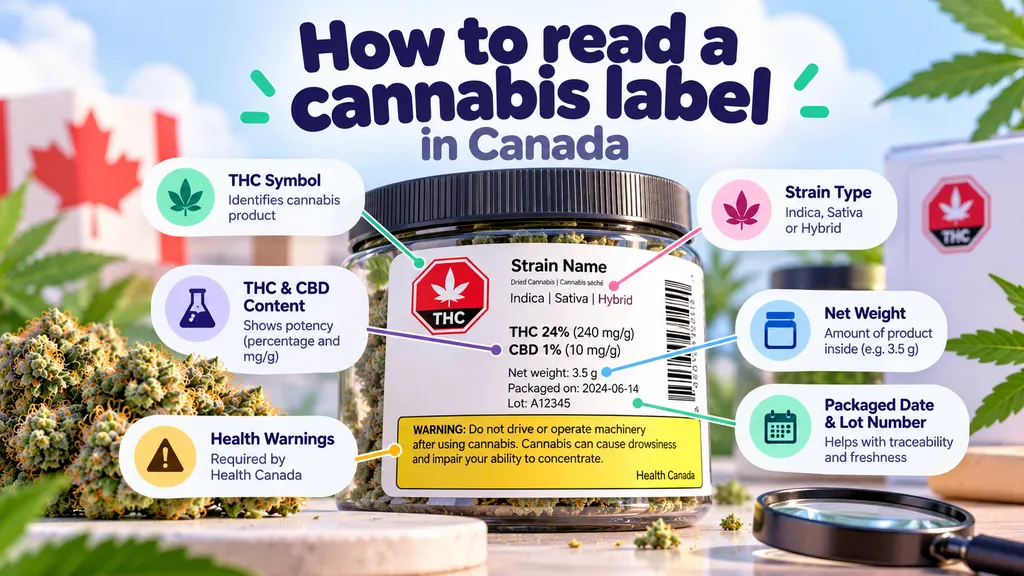
A Canadian cannabis jar with its label parts called out: the THC symbol, THC and CBD content, net weight, packaged date, lot number and the Health Canada warning6 min read · Updated Oct 9, 2026How to read a cannabis label in CanadaEvery legal cannabis product in Canada has to show its Total THC and Total CBD, the red THC symbol, a yellow health warning, a lot number, a packaging date and an excise stamp for your province. Total THC is the number to compare, and it's shown in mg/g for flower and in mg per piece and per package for edibles.Read it
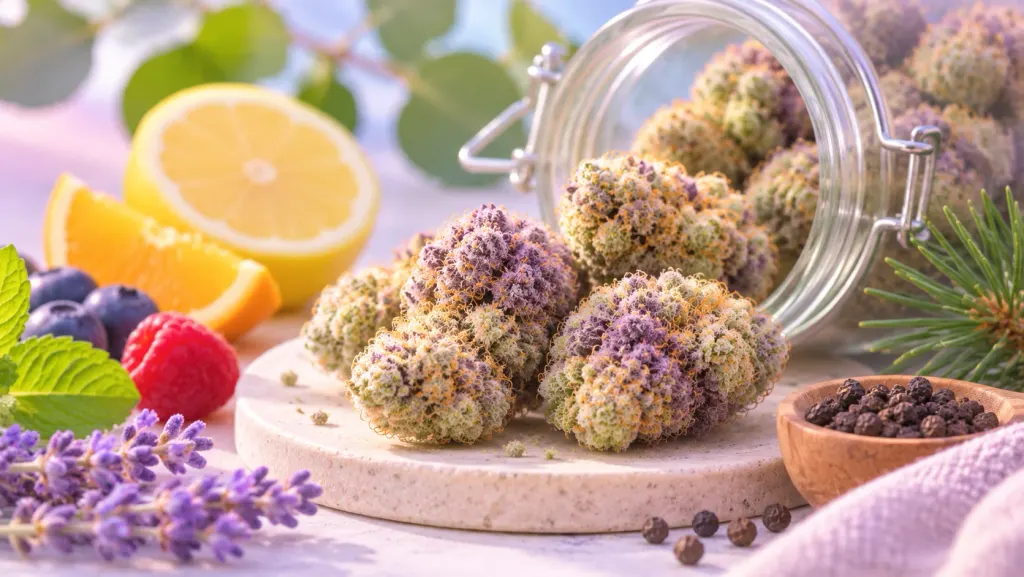
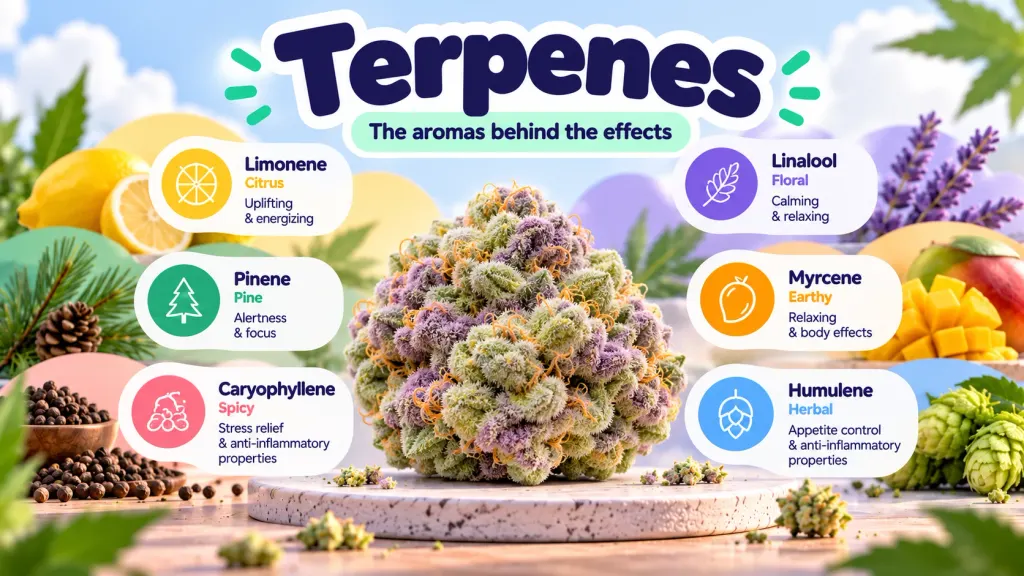
Frosty purple-tinged cannabis buds spilling from a jar beside lemon, orange, berries, mint, lavender, pine and peppercorns4 min read · Updated Oct 8, 2026What does weed smell like? Aromas and terpenesWeed smells earthy, sweet, citrusy or piney, and often a bit skunky. Across 1,756 strain guides on WeedDB, sweet and earthy are the most common aromas, and the lead terpenes are usually caryophyllene, myrcene and limonene.Read it
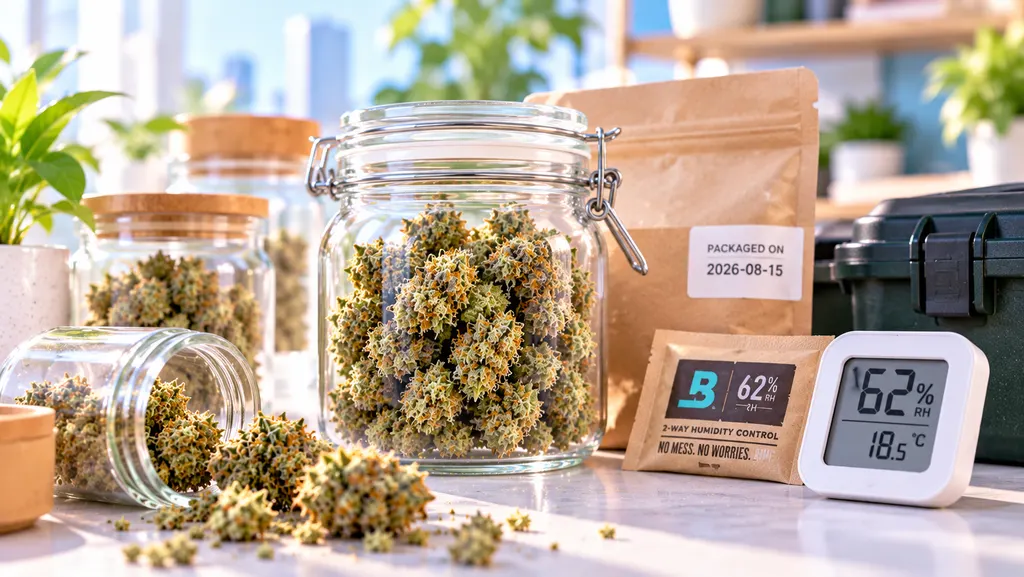
Cannabis stored in sealed glass jars beside a packaged-on date label, a humidity pack and a hygrometer5 min read · Updated Oct 7, 2026Does weed expire? Shelf life, storage and the packaged dateWeed doesn't spoil on a fixed date, but it does change. Over time THC slowly breaks down into CBN, and flower that's stored damp can grow mould. Canadian dried cannabis labels show a packaged date rather than an expiry date, while edibles may carry a best-before date.Read it
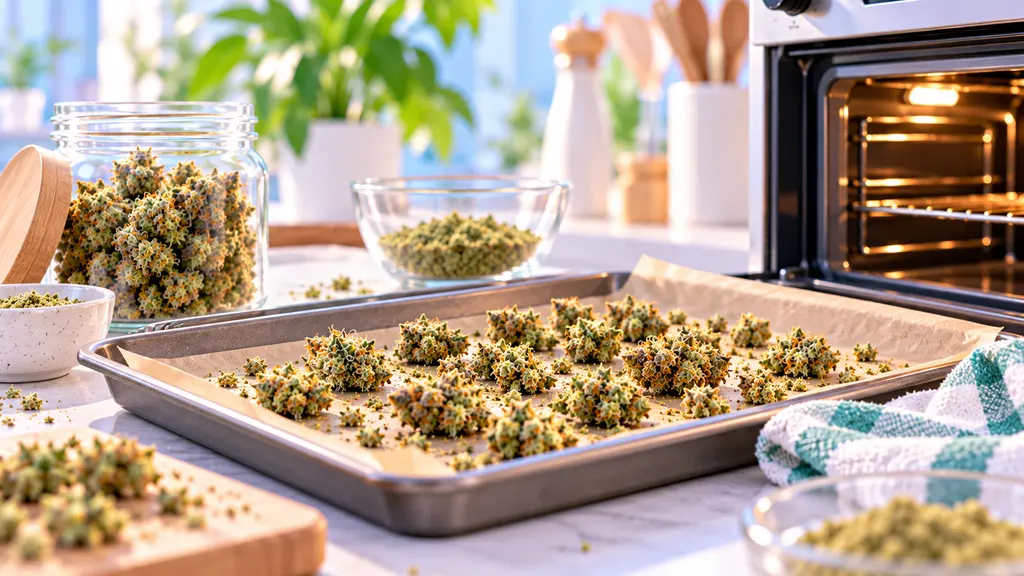
Cannabis buds spread on a parchment-lined baking tray beside an open oven5 min read · Updated Oct 6, 2026How to decarb weed (and why THCA needs heat)Decarbing (decarboxylation) is gently heating cannabis so the THCA it contains turns into THC. Lab studies show the change starts around 90 °C and speeds up sharply as temperature rises, but too much heat or time then starts to destroy THC, so it's a balance. Raw weed isn't intoxicating because it's mostly THCA.Read it
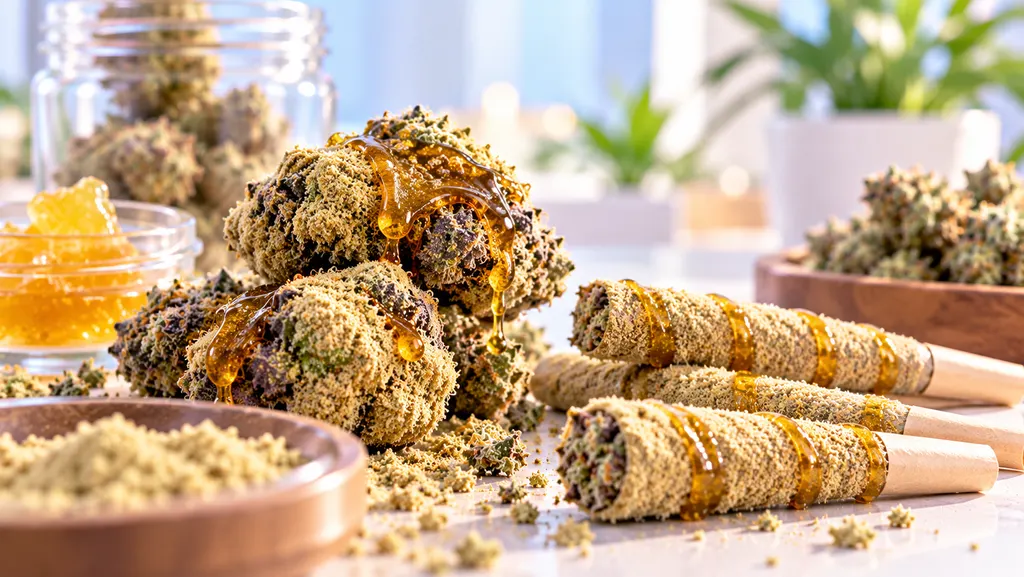
Kief-coated moon rocks dripping with oil beside kief-rolled infused pre-rolls6 min read · Updated Oct 5, 2026Moon rocks and infused pre-rolls: what they areMoon rocks are cannabis buds coated in cannabis oil or distillate and rolled in kief. Infused pre-rolls are joints with concentrate or kief added to the flower. In Canada, Health Canada treats a pre-roll fortified with kief as a cannabis extract product, and those products need Total THC on the label.Read it
A person resting on a couch with a hand on their forehead, next to a water bottle and a bowl of fruit6 min read · Updated Oct 3, 2026What is greening out? Signs and what to doGreening out is a slang term for taking more cannabis than your body handles comfortably, usually with a wave of unpleasant physical and mental effects. It is generally temporary. The usual advice is to stop consuming, get somewhere calm, and call for help if symptoms are severe.Read it
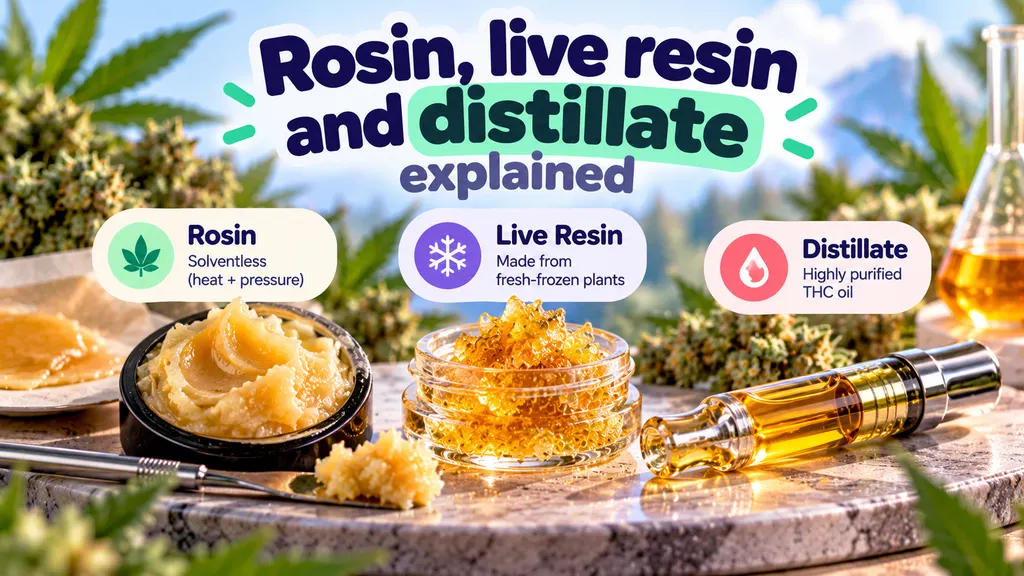
Jars of rosin and live resin beside a distillate cartridge, labelled solventless, made from fresh-frozen plants and highly purified THC oil7 min read · Updated Oct 2, 2026Rosin, live resin and distillate explainedConcentrates are cannabis products with the plant material mostly removed, and the names mostly describe how they were made. Rosin is pressed with heat and no solvent, live resin starts from fresh-frozen plants and uses a solvent, and distillate is a refined oil. In Canada they are sold as extracts or concentrates, with a 1,000 mg THC cap per container.Read it
Three cannabis plants of different colours and shapes side by side with a magnifying glass5 min read · Updated Oct 1, 2026What does pheno mean? Phenotypes, cuts and why one strain name can mean different plants"Pheno" is short for phenotype: the physical and chemical traits a plant actually shows, such as its smell, structure and cannabinoid levels. Two seeds from the same cross can grow into different phenotypes, which is why one strain name can cover several different plants.Read it
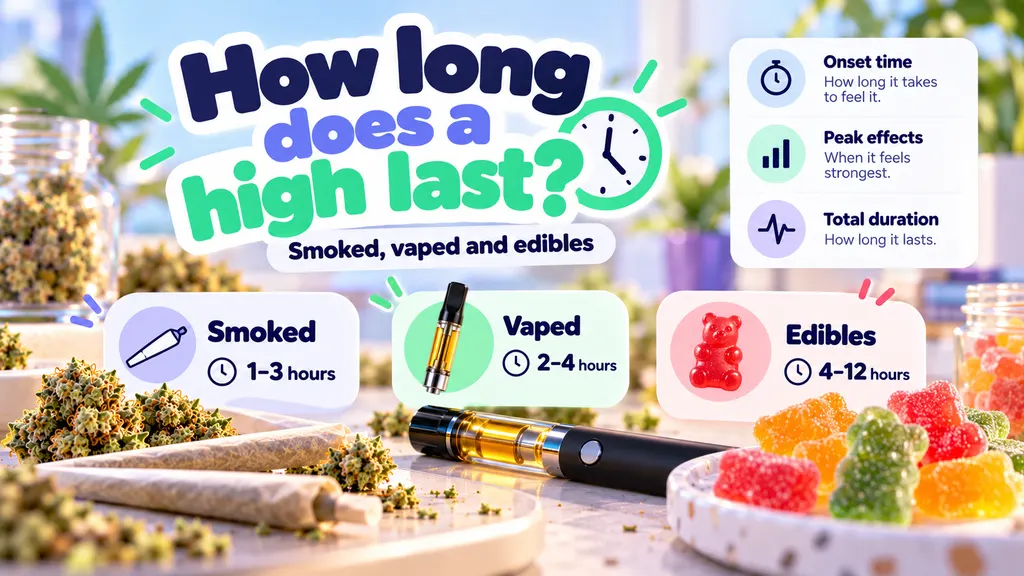
A joint, a vape cartridge and gummies, titled How long does a high last? Smoked, vaped and edibles5 min read · Updated Sep 30, 2026How long does a high last? Smoked, vaped and ediblesHealth Canada says that after smoking or vaping you could feel effects for 2 to 4 hours, and after eating or drinking cannabis for 4 to 8 hours. Edibles also start later: within 30 minutes to 2 hours, compared with seconds or minutes when inhaled.Read it
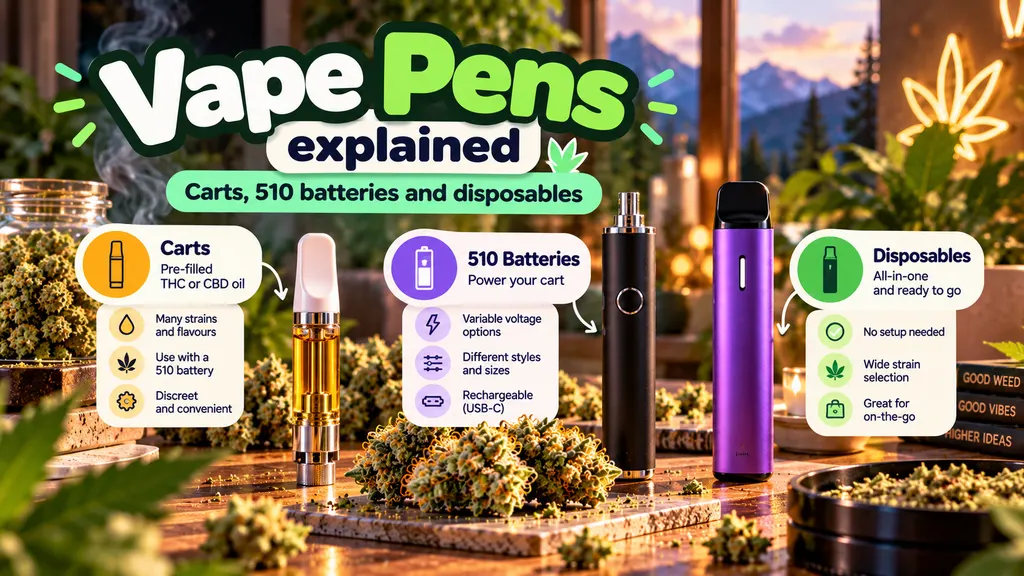
A cannabis vape cartridge, a 510 battery and an all-in-one disposable vape side by side with labels8 min read · Updated Sep 29, 2026Vape pens explained: carts, 510 batteries and disposablesA cannabis vape pen is a battery that warms a cartridge of cannabis extract so you inhale vapour instead of smoke. The main types are 510 cartridges on a separate battery, all-in-one disposables, pod systems and dry-herb vaporizers, and the main thing that decides what fits what is the thread or pod design.Read it
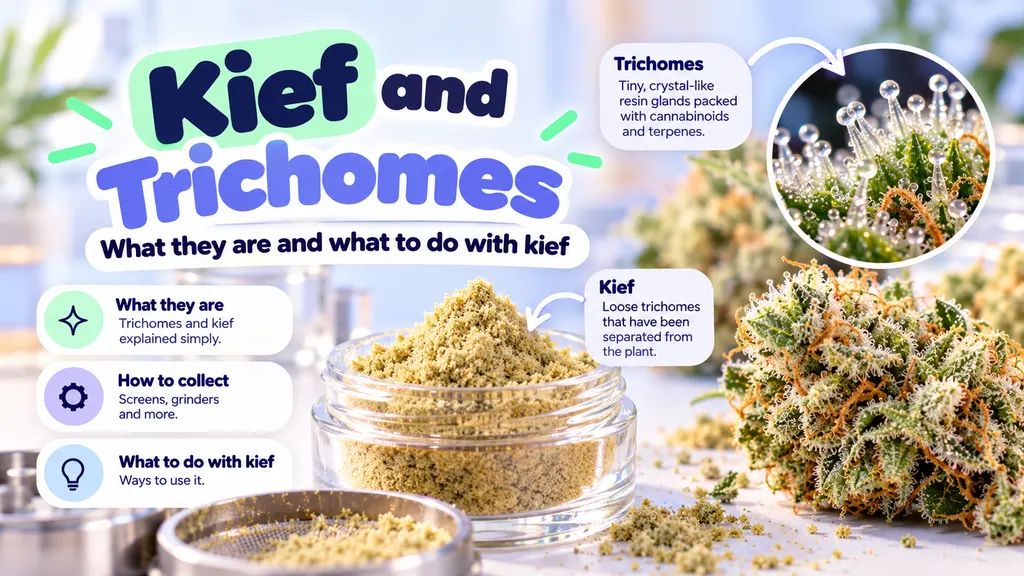
A jar of kief beside a cannabis bud, with a close-up of trichomes, titled Kief and trichomes5 min read · Updated Sep 28, 2026Kief and trichomes: what they are and what to do with kiefTrichomes are the tiny resin glands on cannabis flower that hold most of its cannabinoids and terpenes, and kief is the powder of trichomes that falls off the flower, often collecting at the bottom of a grinder. Pressed together, kief becomes hash. Both are concentrated, so Health Canada advises new or occasional users to avoid them.Read it
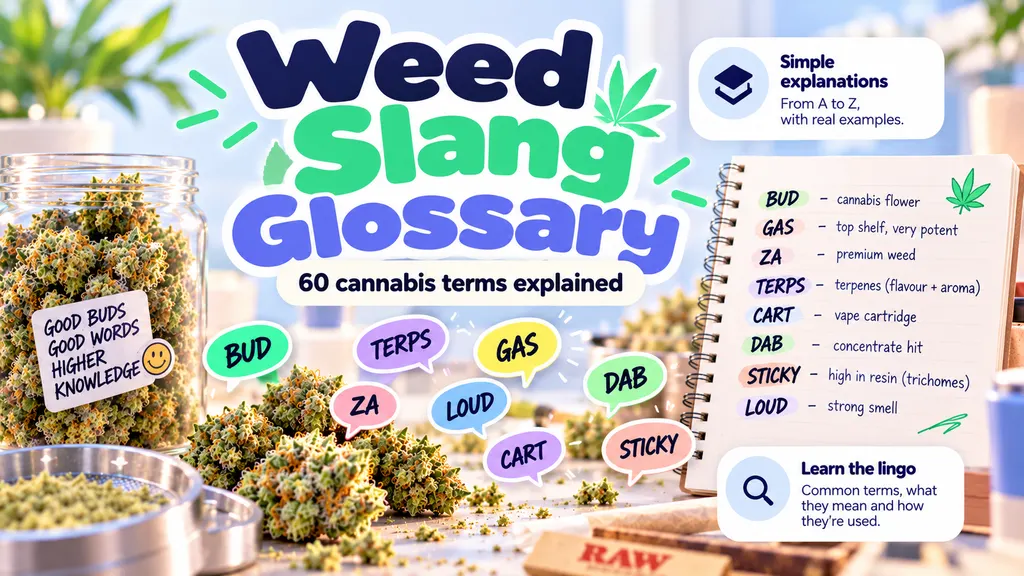
A notebook of cannabis slang terms like bud, gas, za and loud beside a jar of buds, titled Weed slang glossary6 min read · Updated Sep 26, 2026Weed slang glossary: 60 cannabis terms explainedCannabis slang changes by region and decade, but most terms fall into five groups: amounts (zip, QP, dub), quality (zaza, exotic, gas, loud), consumption (toke, hotbox), the plant (pheno, nug) and products (kief, shatter). This glossary explains 60 of them in plain language, with metric conversions where a term is a weight.Read it
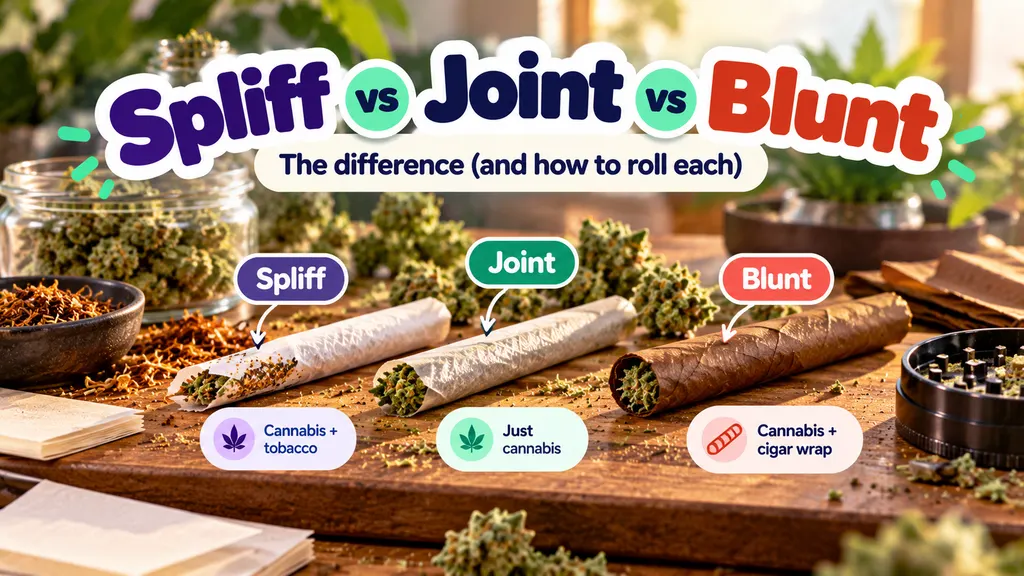
A spliff, a joint and a blunt side by side, labelled cannabis and tobacco, just cannabis, and cannabis in a cigar wrap7 min read · Updated Sep 25, 2026Spliff vs joint vs blunt: the difference (and how to roll each)A joint is cannabis rolled in thin paper, a spliff is a joint that also has tobacco mixed in, and a blunt is cannabis rolled in cigar paper or tobacco leaf. The wrapper and the tobacco are what separate them, and both change what you are actually smoking.Read it
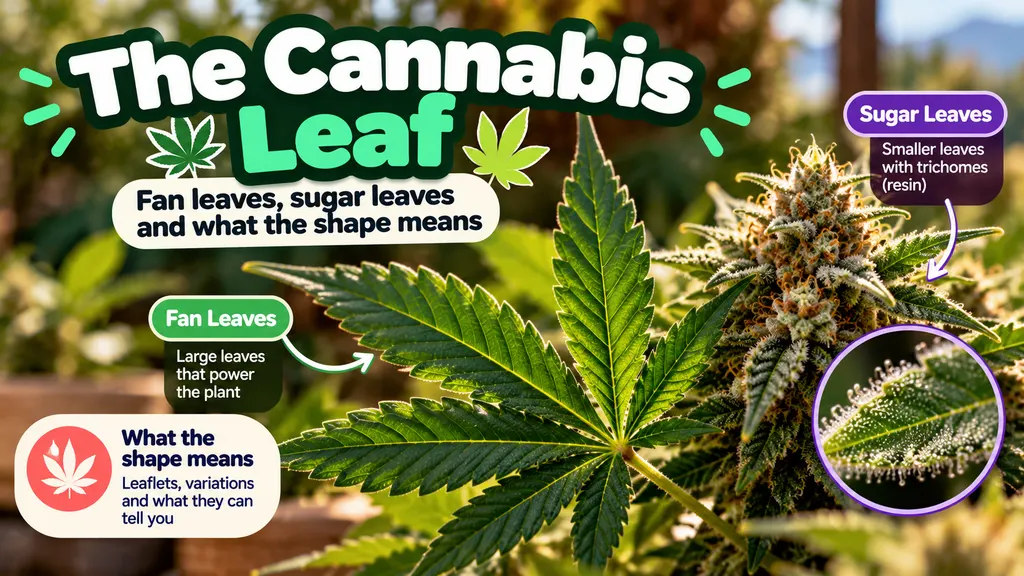
A cannabis fan leaf beside a bud with sugar leaves called out, titled The cannabis leaf5 min read · Updated Sep 24, 2026The cannabis leaf: fan leaves, sugar leaves and what the shape meansA cannabis leaf is palmately compound: several narrow, serrated leaflets fan out from one point, usually five to seven but anywhere from three to nine or more. Big fan leaves do the photosynthesis, small sugar leaves sit inside the bud, and leaf shape alone does not reliably tell you whether a strain is an indica or a sativa.Read it
A cannabis jar, a rolled joint and a mug at sunset over a city skyline, titled What does 4/20 mean? The real origin story5 min read · Updated Sep 22, 2026What does 4/20 mean? The real origin story4/20 (or 420) is cannabis culture's shorthand for 4:20 p.m. and for April 20. The best-documented origin is a group of San Rafael, California high school students called the Waldos, who used it as a meeting time in 1971. The police-code and chemical-count stories are myths.Read it
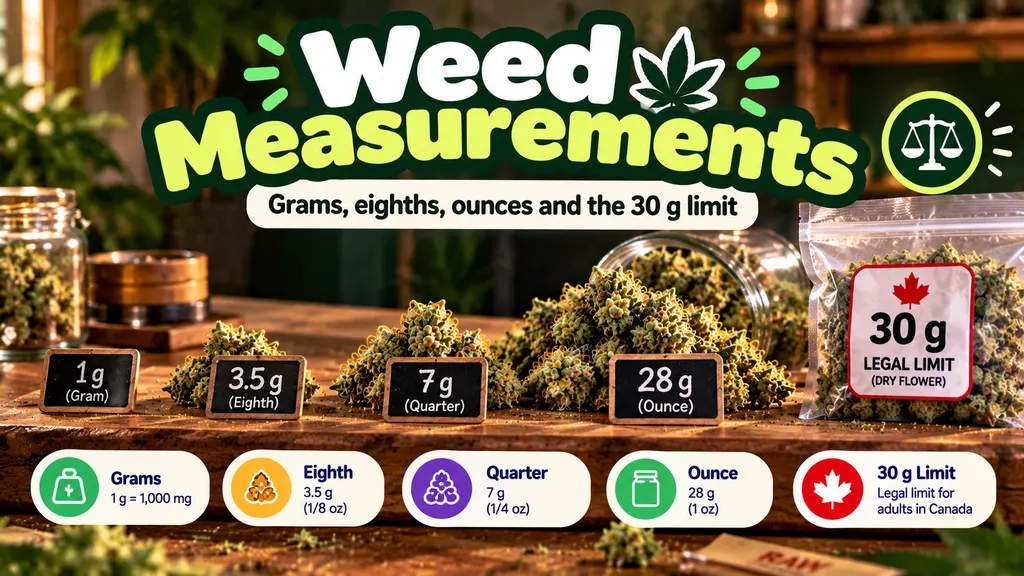
Cannabis portions labelled 1 g, 3.5 g, 7 g and 28 g beside a bag marked 30 g legal limit5 min read · Updated Sep 21, 2026Weed measurements: grams, eighths, ounces and the 30 g limitAn ounce of weed is 28 grams in everyday use (the exact figure is 28.35 g). An eighth is 3.5 g, a quarter is 7 g and a half is 14 g. In Canada, an adult can carry up to 30 g of dried cannabis in public, and other forms count against that limit by an equivalency schedule in the Cannabis Act.Read it

Indica, sativa or hybrid?

What each label means, and the strains people search for most in each group.
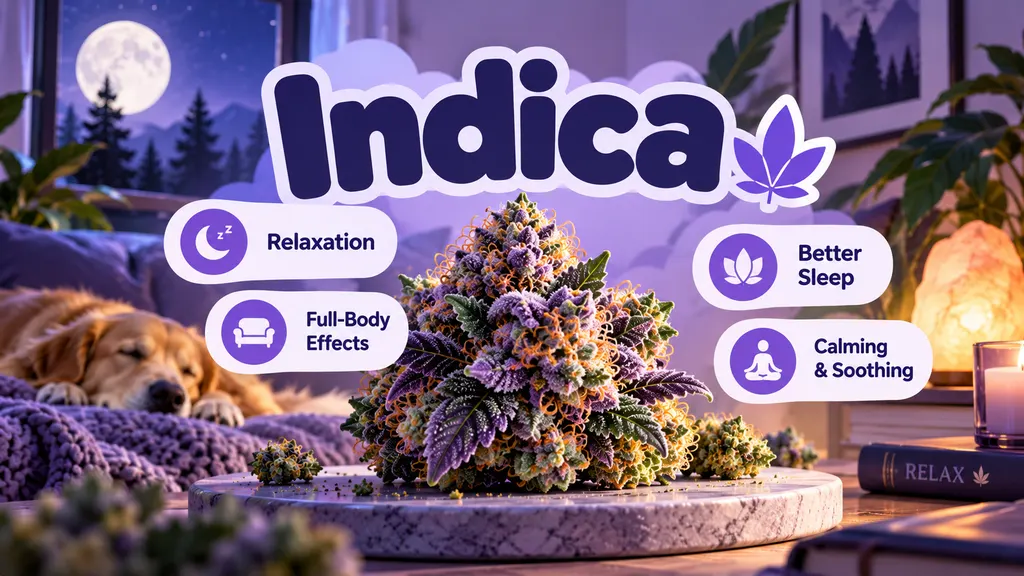
Illustration of a cannabis bud surrounded by the foods and plants behind six common terpenes: lemon, pine, pepper, lavender, mango and hopsSmell and flavourCannabis terpenesThe aroma compounds behind lemon, pine, pepper and more: what each one smells like and which strains it shows up in.Explore terpenes