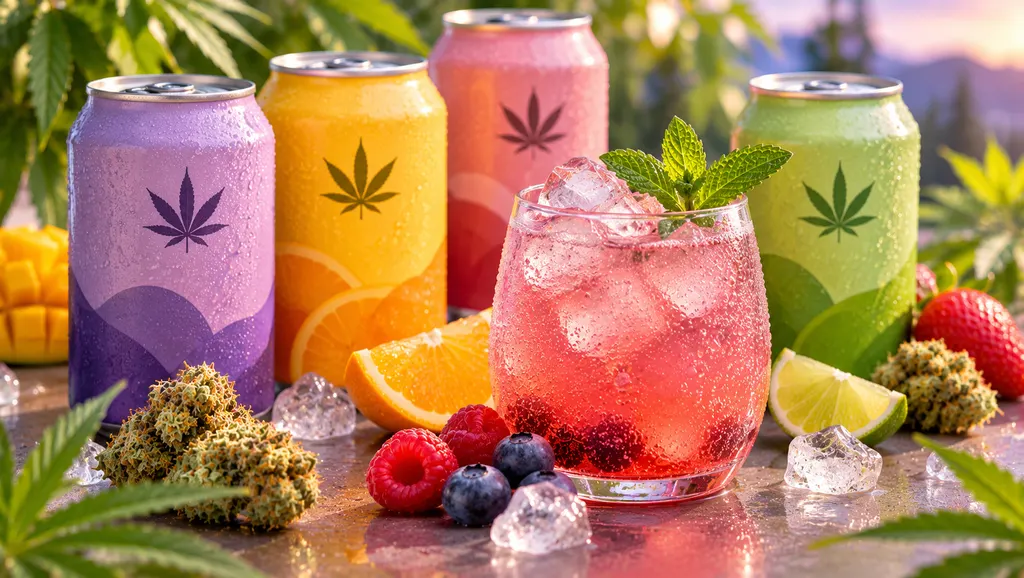
Cannabis drinks are a legal edible category in Canada, capped at 10 mg of THC per container, and they work like any other ingested cannabis: slowly, and for longer than smoking. Here is what the law allows, how much counts toward your public possession limit, how long they take, how the THC gets into a drink, and what Health Canada says about alcohol and driving.
Are THC drinks legal in Canada?
Yes. Edible cannabis, which includes beverages, became legal to sell in Canada in October 2019 under the Cannabis Regulations, a year after legalization of dried flower. Adults can buy them from provincially authorized retailers, the same way as other legal cannabis.
Cannabis drinks fall under the Cannabis Act and its regulations, not under alcohol rules. They are sold as cannabis, labelled as cannabis and subject to the same age limits as other products. Tea bags and powders added to a drink fall into the same group.
Making your own is also allowed. Adults can prepare food and drinks containing cannabis at home, provided dangerous organic solvents are not used. Homemade drinks have no label, so their strength is uncertain. See our guide to making cannabutter for how home infusion works.
How much THC can a cannabis drink contain?
No more than 10 mg of THC per container. Under the Cannabis Regulations, that cap applies to the whole beverage, not to each serving, and Ontario Cannabis Store education pages describe the same limit for a unit of beverage mix such as a tea bag or powder packet.
Health Canada suggests that people new to cannabis start with a product containing 2.5 mg of THC or less, and advises the most caution with products containing 10 mg or more. A full 10 mg drink is the top of what the law allows, not a recommended starting amount.
The 10 mg cap is the same one that applies to other edibles, so a drink and a gummy pack share the same ceiling. For how that cap works across edible formats, see how long do edibles take.
How much counts toward the 30 g public limit?
In a public place, an adult can have up to 30 g of dried cannabis or the equivalent in other forms. Cannabis beverages have their own row in Schedule 3 of the Cannabis Act: 570 g of beverage counts as 1 g of dried cannabis, so 17,100 g (about 17 kg) equals the 30 g limit. Other liquids, such as tinctures, use the 70 g row instead.
That makes the possession limit very hard to reach with drinks alone: 17,100 g is far more than anyone carries around. In practice, the weight counted is the weight of the product, not the cannabis in it, so the table works for any mix of items you are carrying. The full set is in the table above.
To total up a mix, convert each item and add. If you carry a drink and some flower, count the drink by its weight against the 570 g per gram of dried figure, and the flower by weight. For more on units and limits, see weed measurements.
| Form | Equals 1 g dried | Equals 30 g dried |
|---|---|---|
| Dried cannabis | 1 g | 30 g |
| Fresh cannabis | 5 g | 150 g |
| Solids containing cannabis (most edibles) | 15 g | 450 g |
| Non-solids containing cannabis, other than beverages | 70 g | 2,100 g |
| Cannabis concentrates | 0.25 g | 7.5 g |
| Cannabis beverages | 570 g | 17,100 g |
| Cannabis plant seeds | 1 seed | 30 seeds |
How long do cannabis drinks take to work?
Health Canada says effects from eating or drinking cannabis can begin within 30 minutes to 2 hours, with the strongest effects 2 to 4 hours in, and effects lasting 4 to 8 hours. Some impairment can remain for up to 24 hours. A drink is ingested cannabis, so it follows that timeline, not the faster one for smoking or vaping.
The Ontario Cannabis Store describes the same pattern for drinks: effects commonly start around 30 minutes and may take two hours or more, with full effects around four hours. How fast and how strongly it hits depends on your body, how much you have eaten and your tolerance.
The main risk with the delay is taking a second drink because the first seems to be doing nothing. Health Canada advises waiting before consuming more. For the full timeline across edibles, see how long do edibles take, and for every method side by side, how long does a high last.
How does THC get into a drink?
THC is an oil, and oil does not mix with water on its own. Producers solve this with an emulsifier, an ingredient that lets oil spread evenly through a water-based liquid. The Ontario Cannabis Store describes licensed producers blending cannabis extract with an emulsifier to make it water-soluble, then adding it to ready-made drinks or turning it into drops or powders you add yourself.
The goal is an even distribution, so each sip contains a similar amount. Producers also test finished products, and the label amount is what the regulations hold them to. We found no Health Canada guidance setting one required method of emulsion, so we will not name one as standard.
Differences in how products are made are one reason two drinks with the same THC number can feel different. We found no source giving a set difference in timing between formulations, so use the label and start low.
How do you read a cannabis drink label?
A drink label shows the THC and CBD content per container, the standardized cannabis symbol, the producer and a lot number, along with Health Canada's warning messages. For beverages, the THC figure is the whole container, so a bottle with several servings still holds at most 10 mg in total.
Check the amount per container first, then any stated serving size, and compare. If a label shows 10 mg per container and you plan to drink half, you are taking about 5 mg, which is already above the 2.5 mg starting amount Health Canada suggests for new consumers.
For what each part of a Canadian label means, see reading cannabis labels. Look also at the best before date and the packaging, which must be child-resistant.
Can you mix THC drinks with alcohol or drive after?
Health Canada advises against using cannabis and alcohol at the same time, because the combination can increase impairment and slow reaction time beyond what either does alone. The Ontario Cannabis Store gives the same advice and notes mixing can bring dizziness and nausea.
Driving while impaired by cannabis is illegal in Canada. Health Canada notes that effects of ingested cannabis can last well beyond the point where you feel normal, and the Ontario Cannabis Store recommends waiting six or more hours before driving after consuming a drink.
Keep drinks away from children and pets. A drink in a familiar container can be mistaken for an ordinary beverage, and Health Canada warns about accidental poisoning in children from edible products. Store cannabis out of sight and out of reach, in its original packaging.
Sources: laws-lois.justice.gc.ca, laws-lois.justice.gc.ca, ocs.ca, canada.ca, canada.ca