You'll read everywhere that THC suppresses REM sleep, so quitting brings the dreams back. The second half is fairly well supported. The first half is not. Here's what was actually measured, what was only inferred, and where the evidence runs out. This is a plain read of published studies, not advice, and it isn't a guide to getting any particular result from cannabis.
Does weed stop you dreaming?
Many daily users say they remember few or no dreams, and that experience is widely described. But remembering a dream and having one are different things. A missing memory doesn't prove the dream never happened.
Whether THC changes REM sleep itself is less certain than it sounds. Reviewing the studies that used objective sleep measures, researchers found six. REM increased in one, decreased in one, and showed no effect in four. We come back to those below.
Why do you get vivid dreams when you stop smoking weed?
Strange and vivid dreams are one of the best-documented features of stopping after regular use. A systematic review of 36 publications found they were reported by an average of 34.4% of people across 11 studies, with individual studies ranging from 5.1% to 78.0%.
In a lab study, 20 daily users stayed in a hospital unit for three days of abstinence while their sleep was recorded with electrodes. REM sleep arrived sooner after they fell asleep, and it took up a larger share of the night. Both changes were statistically significant, and so was an increase in self-rated strange or wild dreams.
That study had no comparison group of people who don't use cannabis, and it covered only three days. It's a real finding, but a narrow one.
How long do weed dreams last after you quit?
Only one study tracked dreams day by day. In it, strange dreams began around day 2 and peaked around day 9. A different study, using a different scale, put the peak for nightmares at about a day and a half. Those two disagree, and we're not going to average them.
One review also notes that subjective reports of strange dreams have been seen for up to seven weeks in some people. Durations differ a lot between studies, so nobody can promise you a number. If sleep trouble sticks around or gets in the way of your days, talk to a doctor or pharmacist rather than researching it online.
Does THC actually suppress REM sleep?
Less clearly than almost every article on the subject claims. The early studies were small, mostly from the 1970s, and several used doses well above what people normally take. A 2025 meta-analysis found no consistent effect of cannabis administration on sleep staging.
That's weak, mixed evidence. It is not proof that THC has no effect on REM, and we're not saying it has none. It means the confident version of the claim hasn't been established.
Here is what the six objective studies reported, with sample sizes kept visible.
| Study | People | What was given | Nights | REM finding |
|---|---|---|---|---|
| Barratt 1974 | 12 (8 dosed) | THC in joints, twice a day | 10 | No effect on REM or time asleep |
| Hosko 1973 | 7 | Oral THC, two dose levels | 2, plus 5 placebo each | Brief REM increase, then decrease at the high dose only; no net drug effect |
| Karacan 1976 | 64 | Usual use, averaging 9.2 joints a day | 8 | REM time increased |
| Pranikoff 1973 | 20 | Dose unclear | 2 | No effect on REM time or time asleep |
| Tassinari 1999 | 9 | 0.7 to 1.4 mg/kg oral THC, one dose | 1 | REM decreased |
| Nicholson 2004 | 8 | 15 mg THC | 1 | No effect on time asleep, sleep stages or awakenings |
Look at the Tassinari row. It's the one finding REM down, and it came from nine people given a single large oral dose. That is not how most people use cannabis, and we're listing it as what a 1999 experiment gave, not as a guide to anything.
What does "REM rebound" mean?
REM rebound describes REM sleep coming back sooner and taking up more of the night after a period in which it was held down. Two things get measured. REM latency is how long after falling asleep REM begins. REM percentage is the share of the night spent in REM.
During abstinence, the lab study above found shorter REM latency and a higher REM percentage. Results on total REM time are less consistent: one abstinence study found shorter latency but no change in REM time, another found REM time lower throughout, and a study of adolescent users found no REM change at all. The one steady direction is shorter REM latency.
The step from those numbers to dreams that feel more intense is inference. Nobody measured it, and the phrase "REM rebound" is a label more than a proven mechanism.
How common are strange dreams during cannabis withdrawal?
About a third on average, but the spread is huge, about fifteen-fold. The highest rates come from studies of daily, dependent users, and the lowest from general-population surveys. Different questions, different follow-up windows and different people all feed into it. The average always travels with its range: 34.4%, from 5.1% to 78.0%.
| Study | How it was asked | Reported rate |
|---|---|---|
| Budney 2003 | Sleep inventory and withdrawal checklist | 78%, onset day 2, peak day 9 |
| Arendt 2007 | Sleeping difficulty or strange dreams | 72.2% mild, 55.6% moderate, 27.8% severe |
| Budney 1999 | Marijuana withdrawal checklist | 50% mild, 37% moderate, 20% severe |
| Vandrey 2005 | Marijuana withdrawal checklist | 49% overall |
| Allsop 2011 | Cannabis withdrawal scale, daily | 41% nightmares, peaking at about 1.5 days |
| Levin 2010 | Checklist of 8 sleep items | 20.1% strange dreams |
| Agrawal 2008 | Past-year survey, 4 items | 5.1% unpleasant dreams |
| Pooled, 11 studies | Various | 34.4% (range 5.1% to 78.0%) |
Dreams were also the most commonly reported symptom in one review, yet ranked only tenth out of 26 for how distressing people found them. Common doesn't mean severe.
Do edibles and smoking affect dreams differently?
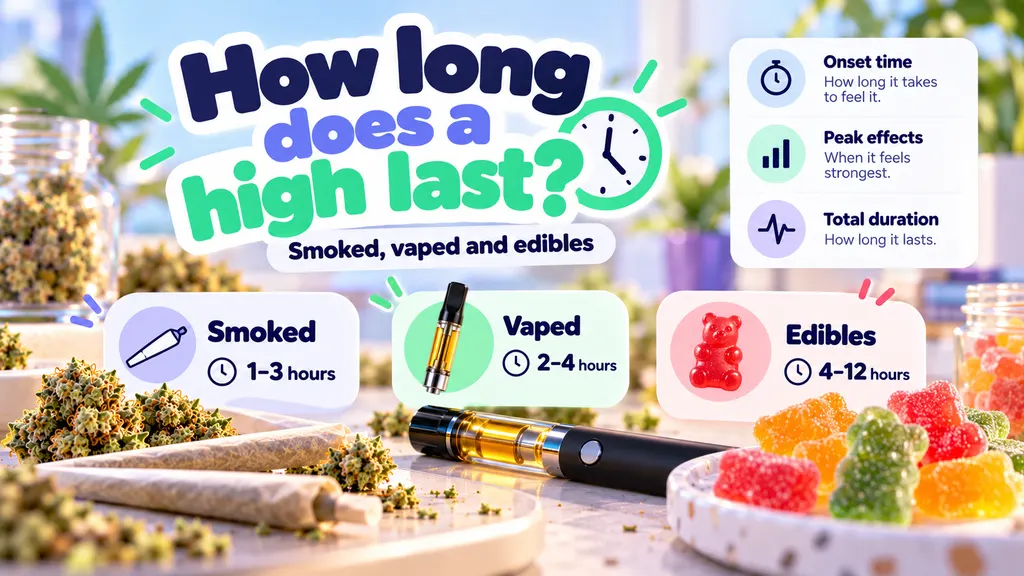
Nobody knows. The sleep-lab studies used smoked cannabis or oral THC capsules in separate experiments, never head to head, so any confident answer is unverified rather than established. If you're curious about how the two routes differ in general, see how long edibles take to kick in and how long a high lasts. Those pages are about timing, not dreams.
The strain names you see online come with plenty of dream claims. None of them are backed by this research, so we don't make any.
How reliable is what you read about weed and dreams?
Less reliable than its confidence suggests. Here's the short list of caveats worth keeping in mind.
- The central claim that THC suppresses REM rests on six small studies, four of which found no effect.
- The classic work used between 2 and 11 healthy young men in the 1970s, at doses most people don't take.
- No study in this literature measured a dream. Dreams show up only as a tick-box item on a symptom checklist. The sleep stages were measured with electrodes, the dreams were not.
- The prevalence figure varies roughly fifteen-fold between studies, and the lab study had no non-user comparison group.
- Three days of abstinence in a hospital unit doesn't represent every person's experience of stopping.
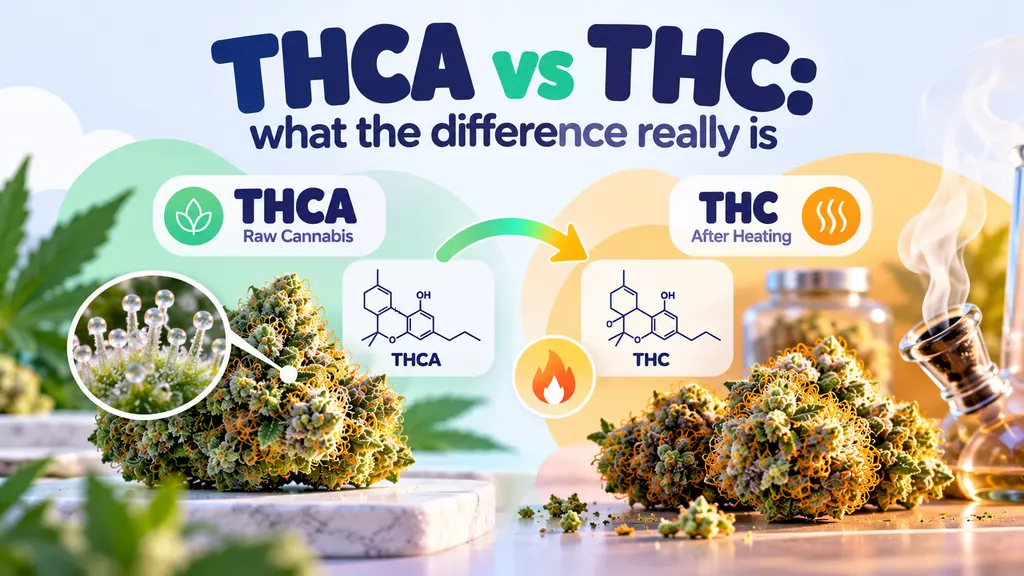
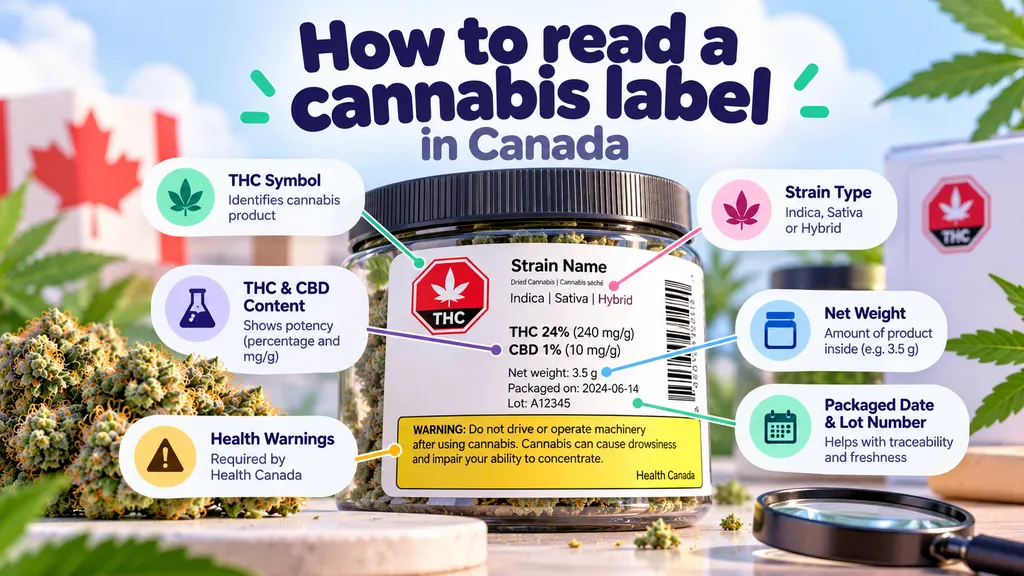
The evidence is better on the second half of the story (dreams do change when people stop) than on the first (THC suppresses REM). And it says nothing about whether cannabis or stopping it is good or bad for you. If your sleep is a worry, ask a doctor or pharmacist. To read your own product's THC, see reading cannabis labels, and for more on the compound itself, THCA vs THC. Too much at once is a separate topic, covered in greening out.