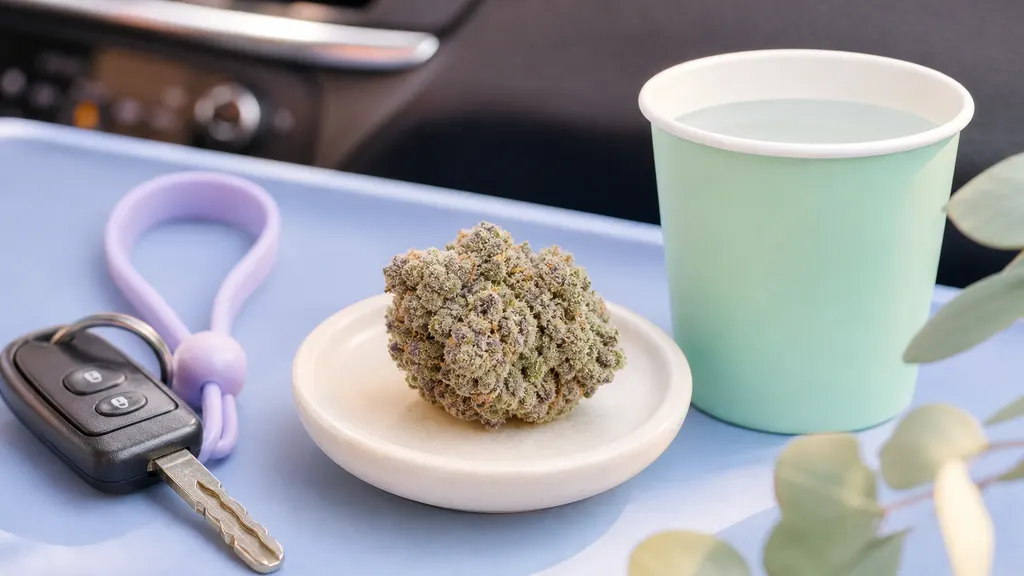
The simplest rule is also the safest one: don't drive after using cannabis. If you want the detail, here is what Canadian law actually sets, what the roadside test does and doesn't tell police, and where the guidance on waiting comes from. This is general information, not legal advice. If you are facing a charge, talk to a lawyer.
What is the legal THC limit for driving in Canada?
There are three numbers, all measured in blood. Each one is a separate offence in the Criminal Code, and each is tied to a section of the law. The Blood Drug Concentration Regulations set the figures.
These are the offences about a measured amount. There is also a broader one: driving while your ability is impaired by a drug to any degree is an offence with no blood number needed at all. So being under every limit below does not protect you if a police officer can show impairment.
ng/mL means nanograms of THC per millilitre of blood.
| Offence | Blood concentration | Where it comes from |
|---|---|---|
| Summary conviction | 2 ng/mL THC | Criminal Code s. 320.14(4), Blood Drug Concentration Regulations s. 1 |
| Hybrid, THC alone | 5 ng/mL THC | Criminal Code s. 320.14(1)(c), Regulations s. 2 |
| Hybrid, THC with alcohol | 2.5 ng/mL THC together with 50 mg alcohol per 100 mL of blood | Criminal Code s. 320.14(1)(d), Regulations s. 3 |
When does the offence apply?
Not only while the wheels are turning. The Criminal Code attaches the prohibited blood concentration to a window of two hours after you stop operating the vehicle. That means a blood sample taken after the trip has ended can still be the evidence.
In plain terms, getting home safely and parking the car does not end your exposure right away.
What are the penalties?
They depend on which offence applies. The lowest-level offence, the 2 ng/mL one, carries a maximum fine of $1,000. The hybrid offences carry mandatory minimums: a $1,000 fine for a first offence, 30 days in jail for a second, and 120 days for each one after that.
A hybrid offence can be prosecuted either by indictment or by summary conviction, and the mandatory minimums apply either way. The maximum is 10 years if prosecuted by indictment. Summarily, it is up to two years less a day, a $5,000 fine, or both.
Licence suspensions, vehicle impoundment and insurance consequences come from provincial rules, and they differ across the country. We don't list them here. Your province's transportation or licensing ministry publishes its own.
| Offence | Minimum | Maximum |
|---|---|---|
| 2 ng/mL (s. 320.14(4)) | None stated | Fine of not more than $1,000 |
| Hybrid offences, first | $1,000 fine | 10 years on indictment; 2 years less a day and/or $5,000 summarily |
| Hybrid offences, second | 30 days imprisonment | As above |
| Hybrid offences, each after | 120 days imprisonment | As above |
Does the limit mean you were impaired?
Not on its own, and the government says so. Justice Canada describes the 2 ng/mL level as based on a precautionary approach. It describes the 5 ng/mL level as more closely linked with impairment, because it can point to recent use.
The Canadian Centre on Substance Use and Addiction (CCSA) adds that the effect of THC varies widely, not only between people but within the same person, and that blood THC can change a lot over a short period. Taking a sample late can mean the level has already dropped below a threshold.
Be careful with both shortcuts. It is wrong to say the limits are meaningless, because they are criminal offences with mandatory penalties. It is just as wrong to say a number under the limit means you are fine to drive. The number defines an offence. It does not measure how you feel or how well you can drive.
| Measured | Where | What it establishes |
|---|---|---|
| Oral fluid screen | Roadside, on approved equipment | Presence above a threshold. Not a concentration. |
| Blood THC concentration | After a demand for a sample | The prescribed concentration that defines the offence. |
| Observed impairment | Under s. 320.14(1)(a) | An offence on its own, with no blood number needed. |
| How high you feel | Nowhere in the law | Nothing legally. It is not an element of these offences. |
What happens at a roadside stop?
If police reasonably suspect there is a drug in your body, they can demand an oral fluid sample on approved screening equipment. The screen shows whether a drug is present above a set threshold. It does not give a THC level, and CCSA notes that the mere presence of a target drug is not evidence of impairment.
A positive screen can lead to a demand for a blood sample or an evaluation by a specially trained officer. Justice Canada states that blood samples are needed to prove the blood concentration offences.
Does a medical authorization change any of this? No. Justice Canada says the drug-impaired driving law applies to people who hold one, with no medical exemption. If you use cannabis under a medical document and drive, speak with your doctor or pharmacist.
How long should you wait before driving?
Here the two Canadian sources disagree on how much they will say, and it helps to see both side by side. Justice Canada says the evidence does not yet support general guidance on how long a driver should wait after consuming cannabis. The Lower-Risk Cannabis Use Guidelines, a peer-reviewed paper, suggest at least six hours and say it may need to be longer.
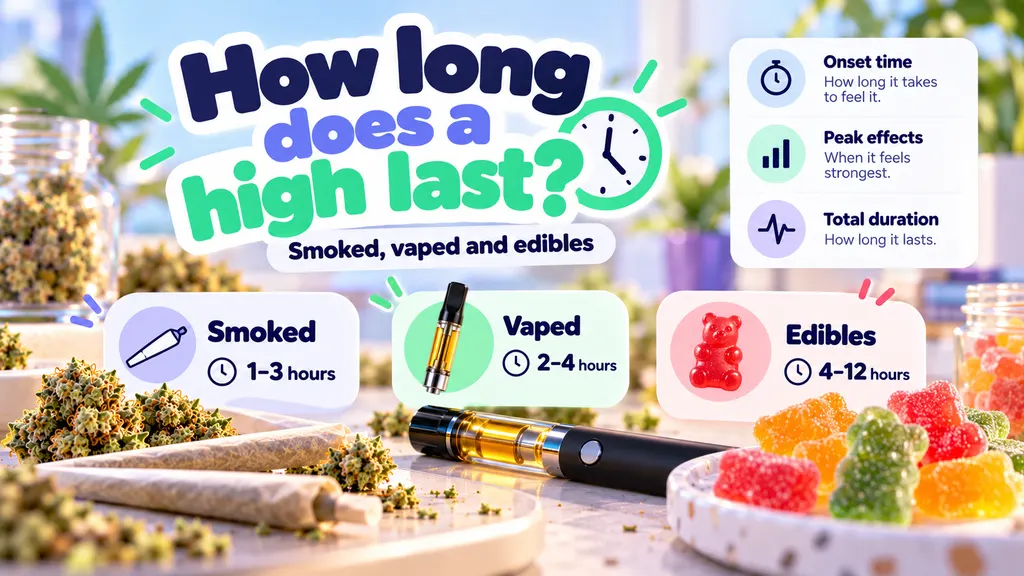
That six hours is guidance about impairment. It is not a legal safe harbour, and no Canadian law says that waiting six hours makes you legal. A blood test could still find THC after that long. Edibles, vapes and drinks can behave differently, so see our guides on how long a high lasts and how long edibles take.
The safest plan is to decide before you use. Arrange a ride, a transit trip or a place to stay, and skip the guessing.
| Source | What it says about waiting |
|---|---|
| Justice Canada FAQ | The evidence does not yet provide general guidance on how long a driver should wait after consuming cannabis. |
| Lower-Risk Cannabis Use Guidelines | At least 6 hours, and it may need to be longer. Impairment typically clears within about 3 to 6 hours. |
How much does cannabis raise crash risk?
The Lower-Risk Cannabis Use Guidelines report that cannabis use is associated with a 1.3 to 3-fold increase in motor vehicle accident risk, with one Canadian case-crossover study reporting a 4-fold increase. These are population-level findings. They are not a prediction for you on any single trip.
We have no Canadian government figure to add, so we leave it there.
What about mixing cannabis and alcohol?
Canadian law treats the combination as its own offence, at a lower THC figure than THC alone: 2.5 ng/mL together with 50 mg of alcohol per 100 mL of blood. That alcohol figure is a blood measure, so don't convert it to a breathalyzer reading or a number you have heard for a drink count.
The Lower-Risk Cannabis Use Guidelines say that combining the two multiplies impairment and risk and should categorically be avoided.
How reliable is the advice you will find about driving high?
Use caution. A lot of it recites the three numbers and skips what they are for. Watch for these claims:
- "Wait X hours and you're legal." No Canadian government publishes a wait that makes you legal.
- "The device measured my THC." The roadside screen shows presence above a threshold, not a level.
- "CBD is fine to drive on." We found no Canadian evidence either way. Impairment by any drug is still an offence under s. 320.14(1)(a), whatever the blood number.
- "My medical authorization covers me." Justice Canada says it does not.
For a related question, see our guide to weed and drug tests. To browse what's in the shops, see dispensaries in your province.
Sources: laws-lois.justice.gc.ca, laws-lois.justice.gc.ca, laws-lois.justice.gc.ca, justice.gc.ca, ccsa.ca, doi.org