StrainsTerpenesGuidesDispensaries
WeedDB
StrainsTerpenesGuidesDispensaries

Get new strain guides and deals

Yes, email me new strain guides, deals and WeedDB news. I can unsubscribe at any time. Privacy policy

WeedDB
StrainsIndicaSativaHybridTerpenesGuidesAboutContactPrivacyTermsDispensaries
19+ only. Please consume responsibly. © 2026 WeedDB
Home›Guides›Cannabis nutrients and deficiencies: what the studies measured
Guide

Cannabis nutrients and deficiencies: what the studies measured

Cannabis needs the same essential nutrients as other crops: nitrogen, phosphorus, potassium, calcium, magnesium and sulphur in larger amounts, plus trace elements. Peer-reviewed trials found lower optimum rates than many feeding charts suggest, and deficiencies took five to nine weeks to show when a nutrient was fully withheld.

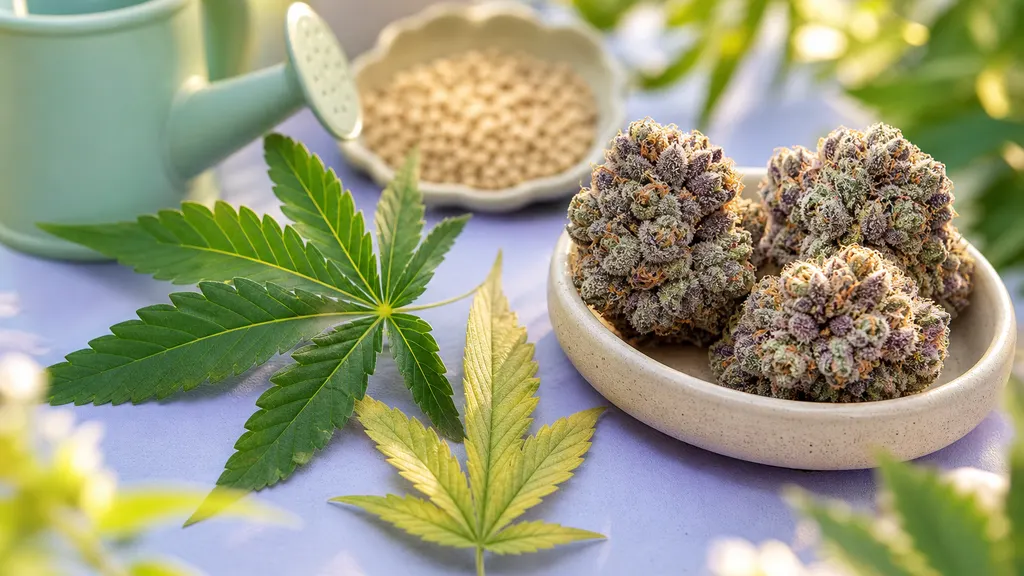
A deep-green healthy cannabis leaf beside a pale yellowing one, next to a dish of frosty cannabis buds and a mint watering can

6 min read · Updated November 16, 2026 · WeedDB editors

Most deficiency charts online come from companies that sell nutrients, and few cite a study. A handful of peer-reviewed trials have actually measured how cannabis responds to feeding. Here is what they found, how to read leaf symptoms without over-trusting a photo, and what nobody has pinned down yet.

What nutrients does a cannabis plant need?How much nitrogen does cannabis need?Does flowering really need heavy phosphorus and potassium?Do more nutrients make stronger weed?How do you tell which nutrient a plant is short of?How fast do deficiency symptoms appear?What does nutrient burn look like?What about pH and nutrient lockout?How reliable is what you read about cannabis nutrients?

What nutrients does a cannabis plant need?

Cannabis needs the same essential elements as any other crop. Nitrogen, phosphorus and potassium (the N-P-K on a fertilizer label) are needed in the largest amounts. Calcium, magnesium and sulphur come next. Iron, manganese, zinc, copper, boron and molybdenum are needed only in trace amounts.

What differs between crops is the rate, not the list. Cannabis is not nutritionally strange, and a plant grown from a legal seed follows the same rules as a tomato. If you are new to growing, start with our overview of growing weed in Canada, then pick your setup in grow lights and medium.

How much nitrogen does cannabis need?

One controlled trial grew a medical cannabis cultivar in perlite and compared five nitrogen rates, from 30 to 320 milligrams per litre. Growth and photosynthesis were best at 160. At 30, biomass fell by roughly three quarters and photosynthesis by about a quarter.

At 320, the plants were smaller and a dark green. The researchers call that nitrogen overdose. It is a useful picture of nutrient burn: too much food does not make a bigger plant, it makes a smaller, darker one.

The caveat matters. This was one cultivar, in the vegetative phase only, for 32 days. The authors themselves note that cannabis nitrogen needs were largely unknown before their work. Treat 160 as a measured data point, not a law.

Does flowering really need heavy phosphorus and potassium?

Not on the one trial that tested it directly. Researchers grew a single cultivar in deep-water culture and varied nitrogen, phosphorus and potassium together during flowering. Their best inflorescence yield came at about 194 milligrams per litre of nitrogen and 59 of phosphorus.

Potassium did not move yield at all anywhere between 60 and 340 milligrams per litre. The authors note that growers often supply phosphorus up to 200 milligrams per litre in flower, and that there is little evidence to support the practice. They also note that some fertilizer companies recommend 300 to 400 of potassium, above the range where no effect was found.

This was a water-culture study, so use it for the rates only. It does not say whether soil or hydro is better. For that, see grow lights and medium.

NutrientWhat was measuredWhat circulates
Nitrogen, vegetativeBest growth at 160 mg/L (perlite, 32 days)Not surveyed here
Nitrogen, floweringYield optimum near 194 mg/L (deep-water culture)Not surveyed here
Phosphorus, floweringYield optimum near 59 mg/LGrowers often supply up to 200 mg/L, per the study authors
Potassium, floweringNo yield response from 60 to 340 mg/LSome fertilizer companies recommend 300 to 400 mg/L, per the study authors
Measured rates against common advice, from two peer-reviewed trials. Each used one cultivar, so they show a direction, not a rule for every plant.

Do more nutrients make stronger weed?

Nothing in the studies read for this article says so. In a greenhouse trial, extra nitrogen, phosphorus and potassium raised total shoot biomass by 41 percent and raised CBG in the flowers by 71 percent. CBN in the flowers fell by 38 percent. THC and CBD in the flowers did not change.

So feeding changed how much plant there was and shifted a minor cannabinoid, but it did not make the flower stronger in THC. Quantity and chemistry are separate questions. The trial used one chemotype with very little CBD, and the authors called the feeding changes mild, so it is one data point. Our minor cannabinoids guide explains what CBG and CBN are.

How do you tell which nutrient a plant is short of?

Carefully, and often you cannot from a photograph alone. Yellowing of lower, older leaves is a described symptom of nitrogen, magnesium, potassium and sulphur shortage, so the same picture fits several causes. The researchers who catalogued the symptoms say appearance and location change as a deficiency progresses, which makes diagnosis challenging.

A useful habit is to ask where it starts. Some nutrients move around inside the plant, so a shortage shows on the older growth first. Others stay put, so the new growth shows it first. The table below comes from the one study that withheld a single nutrient completely and watched what happened.

NutrientWeeks to showWhere it showed first
Calcium5New growth and growing tips
Nitrogen6Lower, older foliage
Manganese6Upper and central foliage
Boron6Growing tips and new leaflets
Phosphorus7Lower, older leaflets
Sulphur7Mid-plant, then new growth
Magnesium7Lower, older leaves
Potassium9Edges of lower leaves
Weeks until a symptom showed when one nutrient was withheld from transplant. One hemp cultivar grown in sand for nine weeks, so real grows can differ. Source: Cockson and others, 2019.

Use the chart as a starting point

A symptom chart tells you which nutrients to suspect, not which one is the cause. Check your watering, your feed strength and your plant's age before you change anything. Diagnosing pests or mould from a leaf is a separate skill, so do not treat a spotted leaf as a nutrient problem by default.

Strains people look up most
Maui Wowie strainSativaMaui WowieTHC 16–28% · MyrceneBlue Dream strainHybridBlue DreamTHC 17–24% · MyrceneSour Diesel strainSativaSour DieselTHC 18–24% · CaryophylleneApples and Bananas strainHybridApples and BananasTHC 20–30% · CaryophylleneLemon Cherry Gelato strainHybridLemon Cherry GelatoTHC 19–29% · CaryophylleneOG Kush strainHybridOG KushTHC 19–26% · MyrceneGorilla Glue strainHybridGorilla GlueTHC 18–30% · CaryophylleneSuper Boof strainHybridSuper BoofTHC 26–32% · MyrceneGMO strainHybridGMOTHC 22–28% · CaryophylleneRuntz strainHybridRuntzTHC 19–30% · CaryophylleneJack Herer strainSativaJack HererTHC 15–22% · TerpinoleneGelato strainHybridGelatoTHC 18–26% · Caryophyllene

How fast do deficiency symptoms appear?

Slowly. In that same trial, calcium symptoms took five weeks to appear, nitrogen and boron six, phosphorus, sulphur and magnesium seven, and potassium nine. That was with the nutrient completely cut off from the start.

A leaf that changed over a weekend is rarely a deficiency. Overwatering, a heat spike, a flush of too-strong feed or a root problem is a likelier suspect. A partly short nutrient in a plant that is already established was not measured in these studies, so no honest timeline exists for it.

What does nutrient burn look like?

In the nitrogen trial, the top rate produced smaller plants and organs and a dark-green colour. That is the measured version of overfeeding. Growers also describe crisped leaf tips and curling on plants fed too strongly, but those descriptions come from experience rather than from the studies cited here.

The fix for suspected overfeeding is the same either way: stop adding strength, give plain water, and watch new growth rather than the damaged leaves. Damaged leaves do not turn green again. New leaves tell you whether the plant has recovered.

What about pH and nutrient lockout?

No source read for this article gives a cannabis pH target, so none is published here. The link between the pH of the root zone and nutrient availability is established plant science, and a very wrong pH can keep a plant from using what you feed it.

The specific numbers in many growing guides were not traced to a cannabis study. That makes them unverified, not disproven. Check what your fertilizer maker and your medium supplier say, and test your water rather than guessing.

How reliable is what you read about cannabis nutrients?

Be careful with anything that comes with a rigid feeding schedule. The studies above used one cultivar each, in perlite, sand, deep-water culture or greenhouse pots. A number from one setup may not carry to a different cultivar in a different pot.

The paper that catalogued symptoms also reported a mismatch in its own manganese numbers, which is one more reason to treat tissue figures as a reference. If you are growing for the first time, pick a feminized or autoflower seed from a legal seller, feed gently, and watch the new growth. Adjust one thing at a time.

Sources: doi.org, doi.org, doi.org, doi.org

Common questions

How much nitrogen do cannabis plants need?

One controlled trial compared nitrogen at 30, 80, 160, 240 and 320 milligrams per litre during vegetative growth in a medical cannabis cultivar. Growth and photosynthesis were best at 160. The authors noted that cannabis nitrogen needs were otherwise largely unknown, and the result covers one cultivar.

Do cannabis plants need more phosphorus during flowering?

Less than many feeding charts assume. The one trial that varied nitrogen, phosphorus and potassium together in flower found an optimal phosphorus level of 59 milligrams per litre. Its authors noted that growers often supply up to 200 and wrote that there is little evidence supporting that practice.

Does potassium increase yield?

Not in the one trial that tested it across a wide range. Inflorescence yield did not respond to potassium anywhere between 60 and 340 milligrams per litre in deep-water culture. Some fertilizer companies recommend 300 to 400, which sits above the range where no effect was found.

Will feeding more nutrients make flower stronger?

No study read for this article supports that. Extra nitrogen, phosphorus and potassium raised shoot biomass by 41 percent and raised CBG in flowers by 71 percent, while lowering CBN by 38 percent. THC and CBD in the flowers did not change in that trial.

How long does a nutrient deficiency take to show?

Longer than most growers expect. In a study that withheld one nutrient entirely from transplant, calcium symptoms appeared after five weeks, nitrogen and boron after six, phosphorus, sulphur and magnesium after seven, and potassium after nine. Overnight leaf changes are rarely a deficiency.

Can you identify a deficiency from a photo of a leaf?

Often not on its own. Yellowing of lower, older leaves is a described symptom of nitrogen, magnesium, potassium and sulphur shortage, so the same picture fits several causes. The researchers who catalogued these symptoms wrote that appearance changes as a deficiency progresses, making diagnosis challenging.

What does nutrient burn look like on cannabis?

In the nitrogen trial, plants given the highest rate were smaller and dark green, which the authors called overdose. Growers also report crisped leaf tips on overfed plants. To fix it, stop adding strength, give plain water, and judge recovery by the new growth.

What pH should cannabis nutrients be at?

No source read for this article gives a cannabis pH target, so none is published here. Root-zone pH does affect how available nutrients are, which is established plant science, but the specific numbers in growing guides were not traced to a published cannabis study. Check your fertilizer and medium instructions.

Keep reading

All guides
A young cannabis plant in a fabric pot under a slim LED grow light, with bowls of soil, coco coir and clay pebblesGuideGrow lights and growing medium: what the trials measuredControlled trials show that more light raises how much flower a plant makes, while light colour and growing medium have not been shown to change potency. Soil, coco and rockwool differ mainly in how they hold water. Here is what the research measured, and what it did not.Read it Cannabis buds under floating labels for CBG, CBN, CBC, THCV and THCAGuideMinor cannabinoids: CBG, CBN, CBC, THCV and THCA explainedMinor cannabinoids are the cannabinoids in cannabis other than THC and CBD, called minor because of how little a typical plant makes, not how strong they are. In Canada they all fall under the Cannabis Act, Health Canada names CBN and THCV as intoxicating, and labels only have to show THC and CBD.Read it A small grow tent with a few cannabis plants in the corner of a cozy bedroomGuideGrowing weed in Canada: the 4-plant rule by provinceThe federal Cannabis Act lets adults grow up to four cannabis plants per residence for personal use, but each province sets its own extra rules. Quebec bans home growing outright, and Manitoba only allowed it, indoors, from May 1, 2025. Seeds and plants must come from a legal source.Read it Small autoflowering cannabis plants in fabric potsGuideAutoflower strains: what they are and how they differAutoflowering cannabis switches from growing to flowering based on the plant's age, not on a change in daylight, because it carries genetics from Cannabis ruderalis. It stays smaller and finishes faster than a photoperiod plant, which usually means a smaller harvest.Read it Cannabis seeds falling from plants into a wooden bowlGuideWeed seeds in Canada: is it legal to buy them?Yes. Adults can legally buy cannabis seeds in Canada from federally licensed sellers and provincially authorized retailers. Seeds count toward your possession limit: one seed equals 1 g of dried cannabis under Schedule 3 of the Cannabis Act, so 30 seeds is the public maximum.Read it A healthy green cannabis plant in a pot beside a small clip-on fan, a handheld magnifier and a humidity gauge on a wooden shelfGuideCannabis pests, mould and bud rot: why it starts insideA Canadian government guide says bud rot commonly starts in the interior of the bud, where humidity is highest and air movement is lowest. That makes it an environment problem first. Here is what the sources establish about pests and mould on a growing plant, and where they stay silent.Read it A bushy cannabis plant in a fabric pot with its branches gently tied down and spread through a flat net, beside soft cotton ties, small pruning snips and a few trimmed leaves on a wooden benchGuideCannabis plant training: what topping, LST and SCROG are doingNo controlled cannabis study has compared one training technique against another. Three experiments did prune and shape plants and measure the result: topping gave more flower weight but no significant CBD-yield gain, and buds low on the plant were consistently weakest. Here is what was measured, and what was not.Read it Cannabis seeds on a damp paper towel beside peat pots with young seedlings, a glass of water and a plant misterGuideGerminating cannabis seeds: what the research measuredCannabis seeds germinate across a wide temperature range, with the best results measured between 19 and 30 degrees Celsius. Seeds lose viability with age, feminized seeds have no published sex ratio, and Canadian law treats seed origin separately from the four-plant limit.Read it