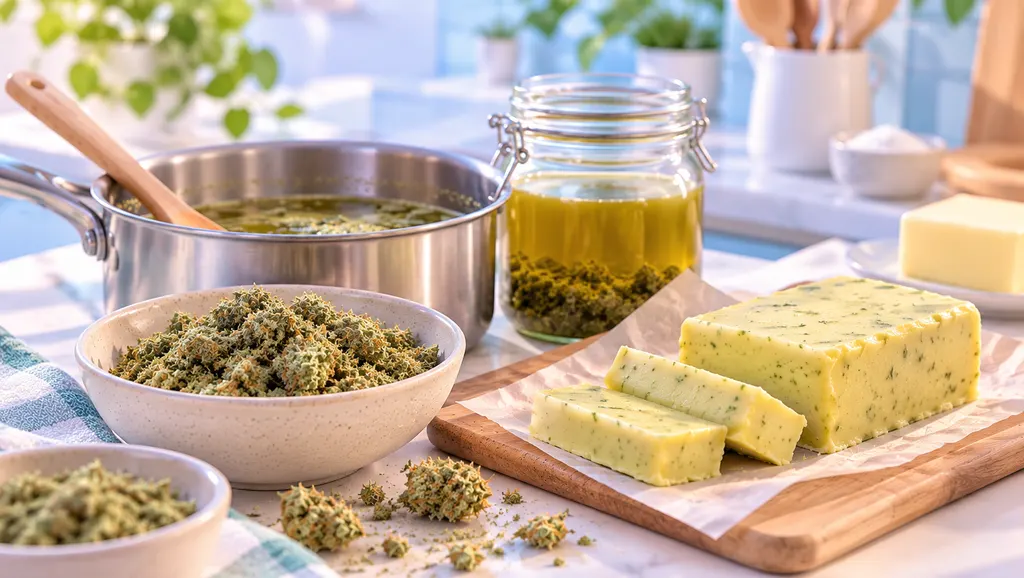
Making cannabutter is easy: decarb the flower, simmer it gently in butter, strain and chill. Getting a predictable dose is the hard part, because a homemade batch has no label and no lab test. Below are the steps, how to strain and store it, why potency varies so much, and what the law in Canada says about making it at home.
What is cannabutter and how is it made?
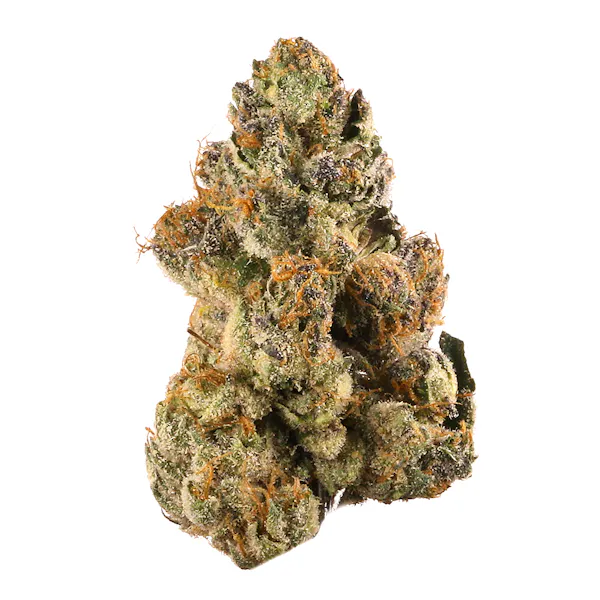
Cannabutter is regular butter infused with cannabinoids from cannabis flower. It is used as an ingredient, spread on toast or baked into other foods, and it is the base of most homemade edibles.
The reason it works is that THC dissolves in fat. Butter, and other fats such as coconut oil, hold the THC that heat has released from the plant. Everything before the infusion is about making sure there is THC to release in the first place.
| Stage | What happens | What can go wrong |
|---|---|---|
| Decarb | Dried flower is heated gently so THCA turns into THC | Too little heat leaves THCA behind; too much loses THC |
| Infuse | Decarbed flower simmers in butter on very low heat | Boiling or scorching damages the butter and the cannabinoids |
| Strain | The plant material is separated from the butter | Squeezing hard can push in bitter plant matter |
| Store | The butter is chilled, labelled and kept away from children | Mixed up with ordinary butter |
Do you have to decarb weed before making cannabutter?
Yes. Raw flower is mostly THCA, which isn't considered intoxicating, and heat is what converts it into THC. Skip this step and the butter will be much weaker than the flower suggests.
Our how to decarb weed guide covers the lab studies behind it. In short, conversion starts around 90 °C and speeds up as the temperature rises, but too much heat starts to destroy THC. Many home cooks use a low oven for a while, and no study has tested a standard home recipe, so treat any time and temperature as a starting point.
If you're not sure what THCA and THC are, THCA vs THC explains the difference.
How do you make cannabutter step by step?
This is a general method rather than a tested recipe, because there is no standard that guarantees an outcome. Times vary between recipes and kitchens. Use a pot, never a sealed container, and keep the heat low throughout.
- Weigh the flower and note its Total THC from the label. Our guide to weed measurements covers grams and how to weigh small amounts.
- Decarb the flower first, then let it cool. Break it up coarsely by hand. Grinding it to powder pushes more fine plant matter into the butter.
- Melt the butter in a pot with a little water. The water helps stop the butter from scorching and keeps the temperature down.
- Stir in the decarbed flower and keep the heat very low. The mix should barely bubble, never boil or smoke.
- Hold it there for a few hours, stirring now and then and topping up the water if it gets low. Recipes differ, so there is no single correct time.
- Take it off the heat and let it cool a little before straining.
- Strain through a fine sieve or cheesecloth into a clean container, and let it settle.
- Chill until solid. If you used water, the butter sets on top and the water can be lifted off or poured away.
How do you strain cannabutter?
Line a fine mesh sieve or a funnel with cheesecloth and pour the warm mix through it into a clean bowl or jar. Let it drip on its own rather than squeezing hard. A heavy squeeze pushes more plant matter and chlorophyll into the butter, which makes it taste grassier and more bitter.
Once it has chilled, the solid butter lifts off the water below it. Scrape off any sediment from the underside and wipe it dry. Use clean tools and containers so the butter doesn't pick up anything unwanted.
Don't throw the used plant material into the compost thinking it is spent. It still carries some THC, and it should be kept away from children and pets until you've disposed of it safely.
How should you store cannabutter?
Keep it in a sealed, airtight container in the fridge, and label it clearly so nobody mistakes it for regular butter. Many cooks freeze extra portions for longer storage, which also helps it keep.
Cannabutter is a dairy product, so treat it like butter. If it smells off, has changed colour or shows mould, throw it out. Our guide to whether weed expires covers the dried flower side of storage.
Where it lives matters as much as how it is stored. Health Canada warns that cannabis edibles can look like regular food and sweets, so keep any infused butter and finished baking in a locked or high spot, away from children and pets.
How strong is homemade cannabutter?
There is no reliable number, and anyone who gives you one is guessing. The strength depends on the flower's Total THC, how fully it was decarbed, how much THC was lost to heat, how much was left behind in the plant material, and how evenly it was mixed through the butter.
Even within one batch, a spoonful from the top can differ from one near the bottom of the container. That uneven spread carries into whatever you bake with it, so one cookie from a tray can be stronger than the next.
Licensed edibles are tested and labelled, and Canada caps them at 10 mg of THC per package. A homemade batch can't be checked that way, so the usual advice from Health Canada applies in full: start low and go slow.
How do you dose homemade edibles safely?
Start with a very small portion, such as a small amount of butter on toast, and wait. Health Canada says edibles can take 30 minutes to 2 hours to start and 2 to 4 hours to reach their strongest effects, so waiting a few hours before eating more is the safe choice. Our guide to how long edibles take goes through the timing and why you shouldn't redose early.
Mix the butter into the food thoroughly, so each portion gets a similar share. Keep a record of what you used, including the flower's Total THC, the amount, and how a portion felt, so the next batch is less of a guess. It will still be an estimate.
Tell anyone who might eat it what is in it. Never serve infused food to someone who doesn't know, and don't give it to children or pets.
Is it legal to make cannabutter at home in Canada?
Yes, for adults, within the rules. Health Canada's backgrounder on the Cannabis Act lists making cannabis-containing products at home, such as food and drinks, as allowed for personal use, as long as dangerous organic solvents are not used. That rules out methods using butane or other flammable solvents, but a simple butter infusion is a different matter.
The catch is sourcing. You can only make it from cannabis you have obtained lawfully, such as from a provincially licensed retailer, or grown within the home-grow limits where your province allows it. Making it to sell is not allowed, and provincial rules on age and where you can consume still apply.
Check your own province or territory for anything extra, since some have additional rules.
Sources: canada.ca, canada.ca, canada.ca, pmc.ncbi.nlm.nih.gov, laws-lois.justice.gc.ca