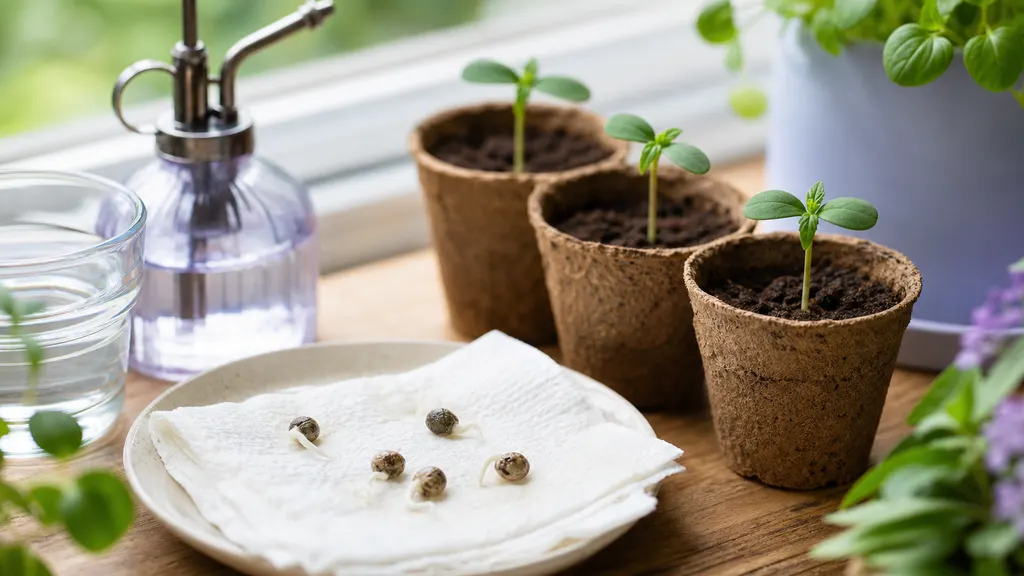
Most germination advice says the same three things: damp paper towel, keep it warm, expect all females. Very little of it comes with a number. Here is what published studies did measure, what they did not, and where we are only passing along common practice.
What is the difference between regular, feminized and autoflower seeds?
A cannabis seed is a small, single-seeded dry fruit with a hard shell. Regular seeds give a mix of male and female plants. Feminized seeds come from a female plant that was chemically induced to shed pollen. Autoflower seeds flower on age rather than on day length.
For a longer look at the legal side of buying them, see our guide to weed seeds in Canada. For the autoflower trait itself, see autoflower strains.
| Regular | Feminized | Autoflower | |
|---|---|---|---|
| Comes from | A female crossed with a male | A female induced to shed pollen | Day-neutral genetics |
| Plant sex | Both sexes | No published percentage found | Both, unless also feminized |
| Flowers on | Day length | Day length, unless also autoflower | Age |
| Days to 10% flowering (females) | 80 to 115 (early), 115 to 140 (late) | Same as its photoperiod class | 60 to 80 |
| What was measured | Class counts across 145 accessions | Pollen germination of 2.2% to 5.8% | Gene regions associated with the trait |
Are feminized seeds really 100% female?
We could not find a study that reports it. The packet figure is the seller's claim, not a measured result. The peer-reviewed work we read on the technique measured the pollen instead, and found germination between 2.2% and 5.8%. It did not report a share of female seedlings.
That makes "100% female" unverified, not disproven. Plenty of growers have good results from feminized seed, and that is worth something. It is just not a number we can print. That study also used a single cultivar. If a stray male in a four-plant grow worries you, read about male and female plants.
What temperature do cannabis seeds germinate at?
Temperature is the one part of germination with real measurements behind it. Researchers tested constant temperatures from 3 to 42 °C on two industrial hemp cultivars. By regression, they calculated a base of 3.4 °C, an optimum of 29.6 °C and a ceiling of 42.6 °C. The best mean germination, in percentage and speed, fell between 19 and 30 °C.
One honest limit: these were oil-crop hemp seeds, not drug-type cannabis. We found no germination temperature measured on drug-type cannabis, so treat the band as a good guide rather than a promise.
| Measure | Value |
|---|---|
| Lowest temperature for germination (base) | 3.4 °C |
| Calculated optimum | 29.6 °C |
| Highest temperature for germination (ceiling) | 42.6 °C |
| Best mean germination percentage and rate | 19 to 30 °C |
| Temperatures tested | 3 to 42 °C, held constant |
How do you germinate cannabis seeds, and what goes wrong?
The usual method is a soak, then a damp paper towel or starter plug held warm until a white taproot appears, then a gentle move into your medium with the root pointing down. That is common practice. We found no controlled comparison of germination methods in cannabis, so we will not say one beats another.
The same goes for hydrogen peroxide soaks, pH-adjusted water, germinating in the dark and the float test. We found no controlled cannabis evidence for any of them, so call them unverified. What you can control with a number behind it is warmth: aim for the measured band, and keep the medium damp rather than soaked.
This guide stops at the taproot and the first true leaves. For what comes next, see grow lights and growing medium and nutrients and deficiencies.
- Start with seed you know the source of, and handle it gently.
- Keep it warm and damp. The measured best range is 19 to 30 °C.
- Wait for the taproot to emerge, and avoid pulling or touching it.
- Plant it root-down in a light, damp medium and keep it warm.
How long do seeds take to sprout, and how long do they stay viable?
In the hemp study, the thermal time to reach 50% germination at below-optimum temperatures was 694 and 714 degree-hours for the two cultivars. In plain terms, that means days rather than hours, and warmth inside the measured band gets there sooner than cool conditions. We will not promise a day count, because the study did not give one for home conditions.
Age matters more than people expect. In a five-cultivar hemp study, fresh seed averaged 96.1% germination. After three years, refrigerated seed (4 to 7 °C) fell to 65.0%, and seed kept at room temperature (20 to 25 °C) fell to 46.4%. Cold slows the decline. It does not stop it. For the general question of shelf life, see does weed expire.
Germination after three years of storage
Do autoflower seeds need a different start?
The germination step is the same. The difference comes afterwards, and it comes sooner. In a study of 145 landrace accessions, auto-flowering females reached 10% flowering at 60 to 80 days. Early-flowering photoperiod plants took 80 to 115 days, and late ones 115 to 140. Those are days to flowering, not days to harvest.
You also cannot spot an autoflower seedling by eye. The researchers state that auto-flowering and early-flowering plants look alike during vegetative growth. In that study, 12 of the 145 accessions were auto-flowering, which works out to about 8%. That share is our own arithmetic, and it describes a sample of landraces, not what is on the market.
Is it legal to grow cannabis from seed at home in Canada?
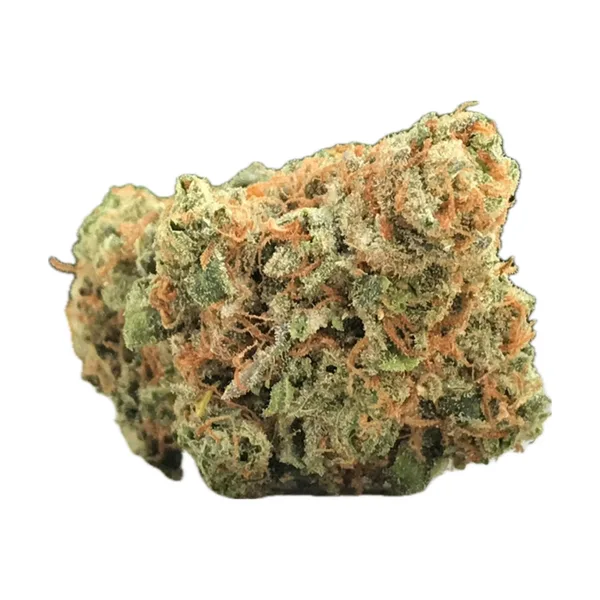
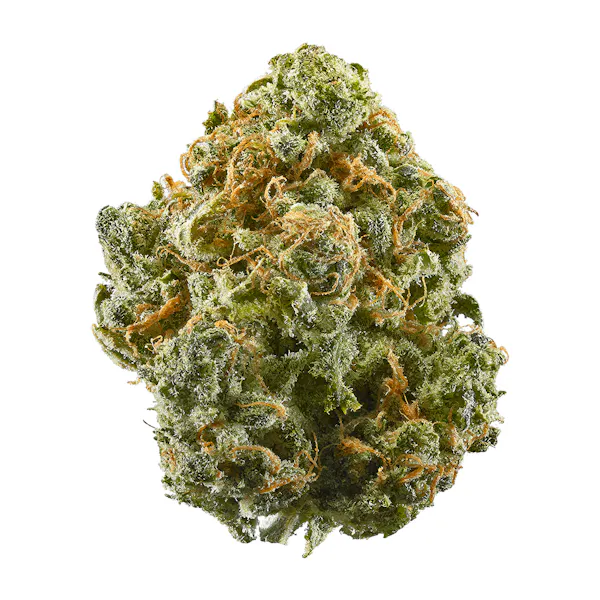
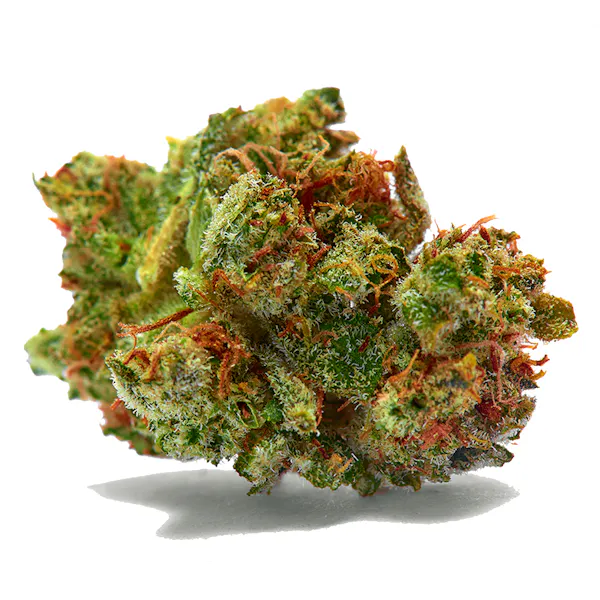
Federally, an adult may not cultivate more than four cannabis plants at any one time in their dwelling-house, and the limit is four per dwelling-house, not four each. Provinces and territories can add restrictions, and Quebec and Manitoba do. Our home-grow guide has the details by province.
Seed origin is a separate rule. The Cannabis Act also prohibits cultivating a plant from a seed or plant material the person knows is illicit cannabis. So the number of plants and where the seed came from are two different questions. The provincial rules and legal sources are covered in our seed guide.
| Question | Section | Wording |
|---|---|---|
| How many plants? | 12(4)(b) | "more than four cannabis plants at any one time in their dwelling-house" |
| Where did the seed come from? | 12(4)(a) | "a cannabis plant that is from a seed or plant material that they know is illicit cannabis" |
| Grow somewhere else? | 12(6)(a) | Prohibits cultivating a plant "at a place that is not their dwelling-house" |
How reliable is what you read about germinating?
Seed sellers have an interest in germination claims, since the claim is part of the product. Here is how the common ones hold up.
- 100% female from feminized seed: no study we read reports it. Unverified, not disproven.
- Soak for 24 hours, then paper towel: common practice. No controlled comparison of methods was found.
- Seeds keep fine in the fridge: they keep better, not forever. Germination fell from 96.1% to 65.0% over three years.
- Peroxide soaks, pH water, dark germination, the float test: no controlled cannabis evidence found for any. Unverified.
- Autoflowers finish in 10 weeks: the study measured days to 10% flowering, not harvest.
- Four plants means you are fine: the plant limit and the seed-origin rule are separate.
Sources: doi.org, doi.org, doi.org, doi.org, laws-lois.justice.gc.ca