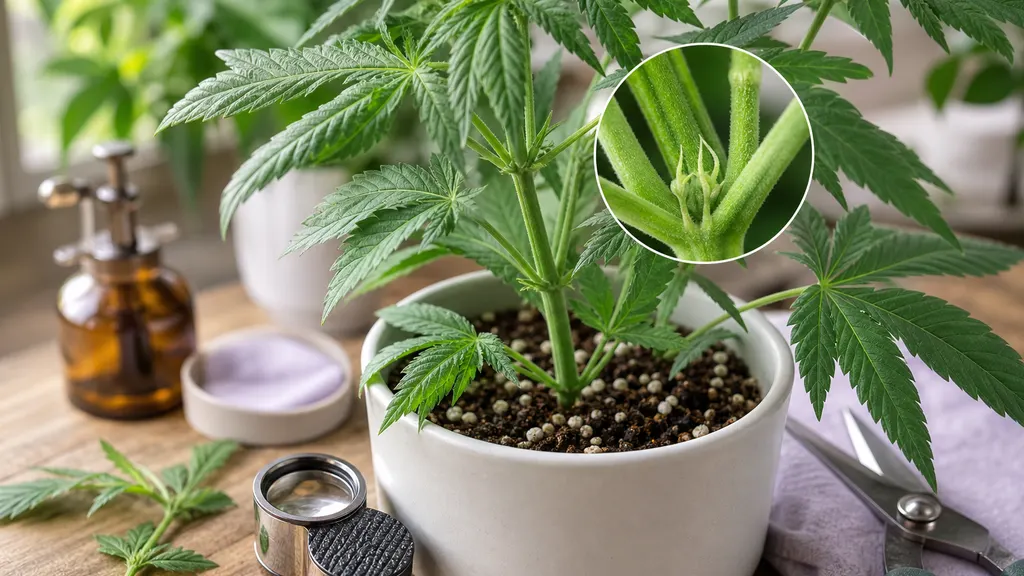
Every gram of flower on a shelf came from a female plant that was never pollinated. That makes sexing the step that decides whether a plant becomes the product at all. Here is how pre-flowers and hermaphrodites are checked, what the research does and does not cover, and what a buyer can actually see.
Why is sexing the step that decides the product?
Flower is the unpollinated female inflorescence of the plant. A male plant makes pollen, and a female that gets pollinated puts her effort into seed. So the grower's real job at this stage is to find out which plants are female and keep pollen away from them.
This guide picks up where growing weed in Canada and our seed guide leave off, at the first signs of pre-flowering. For the basic male and female comparison, start with male vs female weed plants. Here we go deeper on pre-flowers and hermaphrodites, and on what is and is not known.
What are pre-flowers and where do you look?
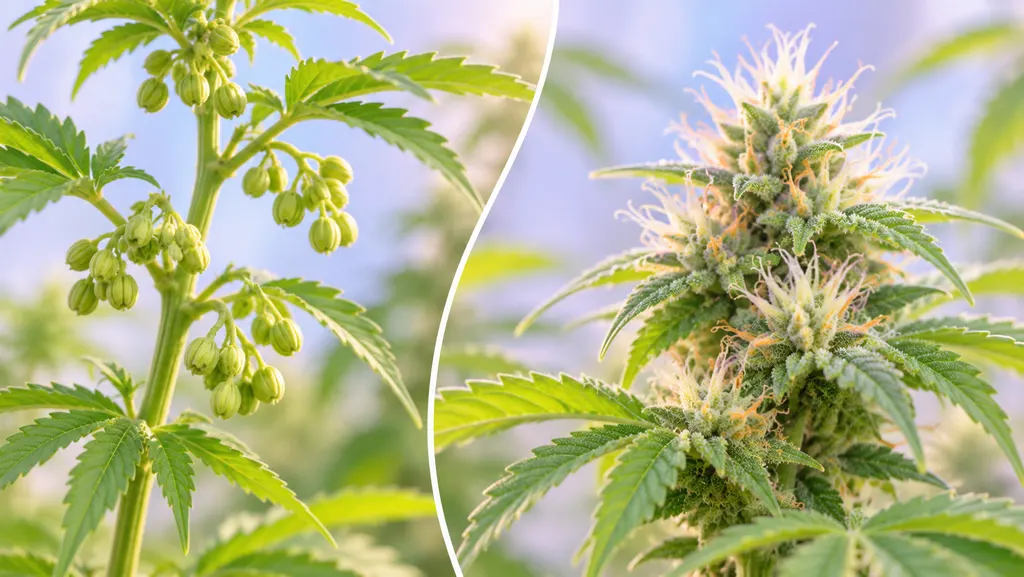
Pre-flowers are the first tiny flower structures a plant shows at its nodes, the spots where a leaf stalk meets the stem. They show the plant's sex well before real flowering starts. Look at several nodes, and check often, because a plant can show them on its own schedule.
A small magnifier or loupe helps a lot. What you are looking for is simple: pointed calyxes with fine white hairs (pistils) point to a female, and small rounded pollen sacs point to a male. A plant showing both is a hermaphrodite, often called a hermie.
We could not find a published cannabis study that measures how reliable pre-flower sexing is, or at what age it works. The advice in this guide is the common grower description, so treat it as practical guidance and not as measured fact.
| Plant | What you can observe | Where to look | Measured in the cannabis literature |
|---|---|---|---|
| Female | Pointed calyx with thin white pistils | Nodes along the stem | Not located |
| Male | Small rounded pollen sacs, in loose clusters | Nodes along the stem | Not located |
| Hermaphrodite | Pistils and pollen sacs on the same plant | Nodes, and later inside the flowers | Not located |
| How early the sex can be read | Varies plant to plant, so check every few days | Several nodes, not one | Not located |
What is a hermaphrodite cannabis plant?
A hermaphrodite carries both female and male flower parts. The worry is simple: pollen sacs can open and pollinate the female flowers, on that plant and on its neighbours.
Growers talk about a few signs. One is a small pollen sac showing up among the pistils of an otherwise female plant, sometimes called a nanner. Another is a plant that was clearly female turning up male parts later on. Because the signs can be small, checking a plant once is not enough.
People often say stress causes hermies. We could not source a measured link, so we will not give you a list of triggers. How it works in the plant is not something we can back with a citation, and we are not going to guess.
- Check the nodes of every plant on a regular schedule, with a magnifier.
- Keep any suspect plant apart from the others right away.
- Remove a plant that has shown male parts before it can release pollen.
- Keep checking the plants that remain, since a clean check once does not clear a plant for good.
What does the research say about timing?
Plenty has been measured about how the female flower develops. None of it was a study of sex determination, and we want that clear. The three studies below describe what is forming on female plants over time, which is useful background, not a sexing guide.
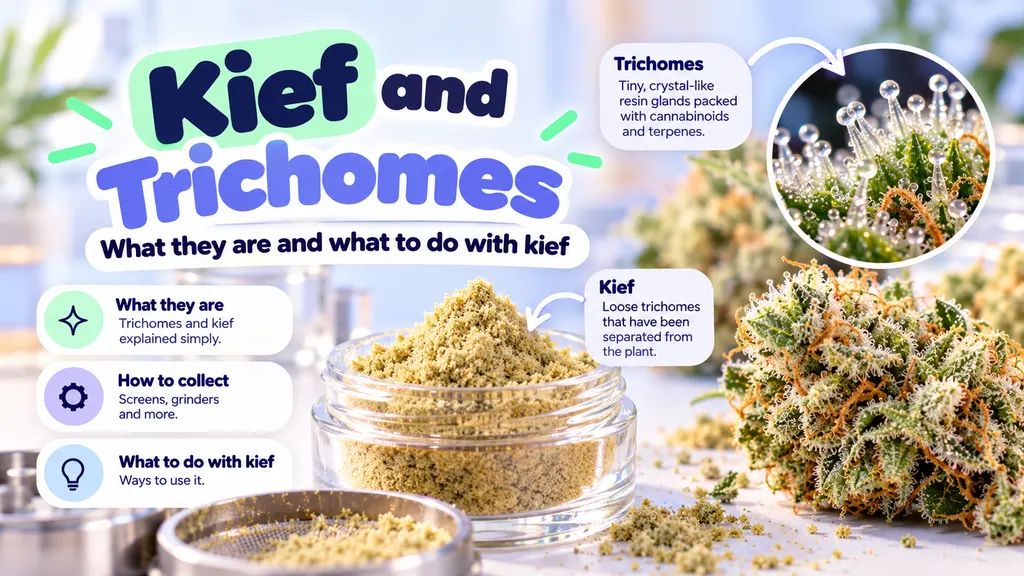
Livingston and colleagues (The Plant Journal) studied the resin glands, called glandular trichomes, that make cannabinoids and terpenes. They found stalked trichomes carry the high cannabinoid levels, and their evidence supports a model where stalked trichomes develop from sessile-like ones. Punja, Sutton and Kim (2023) followed female flower tissue from 3 to 8 weeks of flower development in two genotypes. Aizpurua-Olaizola and colleagues (2016) tracked cannabinoid and terpene content during growth in plants of different chemotypes.
For a closer look at the resin itself, see kief and trichomes.
| Source | What it looked at | What it found, in brief | Scope note |
|---|---|---|---|
| Livingston et al., The Plant Journal | Glandular trichome types on cannabis flowers | Stalked trichomes were linked to high cannabinoid levels and monoterpene-dominant terpene profiles. Evidence supports stalked trichomes developing from sessile-like ones. | Female flower maturation, not sex determination |
| Punja, Sutton and Kim, 2023 | Trichome development from 3 to 8 weeks of flower development, two genotypes | Sessile-capitate trichomes predominated at 3 weeks. Trichome development was uneven, so different stages of maturity sat side by side on the same bracts. | Female inflorescences of high-THC plants, not sex determination |
| Aizpurua-Olaizola et al., 2016 | Cannabinoid and terpene content through growth, plants from different chemotypes | Tracked how both change during growth. We use it only as background on development. | Plant growth chemistry, not sex determination |
What does pollination cost in potency?
We do not know, and we are not going to repeat a number. Lines like "seeds ruin potency" or "one male ruins the crop" are everywhere, but none of the sources we could verify measured what pollination does to cannabinoid levels. So the honest answer is that it has not been measured here.
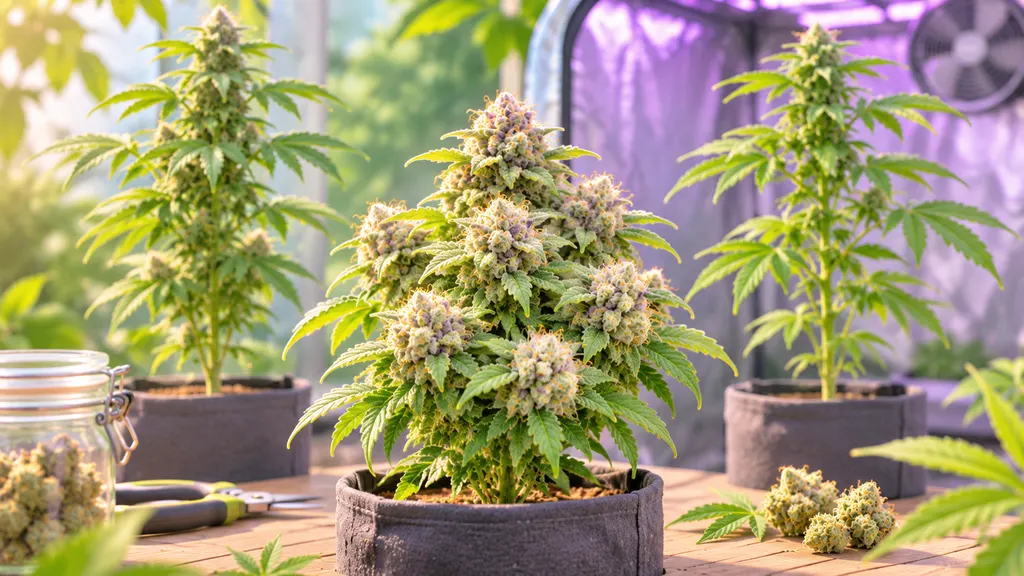
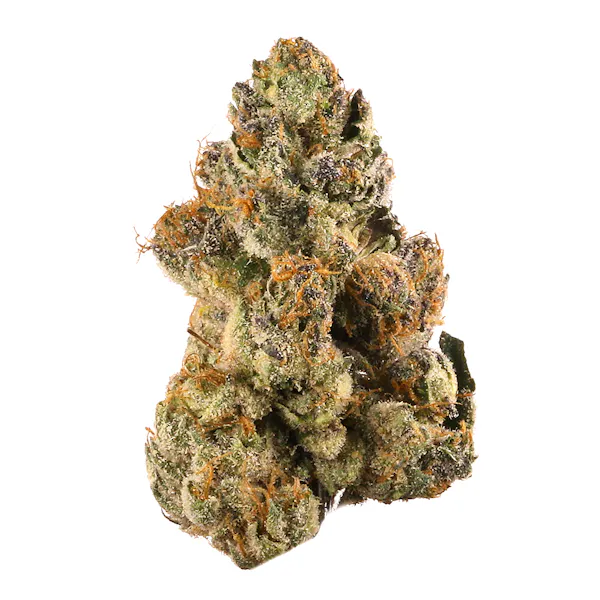
That is not the same as saying seeds are harmless. A seed is weight in the bag that cannot be smoked, and you can see that for yourself. That is the whole consequence we will state. If you want to understand what the numbers on a label actually mean, see reading cannabis labels.
What can a buyer tell from the bag and the label?
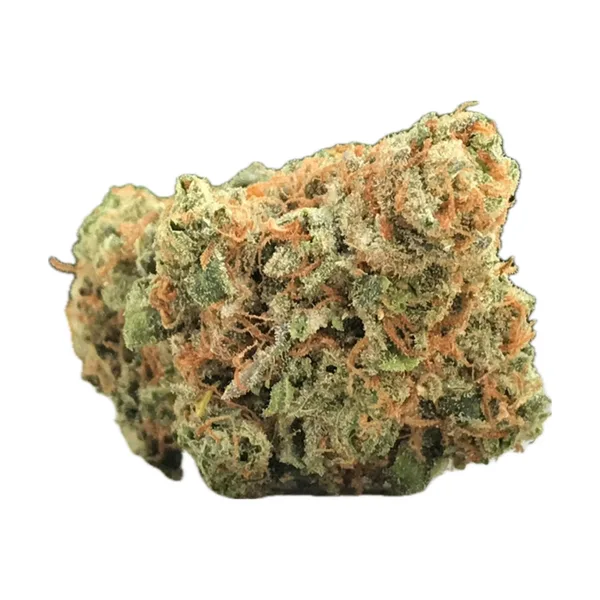
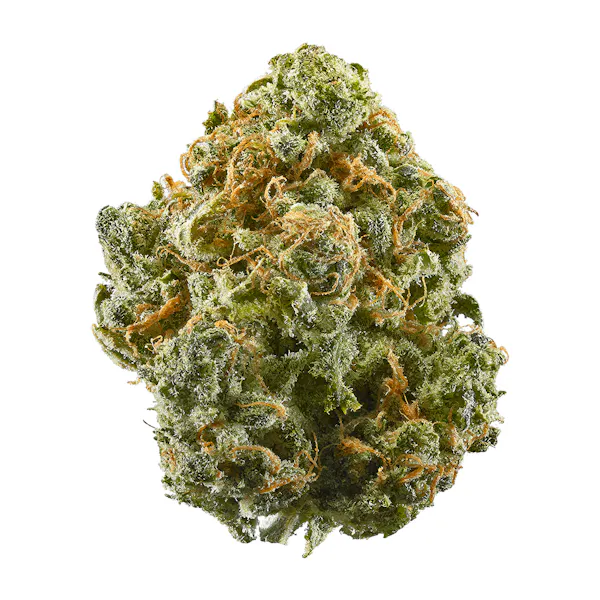
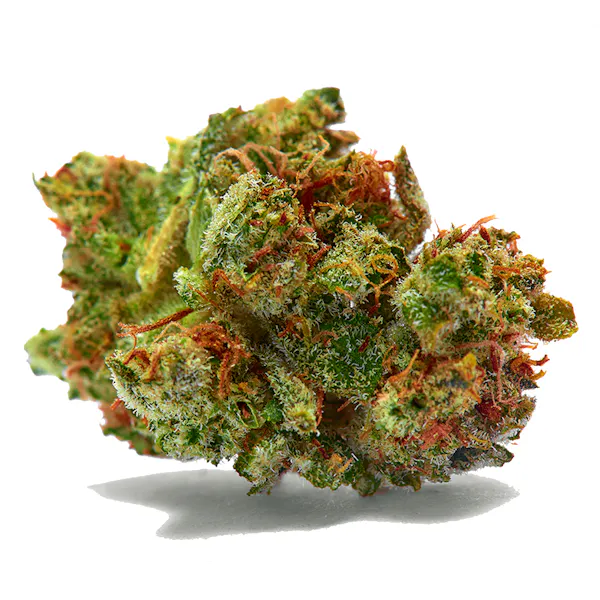
Most readers are buyers, not growers, so this part matters. You can look at the flower itself and see whether seeds are in it. You cannot read it off the label, because the mandatory label fields we know of do not include a seed field.
That label point comes from our sister site Bulk Farms, which read the Cannabis Regulations line by line in its guide to weed shake in Canada. We have not rebuilt that here. We also make no claim about whether any particular product is or is not seeded.
| Question | On the flower itself | On the label |
|---|---|---|
| Are there seeds in the bag? | Yes, you can see them | No field for it |
| Was the plant pollinated? | Seeds are the visible sign | No field for it |
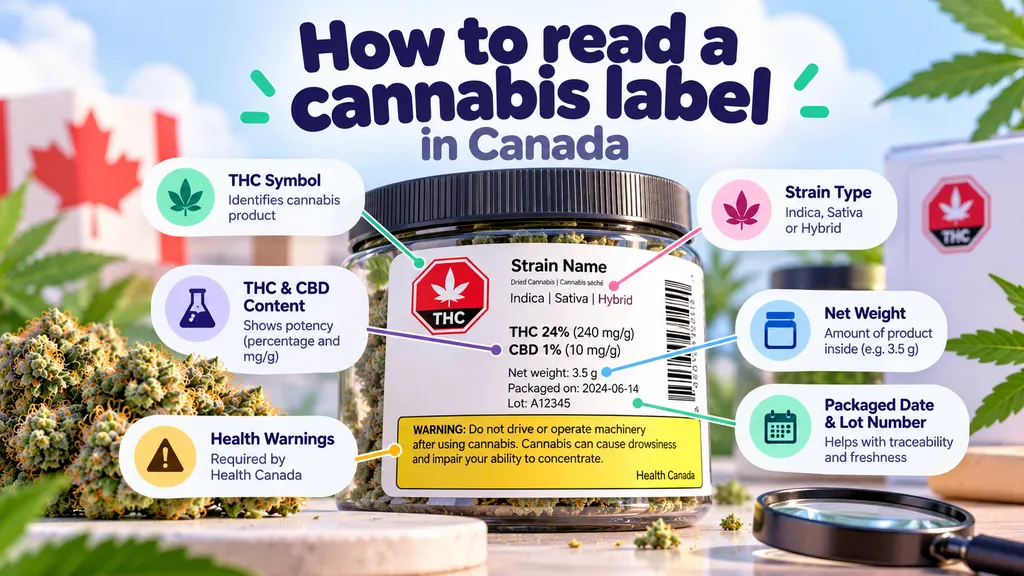
| How strong is it? | Cannot be told by eye | THC and CBD fields exist. See our guide on reading cannabis labels |
What does Canadian law mean for sexing?
Federally, adults can grow up to four plants per residence. Quebec and Manitoba have their own rules and prohibit home growing, and the Supreme Court of Canada upheld Quebec's ban in Murray-Hall (2023 SCC 10). Provincial rules do change, so check yours before you plant a seed.
At four plants, one male is a quarter of the crop, and removing it is the whole remedy. That is the honest reason feminized seed exists as a product category. Our seed guide covers it, and autoflower strains are another route some growers take. For setup, see grow lights and medium.
Sources: doi.org, doi.org, doi.org, laws-lois.justice.gc.ca, canada.ca, canlii.org