StrainsTerpenesGuidesDispensaries
WeedDB
StrainsTerpenesGuidesDispensaries

Get new strain guides and deals

Yes, email me new strain guides, deals and WeedDB news. I can unsubscribe at any time. Privacy policy

WeedDB
StrainsIndicaSativaHybridTerpenesGuidesAboutContactPrivacyTermsDispensaries
19+ only. Please consume responsibly. © 2026 WeedDB
Home›Guides›Weed and caffeine: what the evidence actually shows
Guide

Weed and caffeine: what the evidence actually shows

Weed and caffeine have been tested together in people only once. A small 2025 trial found minimal changes to THC's effects, task performance and metabolism. Most confident claims online rest on animal studies, some of which didn't use caffeine at all. In Canada, caffeine is not generally allowed in cannabis products.

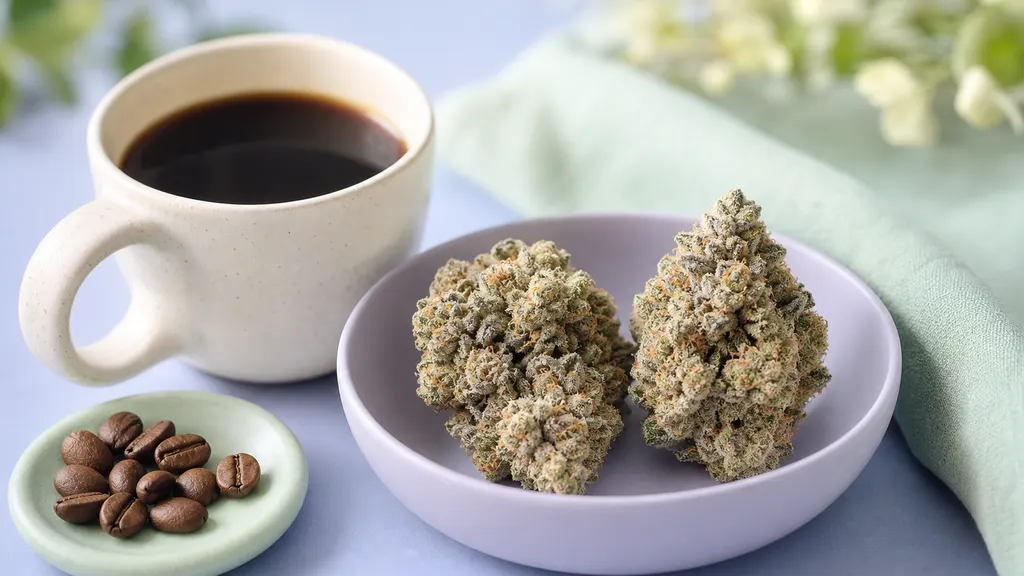
A cream mug of black coffee beside a lavender dish of frosted cannabis buds and a small plate of coffee beans

5 min read · Updated November 13, 2026 · WeedDB editors

Lots of articles say coffee changes your high. The honest answer is shorter. Until 2025, nobody had tested THC and caffeine together in people, and the first trial that did reported minimal changes. Here's what that trial found, what the animal studies really tested, and what Canadian rules say about caffeine in cannabis products.

What happens when you mix weed and caffeine?Has cannabis and caffeine been studied in people?What did the animal research find, and what drug did it use?Does coffee make a high stronger or shorter?Can you buy caffeinated cannabis products in Canada?Why do so many articles sound so sure?How reliable is this evidence?

What happens when you mix weed and caffeine?

Less than most articles claim. The one human trial to test caffeine alongside THC reported minimal changes to THC's subjective effects, to task performance and to how THC was metabolised. Animal work hints at a memory interaction, but it used injected doses in rats, not coffee in people.

That doesn't mean the combination is proven safe, and it doesn't mean the popular claims are disproven. It means the question has barely been asked. Treat anything stated with total confidence as unverified.

Has cannabis and caffeine been studied in people?

Once, directly. A 2025 double-blind, randomised, placebo-controlled crossover trial in Neuropsychopharmacology gave 20 adults oral THC together with caffeine, and also together with CBD. Its authors call it the first direct assessment of THC and caffeine given together in humans. That tells you how little came before it.

The caffeine result was quiet: minimal changes to THC's subjective effects, to performance and to metabolism. The abstract also mentions signals of perceived driving impairment. We've only read the abstract, not the full paper, so we won't say more than that. The CBD arm is useful as a contrast. In that arm the researchers did see changes in THC blood levels, which shows the trial was able to detect an interaction when one was there.

Twenty people at one dose level is a starting point, not a settled answer. It's also not a guide to how much of either to use.

ElementWhat was reported
DesignDouble-blind, randomised, placebo-controlled crossover
Participants20 adults, 10 men and 10 women. Cannabis use history not confirmed.
What was testedOral THC with caffeine, and oral THC with CBD
Caffeine with THCMinimal changes to subjective effects, performance and metabolism
One exceptionSignals of perceived driving impairment were observed. Direction and strength not confirmed.
CBD with THC (for contrast)Higher THC and 11-OH-THC blood levels, and a stronger reported drug high
The one human trial at a glance. We read the abstract only, so fields we couldn't confirm are marked.

What did the animal research find, and what drug did it use?

Two studies come up again and again, and they used different compounds. In rats, researchers gave caffeine and a THC dose too low to affect memory on its own. Together they impaired working memory. The authors concluded that caffeine did not counteract the THC memory deficits but exacerbated them.

The second study used squirrel monkeys, and the drug was not caffeine. It was MSX-3, a selective experimental blocker of one adenosine receptor, given by injection. The paper itself notes there was no pharmacological data on MSX-3 in non-human primates. Coffee has nothing to do with it.

So describing either study as a finding about your morning coffee swaps in a different species, a different compound and a different route of dosing. The table lays out the ladder.

StudySpeciesCompound givenRouteResult
Strickland 2025Humans (20)CaffeineOral THC; caffeine route not confirmedMinimal changes to effects, performance and metabolism
Panlilio 2012RatsCaffeine, in several injected dosesInjectionCaffeine plus a very low THC dose impaired working memory
Justinova 2010Squirrel monkeys and ratsMSX-3, not caffeineInjectionShifted THC's dose-response curve, and left cocaine unaffected
Who was given what. Only the first row involves people.

Does coffee make a high stronger or shorter?

Neither has been shown in people. The human trial found minimal changes to subjective effects and to THC metabolism, so there's no measured basis for coffee intensifying a high or ending it sooner. Feeling more alert isn't the same as being less affected.

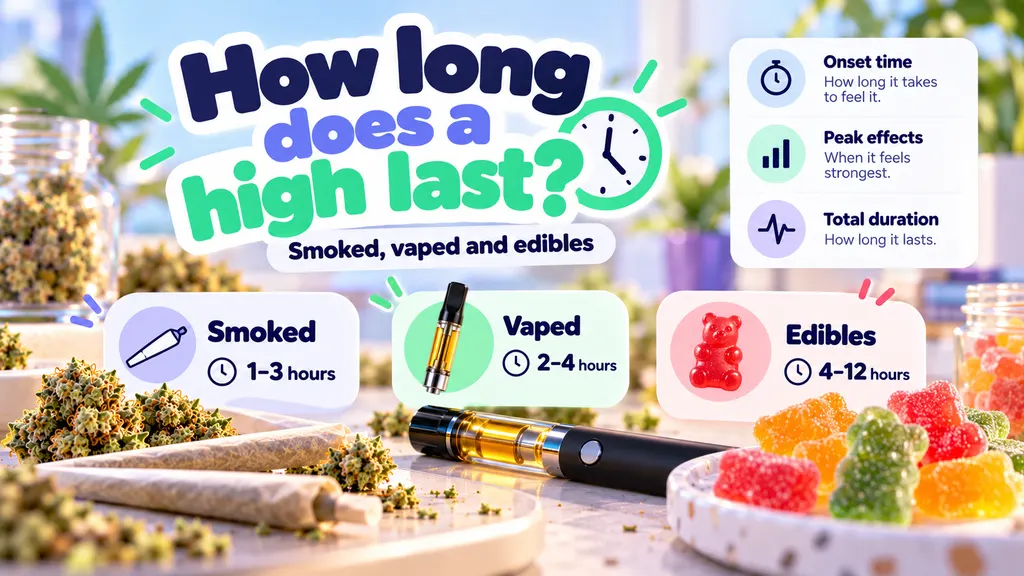
If you're wondering how long a high lasts, that depends on the product and how you take it, and it's covered in our guide to how long a high lasts. Edibles run on a slower clock, which our guide to how long edibles take explains. Neither guide suggests coffee changes the timeline.

If a high feels like too much, our guide to greening out covers what it is and what people do about it.
Strains with lower published THC
Charlotte's Web strainHybridCharlotte's WebTHC 0–1% · MyrceneSour Tsunami strainHybridSour TsunamiTHC 1–10% · MyrceneACDC strainHybridACDCTHC 1–5% · MyrceneGorilla Mints strainHybridGorilla MintsTHC 10–12%Purple Star strainIndicaPurple StarTHC 6%Cannatonic strainHybridCannatonicTHC 4–8% · MyrceneParadise OG strainHybridParadise OGTHC 8–10%Sour Blueberry strainHybridSour BlueberryTHC 12–14% · LimoneneBlueberry Afgoo strainHybridBlueberry AfgooTHC 12% · CaryophylleneMidnight strainHybridMidnightTHC 7–13% · MyrceneRoot Beer Kush strainHybridRoot Beer KushTHC 11–12%Orange Herijuana strainHybridOrange HerijuanaTHC 10–14%

Can you buy caffeinated cannabis products in Canada?

Barely, and not by design. Health Canada's guide on composition requirements for cannabis products says caffeine is not generally allowed in cannabis products. Adding purified caffeine or caffeine citrate to an edible is prohibited.

The one opening is a natural source. An edible can contain caffeine if it comes from an ingredient that naturally has it, like chocolate or tea, and the total is capped at 30 mg per immediate container. Cannabis edibles also can't be made from foods that have been supplemented with caffeine, and the guide's example is caffeinated energy drinks.

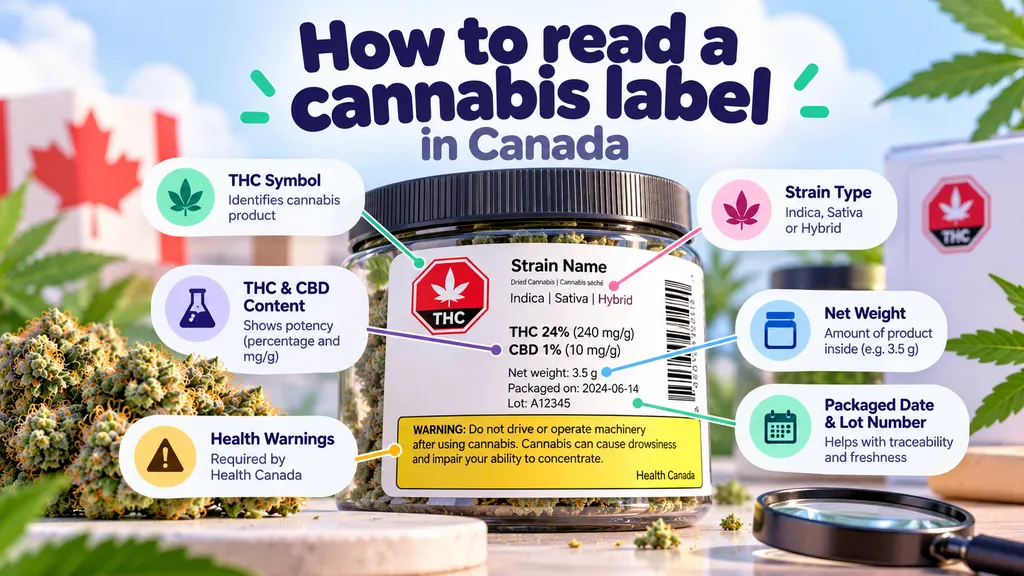
The guide does not print a caffeine limit for topicals or dried cannabis, so we don't state one. For the rest of what a label tells you, see reading cannabis labels. If you're curious about cannabis beverages, our guide to THC drinks covers how they work.

Product classRule
All cannabis productsCaffeine is not generally allowed
Edibles, added caffeineAdding purified caffeine or caffeine citrate is prohibited
Edibles, natural sourcesOnly through an ingredient that naturally contains it, capped at 30 mg per immediate container
Edibles, supplemented foodsNot permitted. The guide's example is caffeinated energy drinks.
ExtractsOnly where caffeine occurs naturally in an ingredient, and not above its natural level
Caffeine in Canadian cannabis products, as Health Canada's composition guide describes it.

Why do so many articles sound so sure?

Because a mechanism reads like a result. Caffeine blocks adenosine receptors, and adenosine and cannabinoid receptors do interact in animal tissue. That's real science. But it gets reported as a measured effect of coffee on a human high, and that step has never been shown.

Another common claim says coffee boosts your endocannabinoid system and so boosts your high. We couldn't read the research behind it, and the work we've seen cited is about coffee metabolism and did not give anyone cannabis. We're not going to describe findings we haven't read.

You'll also see tidy numbers for an ideal gap between a coffee and a joint, or a perfect caffeine dose to match your THC. No source we found supports any of them, so you won't find one here.

How reliable is this evidence?

Thin, but no longer empty. There's one small human trial, two animal studies that used different compounds, and a lot of confident writing resting on neither.

Nothing here is settled. "Not studied" is not the same as "no effect", and it's not the same as "disproven" either. If you take medication or have a heart condition, ask your doctor or pharmacist about mixing caffeine and cannabis rather than settling it from an article. And a quiet result in a lab isn't a reason to skip the basics: start low and go slow with any THC product, and don't drive after using cannabis.

Sources: pubmed.ncbi.nlm.nih.gov, doi.org, pubmed.ncbi.nlm.nih.gov, pubmed.ncbi.nlm.nih.gov, laws-lois.justice.gc.ca

Common questions

Does caffeine make a weed high stronger?

In the only human trial to isolate it, adding caffeine produced minimal changes in THC's subjective effects. Rat studies pointed the other way for memory, but they used injected doses rather than coffee. On current evidence, no reliable strengthening effect has been shown in people.

Does coffee help you come down from weed?

No source we found supports it. The human trial reported minimal changes to THC's effects and to how THC was metabolised, so there's no measured basis for coffee shortening a high. Feeling more alert is not the same as being less affected.

Has cannabis and caffeine been studied together in humans?

Once, directly. A 2025 double-blind, randomised, placebo-controlled crossover trial gave 20 adults oral THC with caffeine and with CBD. Its authors call it the first direct assessment of the two together in humans. Twenty people is a starting point, not a settled answer.

Why do so many articles say caffeine changes your high?

Most trace back to animal studies of the adenosine system. A widely cited squirrel monkey study gave a selective experimental compound called MSX-3 by injection, not caffeine. Calling that a coffee effect in people swaps in a different species, compound and route.

Did the animal research find caffeine made things worse?

For working memory in rats, yes. One study found that a THC dose too low to impair memory alone did impair it once caffeine was added, and concluded caffeine exacerbated the deficits. Those were injected doses in rats, not cups of coffee in people.

Can you buy a caffeinated cannabis edible in Canada?

Only within narrow limits. Health Canada says caffeine is not generally allowed in cannabis products and that adding purified caffeine or caffeine citrate to an edible is prohibited. It is allowed only through an ingredient that naturally contains it, capped at 30 mg per immediate container.

Is it safe to combine caffeine and cannabis?

This guide can't say. We found no study that measured heart or blood pressure outcomes for the combination, so we don't estimate one. If you take medication or have a heart condition, ask your doctor or pharmacist rather than settling it from an article.

Should I treat the popular claims as disproven?

No. Almost nothing about this combination has been tested in people, which is not the same as being tested and found to do nothing. One small trial reported minimal changes. Treat the circulating claims as unverified rather than disproven.

Keep reading

All guides
A young woman eating a gummy beside a bowl of colourful gummies and baked treatsGuideHow long do edibles take to kick in?Health Canada says edibles can take 30 minutes to 2 hours to start working, with the strongest effects 2 to 4 hours in and effects lasting 4 to 8 hours. The wait is why the standard advice is to start low, go slow and not take more too early.Read it Cans of cannabis drinks and a glass of sparkling drink with fruit and iceGuideTHC drinks in Canada: how cannabis beverages workCannabis beverages have been legal in Canada since October 2019, and each container can hold no more than 10 mg of THC. They are classed as edibles, so they act slowly: Health Canada says effects can start 30 minutes to 2 hours after drinking.Read it A Canadian cannabis jar with its label parts called out: the THC symbol, THC and CBD content, net weight, packaged date, lot number and the Health Canada warningGuideHow to read a cannabis label in CanadaEvery legal cannabis product in Canada has to show its Total THC and Total CBD, the red THC symbol, a yellow health warning, a lot number, a packaging date and an excise stamp for your province. Total THC is the number to compare, and it's shown in mg/g for flower and in mg per piece and per package for edibles.Read it A person resting on a couch with a hand on their forehead, next to a water bottle and a bowl of fruitGuideWhat is greening out? Signs and what to doGreening out is a slang term for taking more cannabis than your body handles comfortably, usually with a wave of unpleasant physical and mental effects. It is generally temporary. The usual advice is to stop consuming, get somewhere calm, and call for help if symptoms are severe.Read it A joint, a vape cartridge and gummies, titled How long does a high last? Smoked, vaped and ediblesGuideHow long does a high last? Smoked, vaped and ediblesHealth Canada says that after smoking or vaping you could feel effects for 2 to 4 hours, and after eating or drinking cannabis for 4 to 8 hours. Edibles also start later: within 30 minutes to 2 hours, compared with seconds or minutes when inhaled.Read it A pill organizer and an amber bottle beside a cream dish holding a frosted cannabis budGuideWeed and medications: what is actually known about drug interactionsTHC and CBD are broken down by the same liver enzymes that process many prescription drugs. Documented interactions cluster in blood thinners, anti-seizure drugs and transplant drugs, mostly from case reports. For most other medications, including antibiotics, nobody has studied it. Ask your pharmacist or doctor, and never change a medication on your own.Read it Three glass jars of frosty cannabis buds on a wooden counter beside a small digital scale and a glass beakerGuideWhat does the THC percentage on weed actually mean?A THC percentage is a calculated share of a flower's weight, worked out from one lab sample of one lot. It is useful, but it is one value drawn from a plant that varies, and we could not find a source that shows what it predicts about how a product will feel.Read it A healthy green cannabis plant in a pot beside a small clip-on fan, a handheld magnifier and a humidity gauge on a wooden shelfGuideCannabis pests, mould and bud rot: why it starts insideA Canadian government guide says bud rot commonly starts in the interior of the bud, where humidity is highest and air movement is lowest. That makes it an environment problem first. Here is what the sources establish about pests and mould on a growing plant, and where they stay silent.Read it