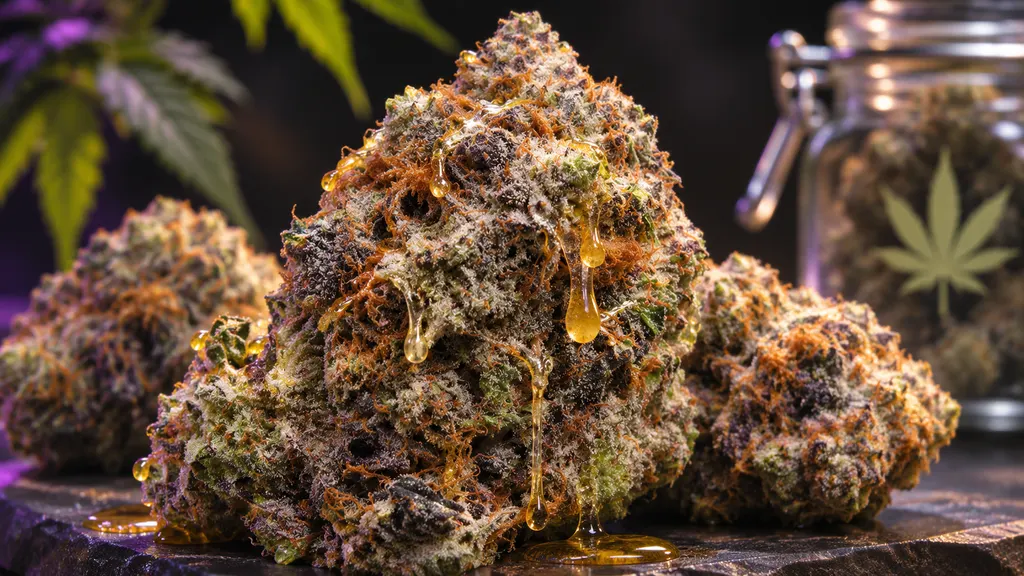
Search for the strongest weed and you'll find lists topped by numbers in the 30s. Those numbers deserve some skepticism. THC percentage is a measurement, and measurements depend on who ran the test, how the sample was handled and what the lab was asked to report. Below is how Canadian labelling works, why the biggest claims are the least reliable, and what to weigh alongside THC.
Which strains have the highest THC?
The chart below ranks strains in our records by their reported THC, and it updates as the records do. It's a live, computed ranking, so we don't type strain names or percentages into this text. Treat it as a snapshot of what has been reported, not a verdict on which strain is strongest.
Why the caution? A strain name isn't a fixed recipe. The same name can come from different growers, different phenotypes and different harvests, and each batch tests a little differently. Our guide to phenotype meaning explains why two jars sharing a name can behave like two different products.
Highest reported THC on WeedDB
- Wham37–38%
- Bombsicle35%
- Cherry Slushie28–39%
- Delphi Diesel28–39%
- Purple Ice Water31–36%
- Miracle Mints30–36%
- Canal Street Runtz30–35%
- Coffin Candy32–33%
- Eastside OG29–36%
- Whoa Si Whoa32–33%
- Banana Jelly32%
- Blueberry Gumbo32%
- Fatso28–36%
- Garlic Juice30–34%
- Iverson 0129–35%
How is THC measured and labelled in Canada?
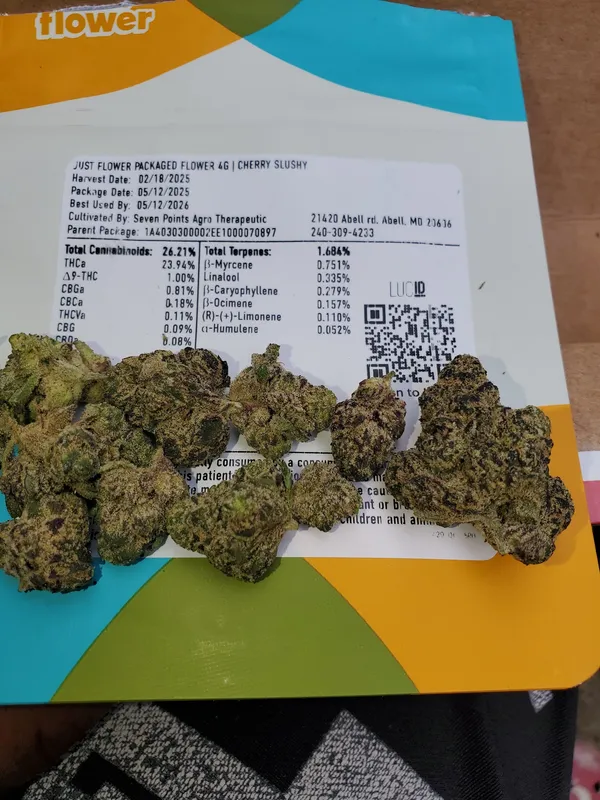
Canadian cannabis labels show Total THC, which counts the THC already present plus the THC that the acid form (THCA) can become once it is heated. Raw flower is mostly THCA, so a label that only counted plain THC would make nearly every product look weak.
The conversion uses a factor of about 0.877, because THCA loses part of its weight when it turns into THC. Our guide to THCA vs THC walks through the maths and the chemistry. For the rest of the panel, including serving sizes, ranges and the standardized cannabis symbol, see reading cannabis labels.
Canadian licensed producers must have products tested before sale under the Cannabis Regulations, and Health Canada sets the labelling rules. Provincial retailers then list the label figure, often as a range, on their product pages.
Total THC on a Canadian label
Total THC = THC + (0.877 × THCA)
- A licensed lab reports THC and THCA for the batch.
- The THCA is multiplied by 0.877 to account for the weight it loses when heat converts it.
- The two are added together and printed as Total THC.
Why are very high THC numbers often inflated?
Because there is pressure to report them. Buyers read THC as quality, so a higher number helps a product sell. That creates an incentive to find the lab and the sample that produce the biggest figure, and researchers have documented the pattern.
A 2018 study of legal cannabis in Washington State found that the reported cannabinoid content varied systematically across testing facilities. Some labs consistently returned higher numbers than others for comparable products, which is what you'd expect if producers could pick the lab that flattered them. This is often called lab shopping.
Other things push numbers up as well. Testing only the densest, most resinous part of a plant, drying samples further than the retail product, or reporting the best result from several tests all raise the figure without making the jar you buy any stronger. Even honest labs differ in method and calibration, so small differences between two labels are noise, not a ranking.
Be especially wary of sourced studies and list articles that quote a single record-setting number with no batch, lab or date attached. If you can't trace the figure to a certificate of analysis, treat it as marketing. In Canada, a label figure comes from a licensed producer's tested batch, which is more traceable than a number repeated across websites.
Do higher THC strains hit harder?
Higher Total THC means more THC per gram, so a given amount of flower delivers more of it. That part is simple arithmetic. What isn't simple is how a person experiences it, which depends on how much they use, how they consume it, their tolerance, their body and the setting.
Past a certain point, the difference between a very high number and a high one is small compared with the difference in how much you take. A small amount of a stronger product and a larger amount of a milder one can deliver the same dose. That is why dose, not the percentage on its own, is the number that matters.
Health Canada's lower-risk guidance makes this point directly. It suggests choosing lower-THC products and using less often, because higher-THC products and heavier use are linked to greater risk of harm. If you're unsure where to start, a lower number and a small amount is the conservative choice, and our guide to how long a high lasts explains the timing so you don't take more too soon.
Do terpenes matter more than the THC number?
They're worth looking at, though the science is still unsettled. Terpenes are the aromatic compounds that give cannabis its smell, and they are what separates a citrus-smelling jar from a pine or fuel one. Some researchers think they may shape the experience alongside cannabinoids, but the evidence is early and nobody has shown that a given terpene reliably predicts a given effect.
What terpenes do give you is a practical way to compare products with similar THC. Two jars at the same Total THC can smell and taste completely different, and many people find the aroma a better guide to what they'll enjoy than the percentage. Pages like limonene, myrcene and caryophyllene describe where each shows up and what it smells like.
Likewise, the old indica and sativa labels are a weak guide. Our indica vs sativa guide explains why plant type predicts less than people assume, which is another reason to look past a single headline figure.
How should you use the THC number when you shop?
Use it as a rough size indicator, not a score. Compare products by Total THC within the same format, because flower, extracts and edibles are measured differently. A milligram figure on an edible or a drink is a dose, while a percentage on flower is a concentration.
Check the batch details on the package, including the packaged-on date and the lab's range, and prefer a recent date. Cannabinoids shift slowly over time as THCA converts and THC degrades, so older stock can read differently from its original certificate.
Finally, match the number to your experience. If you're newer to cannabis or returning after a break, the conservative approach is a lower-THC product and a small amount, then waiting before you take more. Higher isn't better, it's just higher.
Sources: laws-lois.justice.gc.ca, canada.ca, nature.com, canada.ca