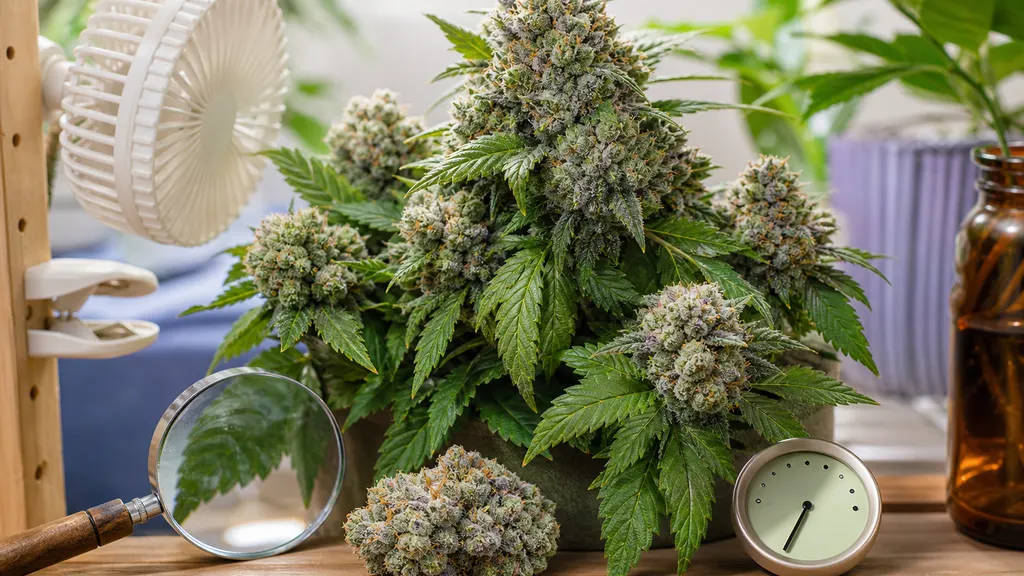
If you grow at home, there is no lab testing your plants for you. That is the honest reason this topic is worth reading before something goes wrong. We stick to what published Canadian and peer-reviewed sources say, we name no products, and we skip the visual-ID cheat sheets, because the research does not back them.
What does this guide cover, and what does it leave out?
This guide is about the living plant: what a grower can prevent in a grow space. Our sister site Bulk Farms covers the other side, which is what a buyer can detect in a jar of flower already bought. That one is spotting mould in bulk cannabis flower, and we link it rather than repeat it.
Two things we deliberately do not do. We do not recommend any spray, product or fix for a plant you will later consume, because we found no source on that for home cultivation. And once the plant is cut, drying and storage are a separate subject. For that, see does weed expire.
If your leaves are yellowing or spotting, that is usually a feeding question, not a pathogen one. Start with cannabis nutrients and deficiencies and come back here only if nutrition does not explain it.
Where does bud rot start?
Inside the bud. The BC Ministry of Agriculture and Food guide, *Diseases of Cannabis in British Columbia* (Scott, Punja and Sabaratnam, 2024), puts it this way: "Infections commonly start in the interior of the buds, where humidity is highest and air movement is lowest, and progress outwards."
That one sentence explains why bud rot is nearly always found late. By the time you can see it from outside, it has already worked its way out from the middle. It also changes the question. Spotting it early is hard by design, so the part a grower can actually act on is the humidity and airflow around the plant.
The same guide describes powdery mildew in plainer terms: the pathogen's growth shows up as "distinct white powdery patches." That is the one appearance description we found in the sources that is worth quoting. We did not find a source for a reliable look-alike test, so we will not give you one.
Can a plant be infected and still look clean?
Yes, according to a 2025 paper in the *Journal of Fungi* (Punja, Tittlemier and Walkowiak). The authors reported finding "incipient infections" in fresh flower that looked symptom-free, confirmed by a lab test (RT-qPCR). The same paper did not detect aflatoxins or ochratoxins.
For a grower the takeaway is practical. If an infection can start inside the bud and sometimes show nothing at all, a daily look is not enough on its own. Your levers are the conditions you control and the timing of your harvest, not a sharper pair of eyes. The buyer-side reading of the same paper sits in the Bulk Farms guide linked above.
| Question | What the source says | What it means for a grower |
|---|---|---|
| Where does bud rot begin? | "In the interior of the buds, where humidity is highest and air movement is lowest" | By the time it shows outside, it has spread from inside |
| Can infection exist before symptoms? | "Incipient infections" found in fresh flower with no visible symptoms | Looking is not a safe test, so conditions matter more |
| What does powdery mildew look like? | "Distinct white powdery patches" | The one visual description we could cite |
| Is there a source on smell as a warning sign? | None located | We leave smell cues out |
Which pests and moulds are the usual suspects?
Growers most often name spider mites, thrips, fungus gnats, powdery mildew and *Botrytis* (the fungus behind bud rot). We were able to source the mildew and bud rot facts above. For the three insects we did not find a source we could cite on what conditions favour them, so those cells say so below instead of guessing.
| Organism | Conditions that favour it | Appearance |
|---|---|---|
| Botrytis (bud rot) | Interior of the bud, high humidity, low air movement (BC Ministry, 2024) | Starts inside, so often not visible early |
| Powdery mildew | Not located | "Distinct white powdery patches" (BC Ministry, 2024) |
| Spider mites | Not located | Not located |
| Thrips | Not located | Not located |
| Fungus gnats | Not located | Not located |
What about airflow, humidity and light?
The only environmental statement we can cite directly is the BC one: humidity high and air movement low inside the bud. We will not give you a target humidity number, since we did not find a home-grow figure we could stand behind.
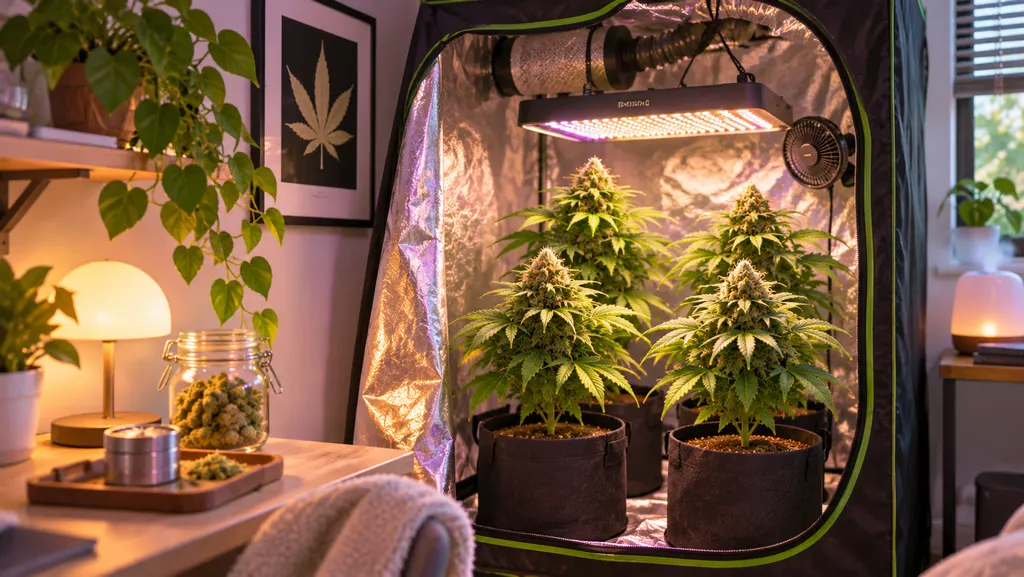
What follows from the quote is that stagnant, damp air around dense flower is the thing to avoid. If you are choosing a setup, our guide to grow lights and growing medium covers the choices that shape your space, and growing weed in Canada covers the rules and basics.
Why is a home grow different from a licensed one?
A licensed producer is tested lot by lot. The *Cannabis Regulations* (sections 91 to 93) require microbial and chemical contaminant testing on "each lot or batch," by "validated methods on a representative sample," with records kept for at least a year. A 2023 paper by Punja, Ni, Lung and Buirs records Canada's microbial limit as 50,000 cfu/g (colony-forming units per gram).
None of that applies to four plants in a spare room. There is no lot test, no limit you are measured against, no recall process and no certificate. The safety net a shopper assumes when buying is exactly what a home grow does not have, so prevention is the whole game.
| Safeguard | Licensed lot | Home grow (four plants) |
|---|---|---|
| Contaminant testing | Required on each lot or batch | None |
| Method | Validated methods on a representative sample | None |
| Microbial limit | 50,000 cfu/g | None |
| Records kept | At least a year | None |
| Recall process | Yes | None |
How worried should you be about mould?
Proportionately. Health Canada's recall wording is a good model for tone: such products "may cause temporary adverse health consequences, where the probability of serious adverse health consequences is remote" (recall RA-75987). Research on who is most exposed describes "a recognized health risk to patients with susceptible conditions, such as those who are immunocompromised" (Gwinn et al., 2023).
A 2019 study (Punja et al., *Frontiers in Plant Science*) found fungal spores "adhered to the surface of glandular trichomes" and reported *Aspergillus* recovery of "less than 1%." We quote these rather than paraphrase, because the wording is careful, and we would rather not make it sound scarier or safer than it is.
If you have a weakened immune system, that is a conversation for a health professional, not a growing guide.
What should you do if you spot a problem?
Here is a short, source-bounded checklist. It is about environment and decisions, not products.
- Check the air first. The one cited mechanism is high humidity and low air movement inside the bud, so that is where to look.
- Rule out feeding. Many leaf problems are nutrition, not pathogens. Use the nutrients guide before assuming the worst.
- Don't trust a clean look. The 2025 paper found infection without symptoms, so a clear-looking plant is not a guarantee.
- When in doubt, don't consume it. We can't tell you what is safe to smoke from a photo, and neither can anyone else reliably.
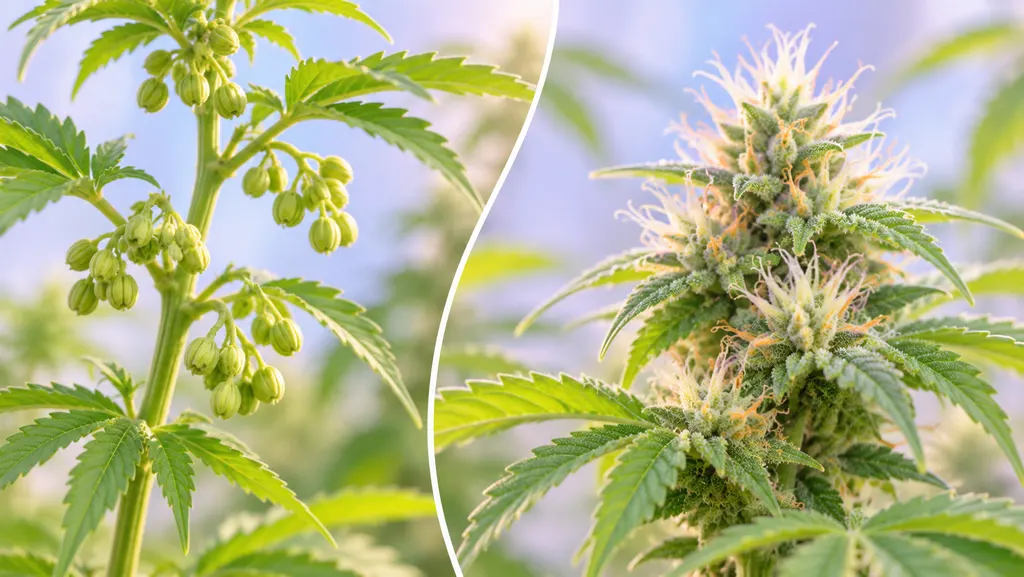
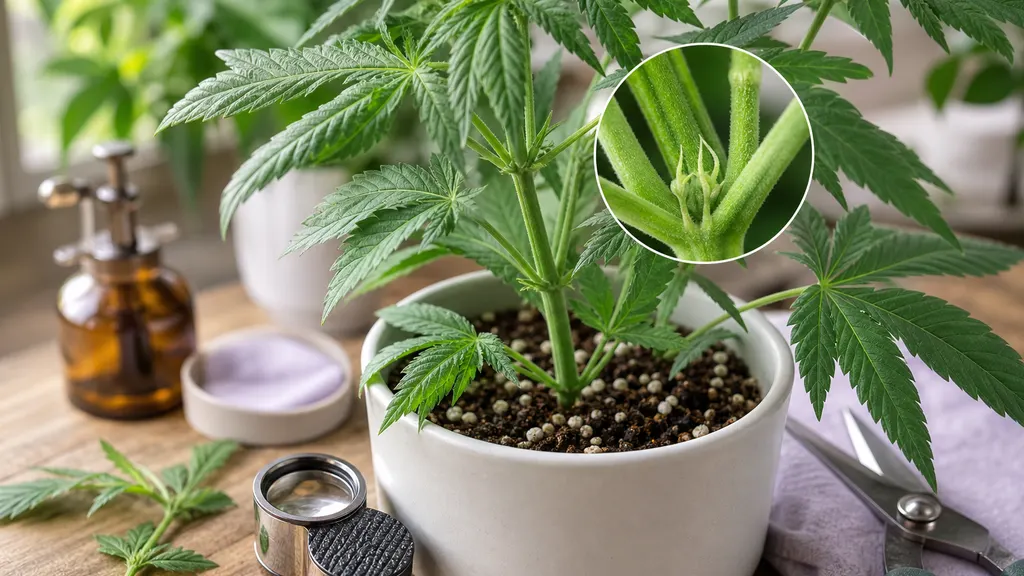
- Learn your plants early. Knowing male from female plants and your seed sources keeps a small grow simpler.
How reliable is what you read about grow problems?
A lot of grow content is confident about things the research has not tested. These are the ones we kept out on purpose.
- "You can spot it by looking": the sources show infection without symptoms, so this is not safe to rely on.
- "Bud rot smells like ammonia": we found no authoritative source linking that smell to fungal contamination.
- "Spray X to fix it": no source located on products for home cannabis, so we name none.
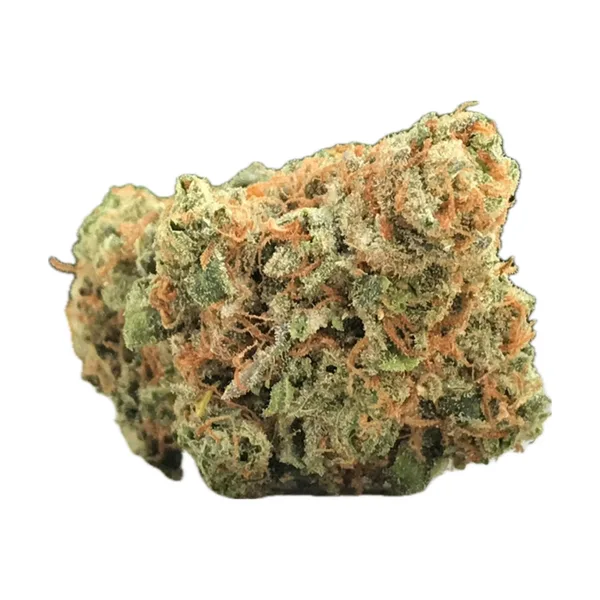
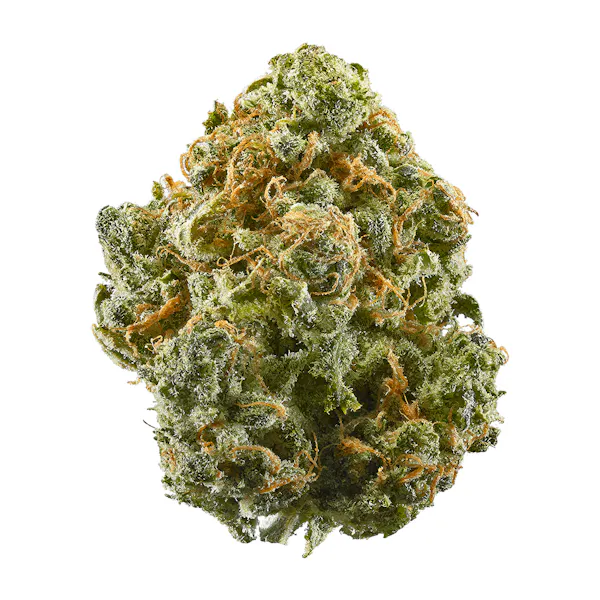
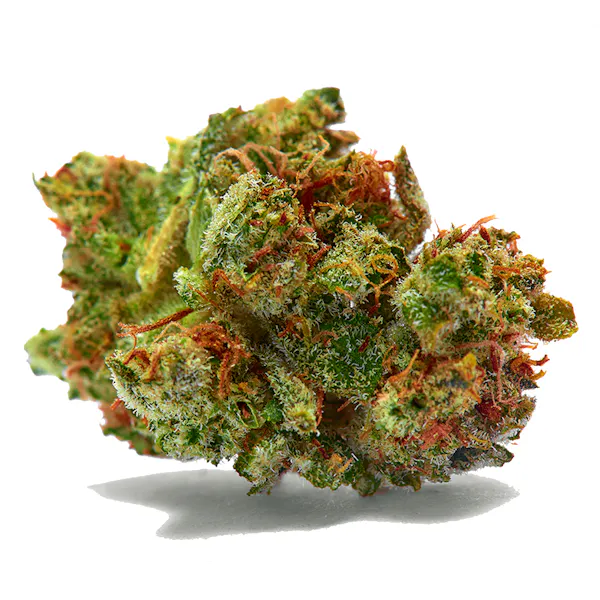
- "Mould is just trichomes" (or the reverse): we did not find a source that gives a dependable way to tell them apart by eye.
Sources: doi.org, doi.org, laws-lois.justice.gc.ca, bulkfarms.ca