StrainsTerpenesGuidesDispensaries
WeedDB
StrainsTerpenesGuidesDispensaries

Get new strain guides and deals

Yes, email me new strain guides, deals and WeedDB news. I can unsubscribe at any time. Privacy policy

WeedDB
StrainsIndicaSativaHybridTerpenesGuidesAboutContactPrivacyTermsDispensaries
19+ only. Please consume responsibly. © 2026 WeedDB
Home›Guides›Weed tolerance and tolerance breaks: what the research does and doesn't show
Guide

Weed tolerance and tolerance breaks: what the research does and doesn't show

Regular cannabis use lowers the number of CB1 receptors in the brain, and that change reverses during abstinence. How long a break takes to matter is not settled: two imaging studies report two days and about four weeks, and neither measured whether the high came back.

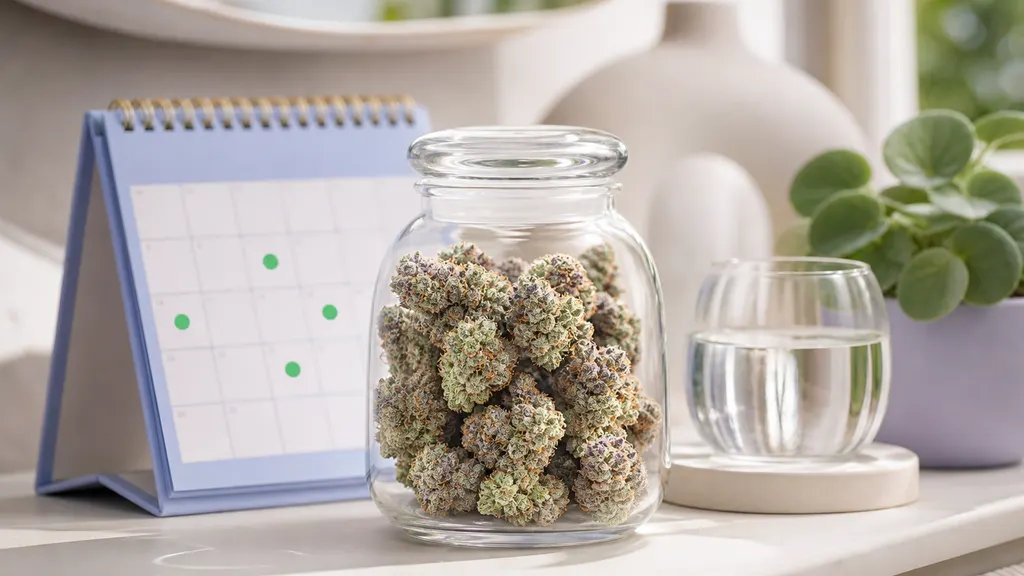
A closed glass jar of cannabis next to a desk calendar marked with mint-green dots, a glass of water and a houseplant

5 min read · Updated November 15, 2026 · WeedDB editors

Every tolerance-break guide gives a number, and the numbers don't agree. That's because nobody has run the study that would settle it. Here's what research does show about tolerance, where the famous break lengths come from, and what Canadian guidance says instead.

What is cannabis tolerance?Where does the tolerance-break number come from?Has anyone tested whether a break brings the high back?Does tolerance make you less impaired?Do edibles and smoking build tolerance differently?What do Canadian guidelines say?What about stopping altogether?What can you do with this?

What is cannabis tolerance?

Tolerance means the same amount feels like less after repeated use. In people who use cannabis often, brain imaging shows fewer available CB1 receptors, the receptors THC binds to. A 2012 imaging study reported that this reduction was linked to the number of years of smoking, and that it was reversible.

So the direction is clear: use goes up, receptor availability goes down, and abstinence reverses it. The size of the change is a different story. Widely repeated percentages for how far receptors drop don't have a source we could verify, so you won't find one here.

Where does the tolerance-break number come from?

Two small imaging studies sit behind most of the advice. The 2012 study (Hirvonen and colleagues) reported that receptor density had returned to normal after about four weeks of monitored abstinence. A 2016 study (D'Souza and colleagues) reported that group differences were gone after two days.

Both measured receptors. Neither measured whether a person's high came back. That gap matters, because the receptor result and the question people actually ask, "will I feel it again?", are not the same thing.

It's tempting to average the two into "two to four weeks." Don't. They used different methods and different groups, so the middle of two incompatible measurements doesn't describe anything.

StudyWho was studiedWhat was reportedDid it measure the high?
Hirvonen et al., 2012, Molecular PsychiatryPeople who smoked cannabis regularly, scanned during monitored abstinenceLower CB1 receptor availability tied to years of smoking; normal density after about four weeksNo
D'Souza et al., 2016, Biological Psychiatry: CNNI11 males with cannabis dependence and 19 controlsGroup differences in CB1 availability gone after two daysNo
The two imaging studies behind most tolerance-break advice. Both measured receptors, not how the high feels.

Has anyone tested whether a break brings the high back?

We couldn't find a study that did. It would mean assigning people to different lengths of abstinence, then giving each a fixed dose and recording how it feels. Searches turned up retailer and hemp-vendor pages with specific numbers, not that kind of trial.

So any exact break length is unverified. Unverified isn't the same as disproven, though. Receptors do recover during abstinence. What's missing is the link between that recovery and how a dose feels afterwards.

Does tolerance make you less impaired?

Not safely assumed. A 2016 study of 122 people (Ramaekers and colleagues) found the acute effects of cannabis on thinking and performance were similar regardless of use history, and the drop in the subjective high was only a non-significant trend.

A 2026 driving-simulator study from a Toronto team looked at frequent users (four or more times a week) the morning after smoking, 12 to 15 hours later. It found no significant impairment versus non-users after correcting for multiple comparisons. But it was a single session, with no baseline control, it wasn't a tolerance study, and its authors call the question of other routes open. It doesn't show frequent users are never impaired. For more on timing, see how long a high lasts.

Do edibles and smoking build tolerance differently?

Nobody has measured it. We found no study comparing tolerance across routes, so claims that edibles "reset" tolerance have no direct evidence behind them. Receptor changes aren't specific to how THC got in, which hints that tolerance would carry across routes, but that's an inference, not a result.

Edibles do work on a different clock. They're slower to start and last longer, which is covered in our guide to how long edibles take. If a product feels stronger than expected, greening out explains what's going on and what people do about it.
Strains with lower published THC
Charlotte's Web strainHybridCharlotte's WebTHC 0–1% · MyrceneSour Tsunami strainHybridSour TsunamiTHC 1–10% · MyrceneACDC strainHybridACDCTHC 1–5% · MyrceneGorilla Mints strainHybridGorilla MintsTHC 10–12%Purple Star strainIndicaPurple StarTHC 6%Cannatonic strainHybridCannatonicTHC 4–8% · MyrceneParadise OG strainHybridParadise OGTHC 8–10%Sour Blueberry strainHybridSour BlueberryTHC 12–14% · LimoneneBlueberry Afgoo strainHybridBlueberry AfgooTHC 12% · CaryophylleneMidnight strainHybridMidnightTHC 7–13% · MyrceneRoot Beer Kush strainHybridRoot Beer KushTHC 11–12%Orange Herijuana strainHybridOrange HerijuanaTHC 10–14%

What do Canadian guidelines say?

They don't mention tolerance breaks. Canada's lower-risk cannabis use guidelines (Fischer and colleagues, 2017) focus on frequency instead. They flag daily or near-daily use as a risk threshold, and recommend limiting use to occasional, for example one day a week or on weekends or less.

That's a frequency rule, not a recipe for lowering tolerance. If you have questions about your own use, or you're thinking about cutting back, a doctor or pharmacist is the right person to ask.

What about stopping altogether?

Some people notice they feel off when they stop. A 2020 review in JAMA Network Open pooled 47 studies and 23,518 participants and put the overall prevalence of cannabis withdrawal at 47%. It was far higher in clinic groups (54% in outpatient and 87% in inpatient samples) than in general population samples (17%).

Those numbers describe the groups studied, not what any one person will feel. If stopping is hard, talk to a doctor or pharmacist.

The questionWhat research measuredEvidence status
Do receptors change with regular use?CB1 availability on brain scansMeasured in humans, direction and reversibility shown
How long until receptors recover?Two days in one study, about four weeks in anotherStudies disagree
Does a break bring the high back?Nothing locatedUnverified
Do edibles and smoking differ?Nothing locatedUnverified
Does tolerance reduce impairment?Acute effects similar by use history (one study)Not safely assumed
What's measured versus what people want to know about tolerance.

What can you do with this?

There's no honest number to hand you, so here's the practical version. Tolerance is real and it tracks how often you use. Using less often is the one thing Canadian guidance actually names. Check the THC on the label rather than guessing, since reading cannabis labels shows where it sits, and note that THCA converts to THC when heated, so flower numbers need a second look.

If you want to see how high the top of the market goes, our list of the highest THC strains shows published figures. Lower-THC options are in the strip above. Whatever you pick, start with a small amount and wait, because tolerance doesn't remove the need to go slow.

Sources: doi.org, doi.org, doi.org, doi.org, doi.org, doi.org
Common questions

How long should a tolerance break be?

No study has measured it. Two imaging studies reported receptor recovery after two days and after about four weeks, but neither measured whether the high came back. Any exact length you see online is an extrapolation, so this guide doesn't recommend one.

Why do tolerance-break guides give different lengths?

Each draws on a different source and leaves out the others. Two human imaging studies used different methods and groups, and they can't be averaged. No trial has tested how long a break takes to restore the effect of a dose.

Is a tolerance break length unverified or disproven?

Unverified. Receptor availability does recover during abstinence, but no study we found links that recovery to how a later dose feels. Nothing shows a break fails, and nothing shows how long one needs to be.

Does tolerance happen with edibles too?

Nobody has measured it. No study we found compares tolerance across smoking and edibles. Receptor changes are not specific to the route, which suggests tolerance carries across, but that is an inference and not a tested result.

Does tolerance mean you are less impaired?

Don't assume so. A 2016 study of 122 people found acute effects were similar regardless of use history, with only a non-significant trend toward a weaker high. A 2026 simulator study had limits and wasn't a tolerance study.

What do Canadian guidelines say about frequency?

They name daily or near-daily use as a risk threshold and recommend occasional use, for example one day a week or weekends or less. They don't describe tolerance breaks. Ask a doctor or pharmacist about your own situation.

Is tolerance a myth?

No. Lower CB1 receptor availability in regular users has been measured in humans, and it reverses with abstinence. What isn't established is how long that takes in terms of how a dose feels.

Keep reading

All guides
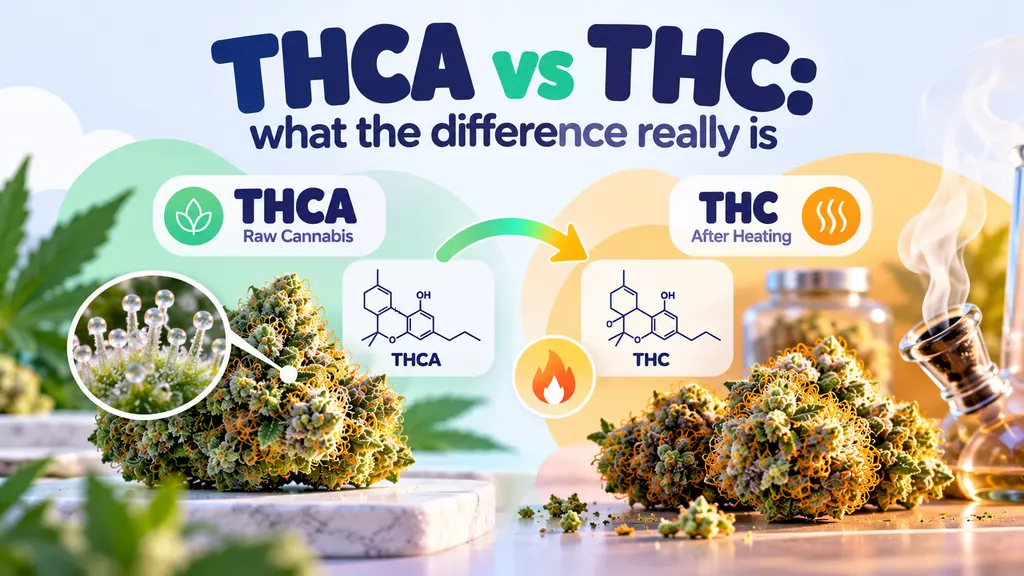
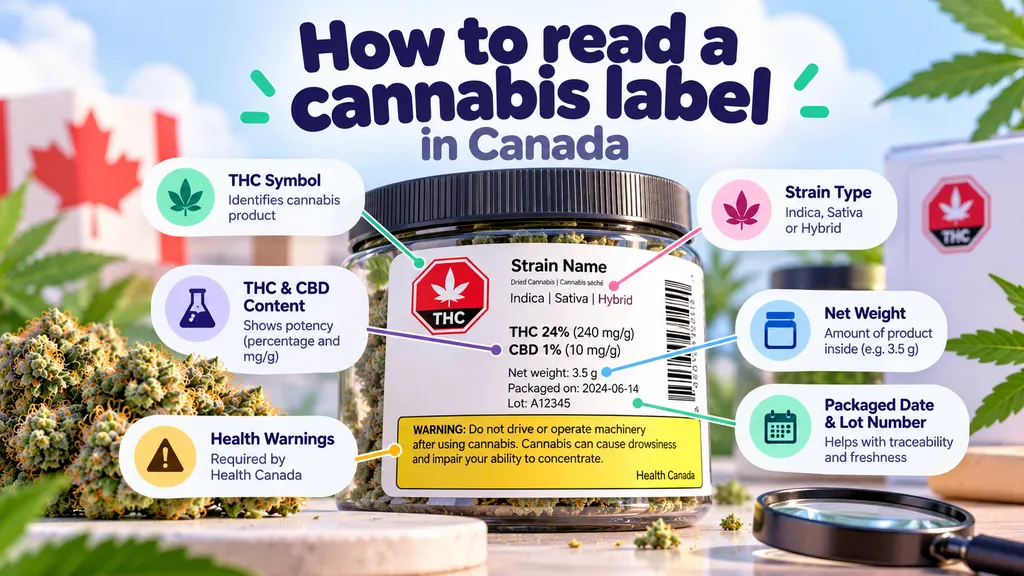
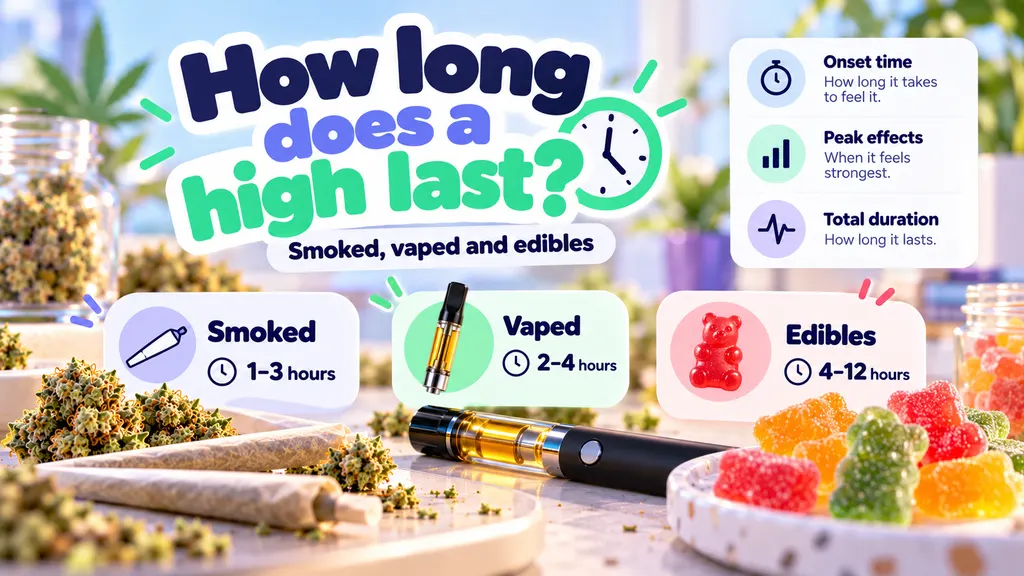
Dense, resin-coated cannabis buds glistening with sticky trichomesGuideHighest THC strains: what the numbers really meanThe highest THC strains are the ones with the biggest Total THC number on a lab report, but that number is a ceiling that varies by batch, lab and method. This guide explains how THC is measured and labelled in Canada, why very high figures are often inflated, and why a higher number isn't automatically a better choice.Read it A young woman eating a gummy beside a bowl of colourful gummies and baked treatsGuideHow long do edibles take to kick in?Health Canada says edibles can take 30 minutes to 2 hours to start working, with the strongest effects 2 to 4 hours in and effects lasting 4 to 8 hours. The wait is why the standard advice is to start low, go slow and not take more too early.Read it Illustration of raw cannabis (THCA) turning into THC after heating, with both molecules shownGuideTHCA vs THC: what the difference really isTHCA is the raw, acidic form of THC that cannabis plants actually make, and on its own it isn't considered intoxicating. Heat strips off part of the molecule and turns THCA into THC, which is why Canadian labels show "Total THC": the THC you'd have if all the THCA converted.Read it A Canadian cannabis jar with its label parts called out: the THC symbol, THC and CBD content, net weight, packaged date, lot number and the Health Canada warningGuideHow to read a cannabis label in CanadaEvery legal cannabis product in Canada has to show its Total THC and Total CBD, the red THC symbol, a yellow health warning, a lot number, a packaging date and an excise stamp for your province. Total THC is the number to compare, and it's shown in mg/g for flower and in mg per piece and per package for edibles.Read it A person resting on a couch with a hand on their forehead, next to a water bottle and a bowl of fruitGuideWhat is greening out? Signs and what to doGreening out is a slang term for taking more cannabis than your body handles comfortably, usually with a wave of unpleasant physical and mental effects. It is generally temporary. The usual advice is to stop consuming, get somewhere calm, and call for help if symptoms are severe.Read it A joint, a vape cartridge and gummies, titled How long does a high last? Smoked, vaped and ediblesGuideHow long does a high last? Smoked, vaped and ediblesHealth Canada says that after smoking or vaping you could feel effects for 2 to 4 hours, and after eating or drinking cannabis for 4 to 8 hours. Edibles also start later: within 30 minutes to 2 hours, compared with seconds or minutes when inhaled.Read it Three glass jars of frosty cannabis buds on a wooden counter beside a small digital scale and a glass beakerGuideWhat does the THC percentage on weed actually mean?A THC percentage is a calculated share of a flower's weight, worked out from one lab sample of one lot. It is useful, but it is one value drawn from a plant that varies, and we could not find a source that shows what it predicts about how a product will feel.Read it A glass of white wine beside a lavender dish of frosted cannabis buds on a periwinkle tableGuideWeed vs alcohol: what the evidence actually comparesNo single study answers whether weed or alcohol is worse, because they've rarely been measured on the same scale. Four comparisons share a unit: crash risk, dependence, acute lethality and cost to Canada. Each points a different way. Canada also publishes a weekly numeric guide for alcohol and none for cannabis.Read it