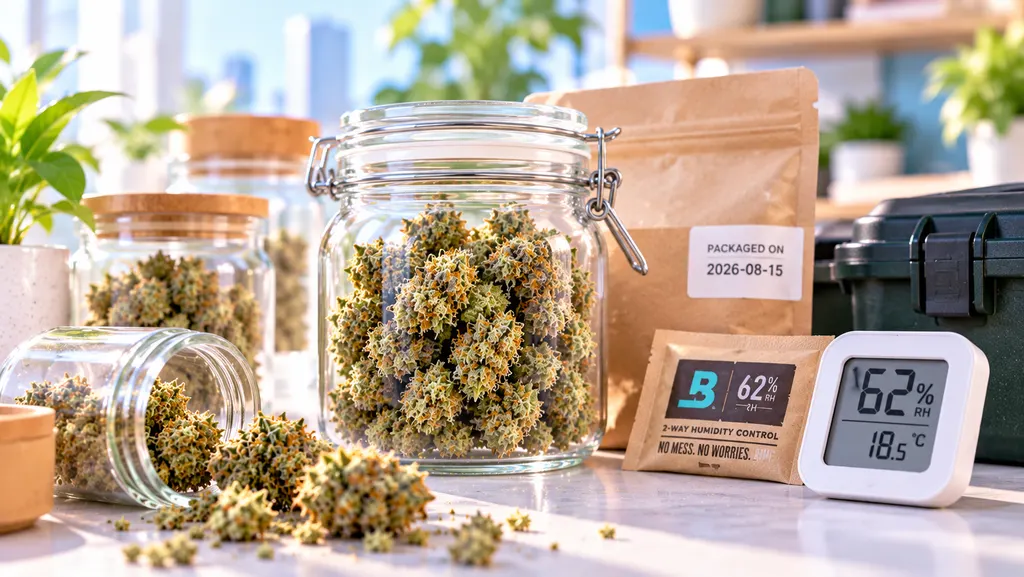
Yes and no. Weed doesn't turn dangerous on a set day like milk, but it does lose potency and aroma with time, and it can go off badly if it's stored wet. In Canada, dried flower is labelled with the date it was packaged, and edibles can carry a best-before date. Here's what actually changes, how to store it, and when to throw it out.
Does weed expire?
Not in the way food does, but it does age. Cannabis loses THC gradually, picks up a different cannabinoid called CBN, and its aroma fades. None of that makes it unsafe by itself. The real safety problem is mould, which can grow if cannabis is stored damp or in warm, humid air.
So old but dry, well-kept flower is usually just weaker and flatter. Flower that looks fuzzy, smells musty or has damp patches is a different matter.
What happens to THC over time?
THC slowly degrades into CBN (cannabinol). A four-year study of marijuana and hashish samples kept under different storage conditions found significant THC loss and CBN formation, with almost all of the THC gone by the end of the four years. Temperature changed how fast THC converted to CBN, while light changed both the speed and the way it converted.
A separate long-term study of herbal cannabis found THC loss was fastest in the first year and larger in samples exposed to light at 22 °C than in samples stored in the dark at 4 °C. CBN rose more in the light-exposed samples. That is why storage advice always comes back to the same three things: keep it dark, cool and sealed.
Time works on the THCA too. THCA slowly converts to THC as flower sits, which is covered in our guide to THCA vs THC, but THC then continues down the path to CBN. These are averages from lab studies, not a countdown. How fast any one jar changes depends on how it's kept.
How should you store weed?
Keep it airtight, cool and out of light, the same way trichome-rich material like kief is best kept. Studies on stored cannabis point most consistently to light and heat as the things that speed up THC loss, and moisture is what invites mould. A sealed glass or opaque container in a cupboard does the job for most people.
Humidity is where advice varies. You'll see ranges of roughly 55 to 65% relative humidity quoted for cured flower, and a common caution that mould risk rises above about 65%. These figures come mainly from industry and standards sources rather than a peer-reviewed study, so treat them as a rule of thumb, not a rule. The safe habit is to avoid anything that adds moisture and to check the jar now and then.
Health Canada's recall notices also say opened cannabis products should be disposed of safely and kept out of the reach of children, which is a good rule for storage too. Our guide to what weed smells like explains why the aroma fades when the jar is left open.
What do Canadian labels say about dates?
Every packaged cannabis product in Canada must show a packaging date, the date it was packaged. Under Health Canada's packaging and labelling guide, that date can differ slightly from the real one if the product was packaged within seven days before or after it.
An expiry date is different. It marks the end of a product's stability period. It isn't required for dried or fresh cannabis, extracts or topicals, though it may be included if the producer has established a stability period. It is not permitted on edible cannabis.
Edibles use a best-before date instead, called a durable life date. It's required if the product's durable life is 90 days or less, and optional if longer. So an older gummy without any date isn't necessarily a problem, and a chocolate with a best-before date is telling you when it's expected to stay at its best. For the rest of the label, see reading cannabis labels.
What changes over time, product by product?
A few rows above rest on general food-safety common sense rather than cannabis studies. That is deliberate: researchers have mostly studied flower and hash, so for other product types the label's date and storage line carry more weight than anything in this guide.
| Product type | What changes over time | Storage tips |
|---|---|---|
| Dried flower | THC slowly degrades to CBN; aroma fades; mould if damp. Labelled with a packaging date. | Airtight, cool, dark. Keep dry. |
| Pre-rolls | Same as flower, and a loose paper can dry out or absorb moisture. Labelled with a packaging date. | Keep sealed in the original tube or an airtight container, away from heat. |
| Hash | Included in the four-year study: THC lost and CBN gained. | Airtight, cool, dark. Light speeds up change. |
| Edibles (gummies, chocolate, baked goods) | Food quality changes like any food. May carry a best-before date (required if the durable life is 90 days or less). | Follow the package. Keep sealed and away from children. |
| Oils and capsules | Light can break down cannabinoids, and published stability data for oils is limited. An expiry date may be shown if a stability period was set. | Keep closed, dark and cool, and follow the label. |
| Homemade edibles | No label or date, and potency is unknown. Treat as perishable food. | Refrigerate as you would the food itself, and label the container. |
Do edibles expire?
Edibles can go off like any food, and they can lose some THC over time. A commercial edible in Canada may show a best-before date, and if it does, treat that as the date to use it by. After it, the taste and texture may change first. If it smells off, looks different or has been opened and left out, don't risk it.
Homemade edibles have no date at all, so store them as you would the food they are, and label them clearly. Potency is unknown in a home batch, so the usual Health Canada advice applies: start low and go slow. Our guide to how to decarb weed explains how potency gets decided in the first place.
How do you know weed has gone bad?
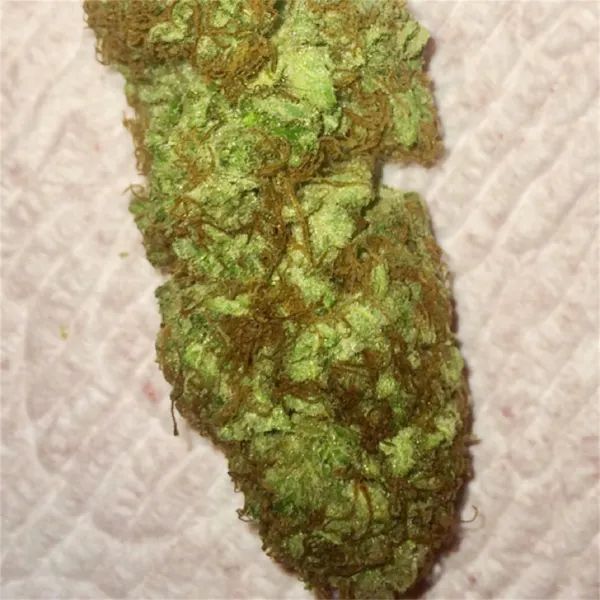
Look for mould first. White, grey or green fuzz, webbing, damp or slimy patches, and a musty or mildew smell are all warning signs. Flower that is simply dry, harsh and low on aroma is stale, not mouldy.
If you see mould, don't use it. Health Canada's recall notices for mouldy cannabis tell consumers to immediately stop using the product, and warn that mould ingestion may pose a risk of gastrointestinal symptoms and infections in people with weakened immune systems. Smoking mouldy flower doesn't get rid of the problem, and you can't reliably cut out the bad part. Throw the whole batch out and keep it away from children and pets.
For a product bought legally, Health Canada's mould recalls have told consumers to contact the provincial retailer they bought it from.
Sources: pubmed.ncbi.nlm.nih.gov, revistadechimie.ro, canada.ca, recalls-rappels.canada.ca, laws-lois.justice.gc.ca, brjac.com.br